After eight years of planning, a highway crossing project spanning U.S. Route 101 could break ground in 2021.


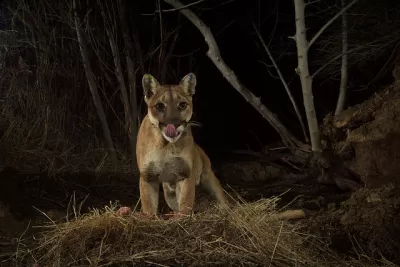
A project to allow safe passage for wildlife across a dangerous Los Angeles freeway will break ground in 2021 if fundraising successes continue. The wildlife crossing will be constructed just north of the city and will be the first wildlife highway crossing in a dense urban area, reports Adele Peters.
Beth Pratt from the National Wildlife Federation, one of the project's stakeholders, says that urban freeways are trapping wildlife in small islands between the thoroughfares. Many species are becoming genetically isolated, unable to commingle with animals in adjacent habitats.
"The situation is most acute for mountain lions, who risk extinction in the area within decades, but other wildlife, from lizards to birds, are also showing a decline in genetic diversity," writes Peters.
Wildfires caused by climate change are creating a sense of urgency. "Fires fueled by climate change are making the challenges worse, as animals often can’t relocate when their habitat is destroyed, or they can’t directly flee the flames. A mountain lion named P-64, who died because of the Woolsey Fire, is one example," Peters reports.
Peters acknowledges that the necessity for a project to provide safe crossing has been in the works for a long time. Given the scale and budget, the U.S. Route 101 project's eight year timeline is moving relatively quickly, Peters says.
Read the full story: This massive wildlife crossing will help protect wildlife from L.A. drivers on the 101

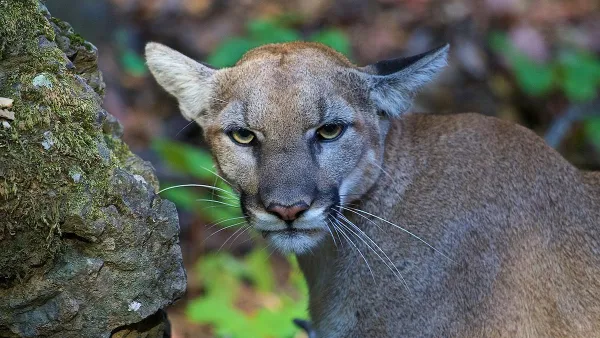
Cougar Death Highlights Urgent Need for Wildlife Crossing
A mountain lion was found dead on the 101 Freeway, less than half a mile from the steel and concrete endoskeleton of the Wallis Annenberg Wildlife Crossing.
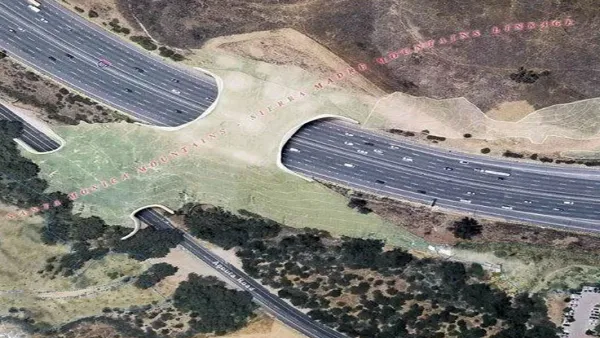
California Wildlife Crossings Get New Funding
The state is budgeting $61 million to build wildlife crossings that increase biodiversity, help species thrive, and save both human and animal lives.
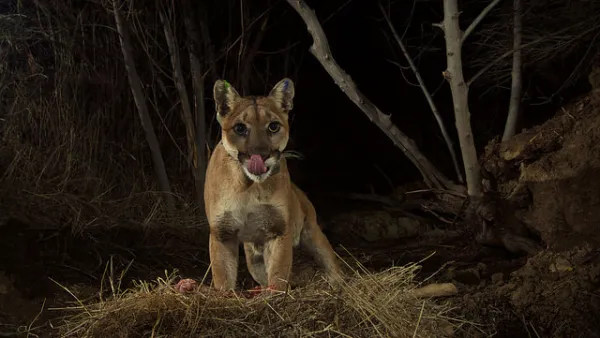
The Best Locations for L.A.’s Mountain Lion Freeway Bridges
A coalition of researchers have identified one area near the 101 and other near I-15 that would help keep the big cats alive and healthy.

Planetizen Federal Action Tracker
A weekly monitor of how Trump’s orders and actions are impacting planners and planning in America.

The state-sanctioned urbicide of Austin
People don’t kill cities. Freeways do.

Colorado’s Largest Data Center Could Rise Next to Homes — Without a Public Hearing
The proposed campus would consume 11 times the power of Denver International Airport; as it has across the country, opposition mounts.

Nation's most wind-powered state turns to coal as data centers increase energy demand
For the first time in decades, Iowa has increased its generation of coal power.

NYC cools commuters with city's first rain garden above a bus stop
New York City officials say the plants in the rain garden can absorb 16 gallons of rainwater during heavy storms.

Brightline West’s future may rely on $6 billion federal loan
The company has until Nov. 2 to make a $400 million equity investment into its proposed high-speed rail line.

FREE Course: Walkable City 1: Why Walkability?
After describing his path towards focusing on walkability as the essence of good planning, Jeff Speck marches through his five principal reasons for making more walkable places.
Reinventing Malls: Planning Alchemy—Turning Gray Fields Into Gold
The course focuses on the opportunities and imperatives that shape reinvention of mall sites.

Greater Baltimore Committee
Eagle County Government
Harvard University Graduate School of Design
The Architects Foundation
University of Cincinnati Online
The Pocatello Development Authority
The Urban Renewal Agency of the City of Pocatello
Journal of the American Planning Association