Is this the "Kitty Hawk moment" driverless car companies have been seeking?



John Krafcik, CEO of Waymo One, announces the launch of a fully autonomous service ride-hailing service to the general public in Phoenix, Arizona.
Beginning today, October 8, we’re excited to open up our fully driverless offering to Waymo One riders. Members of the public service can now take friends and family along on their rides and share their experience with the world. We’ll start with those who are already a part of Waymo One and, over the next several weeks, welcome more people directly into the service through our app (available on Google Play and the App Store).
All Waymo One rides will be 100 percent driverless in the near term, according to Krafcik.
The announcement includes details of Waymo's process of getting to this benchmark achievement, or what Krafcik describes as its search for a "Kitty Hawk moment." The history of autonomous vehicle technology during the pandemic had previously been an up-and-down affair. The launch of Waymo One service to the public would seem, at least, to be a positive incremental step toward an autonomous future.
FULL STORY: Waymo is opening its fully driverless service to the general public in Phoenix


Year One of Waymo
Waymo, like Google a company of Alphabet Inc., has been offering self-driving ride-hailing service to the public for a year, providing 100,000 rides in the Phoenix area in the process.
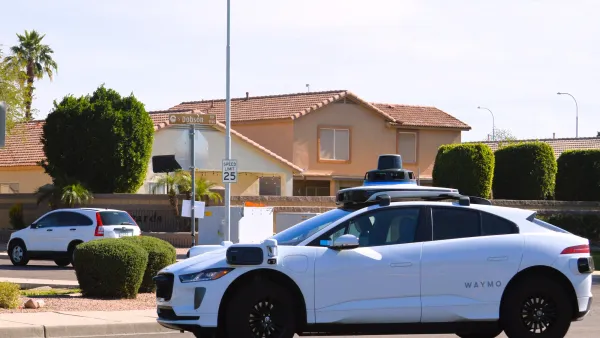
Uber and Waymo part ways in Phoenix
The companies ended a three-year pilot program, with Waymo saying it plans to keep its Phoenix robotaxi fleet available through its own app.
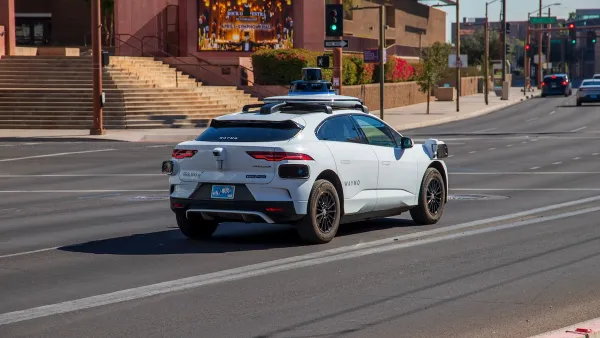
What Happens When a Robotaxi Gets Pulled Over?
In Phoenix, a police officer who pulled over a Waymo driving in the wrong lane was “unable to issue citation to computer.”

Planetizen Federal Action Tracker
A weekly monitor of how Trump’s orders and actions are impacting planners and planning in America.

The state-sanctioned urbicide of Austin
People don’t kill cities. Freeways do.

US to reduce Colorado River water deliveries to Mexico
A new Colorado Treaty amendment reduces Mexico’s Colorado River water allocation by 250,000 acre feet.

5 New England states march closer to 800 megawatt wind energy project
Securing federal approval for the project may be complicated under the Trump administration, which has historically been hostile towards domestic wind power.

Baltimore to break ground on $50 million Transit Priority Project
The project will bring faster bus trips, safer streets and better bike connections to Baltimore.

Airbnb launches $250 million 'last-dollar financing' housing accelerator, makes first investment in Austin
The company will put $6.4 million towards affordable housing development in Texas’ capital.

FREE Course: Walkable City 1: Why Walkability?
After describing his path towards focusing on walkability as the essence of good planning, Jeff Speck marches through his five principal reasons for making more walkable places.
Reinventing Malls: Planning Alchemy—Turning Gray Fields Into Gold
The course focuses on the opportunities and imperatives that shape reinvention of mall sites.

Eagle County Government
Harvard University Graduate School of Design
Nashville Planning Department
The Architects Foundation
University of Cincinnati Online
The Pocatello Development Authority
The Urban Renewal Agency of the City of Pocatello
Journal of the American Planning Association