Federal grant funding awarded recently takes a critical step toward making high-speed intercity rail service a reality between North Carolina and Virginia.


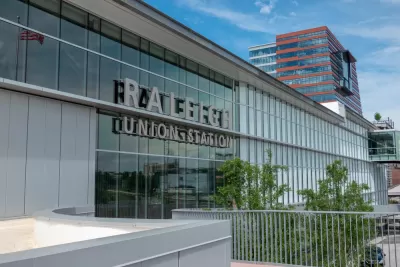
"The effort to establish high-speed passenger rail service between Raleigh and Richmond, Virginia, got a boost Friday with a $47.5 million federal grant to the N.C. Department of Transportation," reports Richard Stradling.
"The money will allow the state to buy a rail line between Raleigh and Ridgeway, near the Virginia state line, from freight railroad CSX," adds Stradling. The Federal Railroad Adminsitration refers to the planned intercity rail line as the Southeast High-Speed Rail Corridor.
(Astute observers will recall a CSX sale playing a central role to rail transit plans that will connect the state of Virginia to Washington, D.C.)
As for how the new stretch of rail line will play into the ambitions for intercity rail between North Carolina and Virginia, Stradling explains that the "state’s long-term plans for rail service include passenger trains capable of going 110 mph between Raleigh and Richmond on the [CSX] S-line."
"Actual construction of the project is still years away, but NCDOT is working to eliminate railroad crossings on the CSX line in Wake County by building bridges, starting with Durant and New Hope Church roads in Raleigh," according to Stradling.
The grant was announced earlier this month by a bipartisan coalition of Congressional representatives of the state of North Carolina. The news about the state of North Carolina's high-speed, intercity rail ambitions synchronized with news about high-speed rail plans in Texas gaining key approval from federal regulators.
Read the full story: NC gets federal grant to buy corridor for Raleigh-Richmond high-speed rail

Legal Standoff Over Federal Funding for California High-Speed Rail Heats up
A judge dismissed the Trump administration’s request to throw out a lawsuit brought by the state’s high-speed rail authority.
Texas, California Rail Projects Seek Out Private Funding
In the wake of Trump’s cuts to high-speed rail projects, rail authorities are looking to private-public partnerships to supplement their budgets.
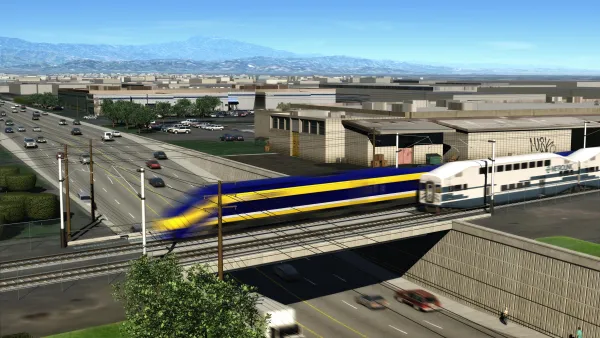
California High-Speed Rail Recommits to Bakersfield-to-Merced Segment
The California High-Speed Rail Authority also certified the Final Environmental Impact Report/Environmental Impact Statement for the San Francisco to San Jose section of the route in August.

Planetizen Federal Action Tracker
A weekly monitor of how Trump’s orders and actions are impacting planners and planning in America.

The state-sanctioned urbicide of Austin
People don’t kill cities. Freeways do.

US to reduce Colorado River water deliveries to Mexico
A new Colorado Treaty amendment reduces Mexico’s Colorado River water allocation by 250,000 acre feet.

Nation's most wind-powered state turns to coal as data centers increase energy demand
For the first time in decades, Iowa has increased its generation of coal power.

NYC cools commuters with city's first rain garden above a bus stop
New York City officials say the plants in the rain garden can absorb 16 gallons of rainwater during heavy storms.

Brightline West’s future may rely on $6 billion federal loan
The company has until Nov. 2 to make a $400 million equity investment into its proposed high-speed rail line.

FREE Course: Walkable City 1: Why Walkability?
After describing his path towards focusing on walkability as the essence of good planning, Jeff Speck marches through his five principal reasons for making more walkable places.
Reinventing Malls: Planning Alchemy—Turning Gray Fields Into Gold
The course focuses on the opportunities and imperatives that shape reinvention of mall sites.

Greater Baltimore Committee
Eagle County Government
Harvard University Graduate School of Design
The Architects Foundation
University of Cincinnati Online
The Pocatello Development Authority
The Urban Renewal Agency of the City of Pocatello
Journal of the American Planning Association