Anthony M. Townsend's new book goes beyond autonomous automobiles to examine autonomous transportation in a larger context.


Anthony M. Townsend's Ghost Road: Beyond the Driverless Car "is a relentlessly creative and deeply thought-through analysis of the future of transportation," says Joshua Kim in a review of the book.
Townsend analyzes autonomous transportation in a wide context, refusing to be limited by the scope of autonomous automobiles. "It is an urbanist take on autonomy that makes Ghost Road such a rewarding and edifying read," writes Kim.
Townsend is an expert on self-driving cars, transportation, and urban design, and he sketches an alternative narrative around our autonomous transportation future. Rather than focusing his analysis solely on self-driving automobiles, Townsend widens the lens to consider all forms of future mobility.
Townsend wrote the book before the COVID-19 outbreak, and Kim wonders how the work would be different if it had been written afterward. "One theme that runs through the book is that of America's deep reliance on automobiles for commuting to work. While telecommuting was growing quickly pre-pandemic, only 3.4 percent of all employees worked entirely remotely," says Kim.
FULL STORY: ‘Ghost Road’ and the Surprising Future of Autonomous Transportation

The Era Of Autonomous Vehicles Has Arrived
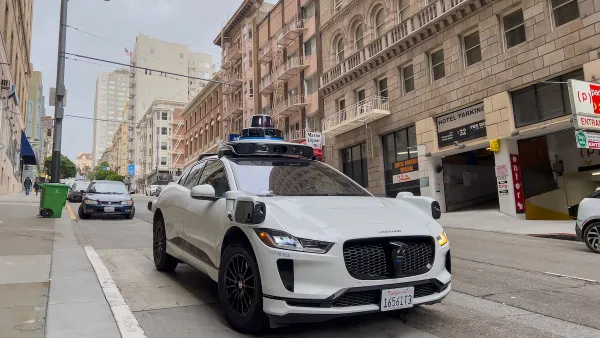
Autonomous vehicles are no longer perpetually “five years away.” They are here now. Planners must act now to ensure they don't degrade city life.

Planning for the Autonomous Future
With some historical perspective, transportation planners and policymakers can avoid the mistakes of the past and develop a transportation system that acknowledges the needs of all road users.
Tech Trends for Cities and States
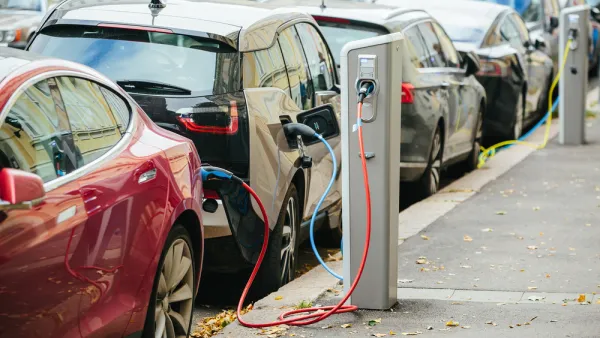
Smart cities technology is well behind schedule, but the technology industry hasn’t given up on new digital solutions, self-driving cars, curb management, and AI-powered systems.

Planetizen Federal Action Tracker
A weekly monitor of how Trump’s orders and actions are impacting planners and planning in America.

The state-sanctioned urbicide of Austin
People don’t kill cities. Freeways do.

US to reduce Colorado River water deliveries to Mexico
A new Colorado Treaty amendment reduces Mexico’s Colorado River water allocation by 250,000 acre feet.

5 New England states march closer to 800 megawatt wind energy project
Securing federal approval for the project may be complicated under the Trump administration, which has historically been hostile towards domestic wind power.

Baltimore to break ground on $50 million Transit Priority Project
The project will bring faster bus trips, safer streets and better bike connections to Baltimore.

Airbnb launches $250 million 'last-dollar financing' housing accelerator, makes first investment in Austin
The company will put $6.4 million towards affordable housing development in Texas’ capital.

FREE Course: Walkable City 1: Why Walkability?
After describing his path towards focusing on walkability as the essence of good planning, Jeff Speck marches through his five principal reasons for making more walkable places.
Reinventing Malls: Planning Alchemy—Turning Gray Fields Into Gold
The course focuses on the opportunities and imperatives that shape reinvention of mall sites.

Eagle County Government
Harvard University Graduate School of Design
Nashville Planning Department
The Architects Foundation
University of Cincinnati Online
The Pocatello Development Authority
The Urban Renewal Agency of the City of Pocatello
Journal of the American Planning Association