The neighborhood of Montrose in Houston has undertaken a self-funded study to assess the facts on the ground about walkability in the neighborhood.


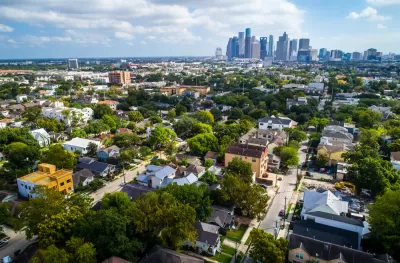
"In Montrose [Houston], despite being considered one of the most walkable areas in the city, almost 30% of the sidewalks are in poor condition, rendering 6 out of every 10 blocks potentially impassable to someone in a wheelchair or pushing a stroller," reports Matt Dullin.
Dullin is sharing findings from "a nine-month, first-of-its-kind study backed by the Montrose Tax-Increment Reinvestment Zone," which charts a path to new levels of walkability and pedestrian friendliness in the neighborhood. The goal is the "20-minute neighborhood" that is becoming a more popular idea in some U.S. cities.
"The plan outlines a road map to make Montrose a '20-minute neighborhood,' where a high quality of life is possible for residents without ever having to hop into a car, said Geoff Carleton, senior principal for Traffic Engineers Inc., which led the study with Gauge Engineering," as reported by the article.
"The study identifies over $40 million in potential projects, most of which will involve partnerships between the TIRZ, the Metropolitan Transit Authority of Harris County, the city of Houston and Harris County. The study also contemplates other programs to encourage homeowners and developers to make sidewalk improvements with the possibility of rebates," adds Dullin for more detail.
The news about Montrose's efforts to plan a more walkable neighborhood is supplemented by the big news that the entire city of Houston adopted this week an ambitious plan for new development in parts of the city to devote more priority to pedestrians, and spend less effort devoted to the car-centric plans of the past.
Unlike much of the city of Houston, Montrose has a reputation as a pedestrian-friendly. Local stakeholders and experts cited by Dullin, however, say that the state of repair of the sidewalks in the neighborhood render much of the neighborhood's pedestrian infrastructure as useless for many users.
Read the full story: Walk/bike study lays out path for Montrose to become ‘20-minute neighborhood’

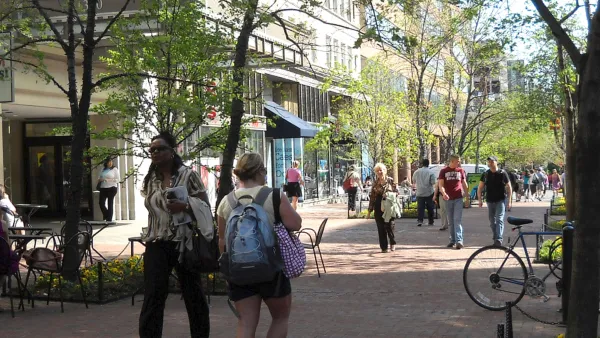
Cities Seeking '20-Minute Living'
Reducing car dependency can improve air quality, increase access to jobs and opportunities, and help cities meet emissions reduction goals.

From Paris to Portland: The 15-Minute City Goes Mainstream
Raising the bar on the 20-minute neighborhood model, cities around the world are embracing the appeal of the 15-minute city during the coronavirus pandemic.
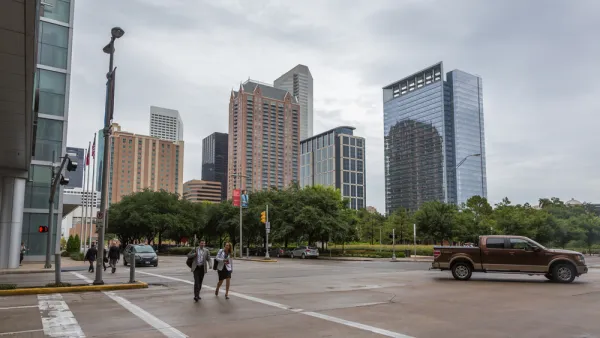
Walkability Plan, Including Parking Reform, Adopted in Houston
The city of Houston is embarking on an ambitious plan to reshape how new development in the city prioritizes walkability, and deprioritizes the automobile.

Planetizen Federal Action Tracker
A weekly monitor of how Trump’s orders and actions are impacting planners and planning in America.

The state-sanctioned urbicide of Austin
People don’t kill cities. Freeways do.

US to reduce Colorado River water deliveries to Mexico
A new Colorado Treaty amendment reduces Mexico’s Colorado River water allocation by 250,000 acre feet.

Nation's most wind-powered state turns to coal as data centers increase energy demand
For the first time in decades, Iowa has increased its generation of coal power.

NYC cools commuters with city's first rain garden above a bus stop
New York City officials say the plants in the rain garden can absorb 16 gallons of rainwater during heavy storms.

Brightline West’s future may rely on $6 billion federal loan
The company has until Nov. 2 to make a $400 million equity investment into its proposed high-speed rail line.

FREE Course: Walkable City 1: Why Walkability?
After describing his path towards focusing on walkability as the essence of good planning, Jeff Speck marches through his five principal reasons for making more walkable places.
Reinventing Malls: Planning Alchemy—Turning Gray Fields Into Gold
The course focuses on the opportunities and imperatives that shape reinvention of mall sites.

Greater Baltimore Committee
Eagle County Government
Harvard University Graduate School of Design
The Architects Foundation
University of Cincinnati Online
The Pocatello Development Authority
The Urban Renewal Agency of the City of Pocatello
Journal of the American Planning Association