Why do movies and tv shows hate public transit much? There's no answer here, but there is plenty of evidence that the question responds to reality.


"Have you ever noticed that almost any time characters ride a bus or a train in a movie, they…kinda hate it?"
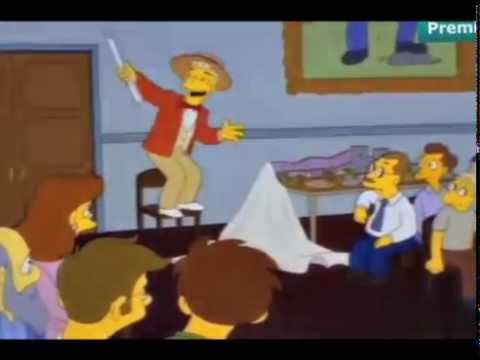
That's how Kea Wilson opens a "Streetsblog 101" feature listing many examples of pop culture stigmatizing public transit. Let's get this out of the way, right away: the list includes the famous monorail episode from The Simpsons, for reasons that rarely get mentioned in transit advocacy:
Seriously, has any small town in America ever been offered a comprehensive transit network — much less had everyone in town unanimously and immediately agree it would be great? If it were true that vaudevillian hucksters are coming to convince us all to invest in trains — unless we’re smart enough to demand the endless autocentric roads we really need — then Streetsblog would not need to exist.
Click through to the source article to see a ton of clips of public transit being defamed on TVs and movie screen, and also read Wilson dispense with the many ways pop culture worships the automobile.
Read the full story: Streetsblog 101: How Pop Culture Stigmatizes Public Transit

Friday Funny: Chicago Transit Has Imposter Syndrome
The Onion posits that the CTA’s failures stem from a debilitating fear of having riders rely on them.
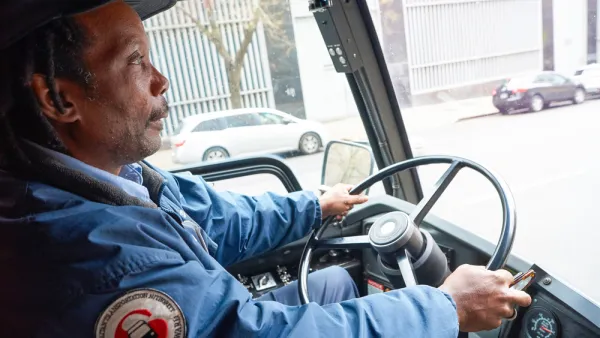
The Onion Skewers Police Use of Public Transit During Protests
It's possible that bus public transit could some day again be a powerful tool for economic and social mobility.
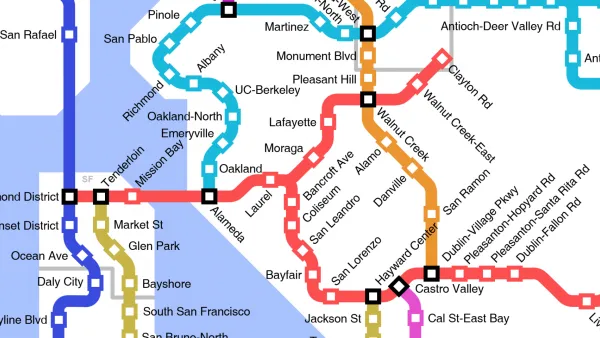
Friday Funny: Imagining Taco Bell-Oriented Rail Transit
A Reddit user created a transit map of the San Francisco Bay Area that connects Taco Bell locations, which, unlike rail public transit, have reached every corner of the region.

Planetizen Federal Action Tracker
A weekly monitor of how Trump’s orders and actions are impacting planners and planning in America.

The state-sanctioned urbicide of Austin
People don’t kill cities. Freeways do.

Colorado’s Largest Data Center Could Rise Next to Homes — Without a Public Hearing
The proposed campus would consume 11 times the power of Denver International Airport; as it has across the country, opposition mounts.

Nation's most wind-powered state turns to coal as data centers increase energy demand
For the first time in decades, Iowa has increased its generation of coal power.

NYC cools commuters with city's first rain garden above a bus stop
New York City officials say the plants in the rain garden can absorb 16 gallons of rainwater during heavy storms.

Brightline West’s future may rely on $6 billion federal loan
The company has until Nov. 2 to make a $400 million equity investment into its proposed high-speed rail line.

FREE Course: Walkable City 1: Why Walkability?
After describing his path towards focusing on walkability as the essence of good planning, Jeff Speck marches through his five principal reasons for making more walkable places.
Reinventing Malls: Planning Alchemy—Turning Gray Fields Into Gold
The course focuses on the opportunities and imperatives that shape reinvention of mall sites.

Greater Baltimore Committee
Eagle County Government
Harvard University Graduate School of Design
The Architects Foundation
University of Cincinnati Online
The Pocatello Development Authority
The Urban Renewal Agency of the City of Pocatello
Journal of the American Planning Association