A new report from the World Economic Forum predicts dire consequences for congestion and carbon emissions if e-commerce delivery services proliferate unchecked.


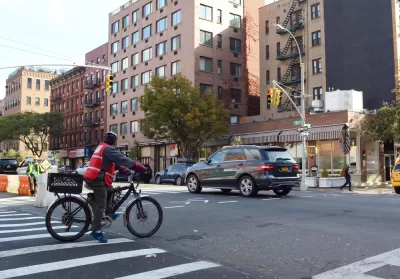
Emma Cosgrove shares news of a new study predicting a 78 percent increase in last-mile deliveries by 2030. The report, published by the World Economic Forum, also provides recommendations for ensuring that such a rush of new vehicle trips won't overwhelm cities.
"The best scenario, according to WEF, is one that takes into account the carriers' interest in fewer disruptions and faster deliveries alongside cities' desire for lower emissions and less congestion," explains Cosgrove. "This combined scenario would include electric vehicles, night deliveries, multi-brand parcel lockers, dynamic re-routing and load pooling. These interventions could reduce emissions by 35%, unit costs by 15% and congestion by 25%, according to the report."
Read the full story: E-commerce deliveries will overrun cities in 1 to 3 years
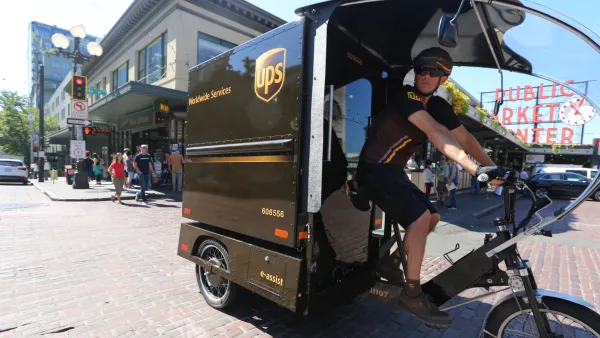
Cargo Bike Pilot Reduces Emissions by 30%
The program deployed electric cargo bikes in a small Seattle neighborhood to test the effectiveness of replacing delivery trucks with lighter vehicles in the last mile of delivery.
How Cities Are Tackling Delivery Emissions
As the popularity of delivery services grows, regulation and tech can address pollution challenges and limit congestion.
Mitigating the Impacts of Delivery Services
How cities can minimize the impact of delivery vehicles on air quality and congestion through effective curb management and zero-emission delivery zones.

Planetizen Federal Action Tracker
A weekly monitor of how Trump’s orders and actions are impacting planners and planning in America.

California plans to bury El Niño’s downpour
If the state plays its cards right, it may be able to store a billion acre-feet of El Niño’s water in aquifers.

Desperate measures: Advocates weigh draining Lake Powell to fill Colorado River
Draining the reservoir could reduce evaporation losses by a couple hundred thousand acre-feet.

In Texas, data centers are swallowing promised parkland
Residents who moved to Taylor, Texas for a rural community now have to contend with three data centers in their backyard.

How a Chicago-sized wind farm beat the odds and powered on
The project spanned five presidential administrations and a standoff with a U.S. military base.

MTA gives itself 30 days to transform pit into basketball court
The site has been under construction since 2022; the city originally estimated it would finish the court in 2024.

FREE Course: Walkable City 1: Why Walkability?
After describing his path towards focusing on walkability as the essence of good planning, Jeff Speck marches through his five principal reasons for making more walkable places.
Reinventing Malls: Planning Alchemy—Turning Gray Fields Into Gold
The course focuses on the opportunities and imperatives that shape reinvention of mall sites.

City of Rosemead
Rutgers University, Edward J. Bloustein School of Planning and Public Policy
One Hundred Miles
Hunter College, City University of New York (CUNY)
The Architects Foundation
University of Cincinnati Online
City of Cambridge
Montrose County
The Pocatello Development Authority