Delivery Services
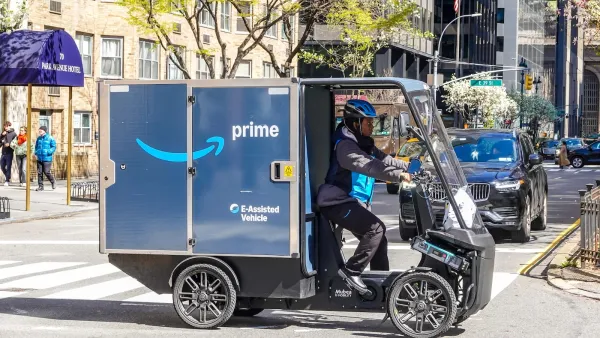
Amazon launches cargo bike deliveries in DC
The e-commerce giant is deploying micromobility devices including cargo bikes and mopeds in several global markets to reduce the need for larger trucks and vans for last-mile deliveries.
How Cities Are Tackling Delivery Emissions
As the popularity of delivery services grows, regulation and tech can address pollution challenges and limit congestion.
Minnesota Lawmakers Propose New Ridehailing, Delivery Fees
The proposed fees on transportation network companies and delivery services would help cover buddget shortfalls for transportation and transit in the state.
Mitigating the Impacts of Delivery Services
How cities can minimize the impact of delivery vehicles on air quality and congestion through effective curb management and zero-emission delivery zones.
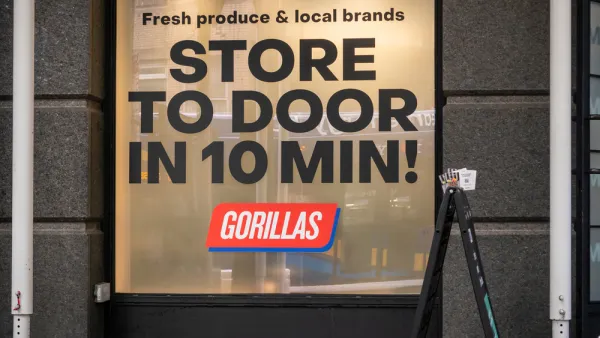
New York Councilmembers Seek Action Against Cashless ‘Fast-Delivery’ Stores
After the city instituted a ban on cashless businesses, calling the model discriminatory against poor New Yorkers who rely on cash transactions, a study found that more than 80 percent of new fast-delivery stores don’t accept cash.
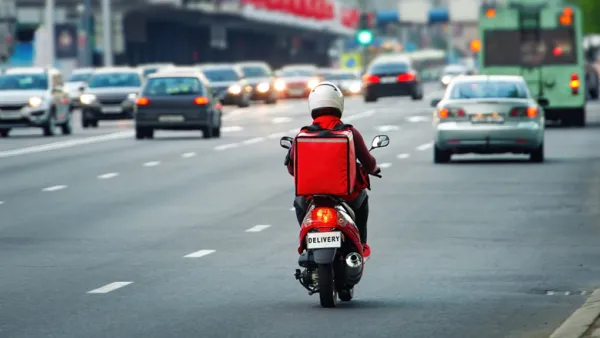
How Micromobility Can Improve Last-Mile Delivery
Facilitating the use of micromobility devices for the last mile of urban deliveries can reduce congestion, lower emissions, and take bigger vehicles off small neighborhood roads.
How Does Freight Fit Into Complete Streets?
As home delivery of everything from groceries to furniture becomes more popular, policymakers must evaluate how to keep streets safe and accessible for pedestrians and other vulnerable users.
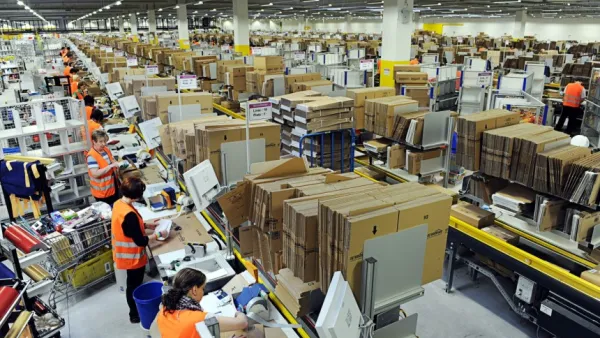
The Impact of Amazon Warehouses on Communities
Often located in low-income communities of color, Amazon's warehouses contribute to public health impacts like poor air quality, noise pollution, and traffic congestion.
Opinion: 'Instant' Delivery Services Could Decimate Street Vitality
The race to deliver goods at lightning speed has the potential to create 'dark cities' as street-level storefronts give way to closed-off warehouses only frequented by delivery workers.
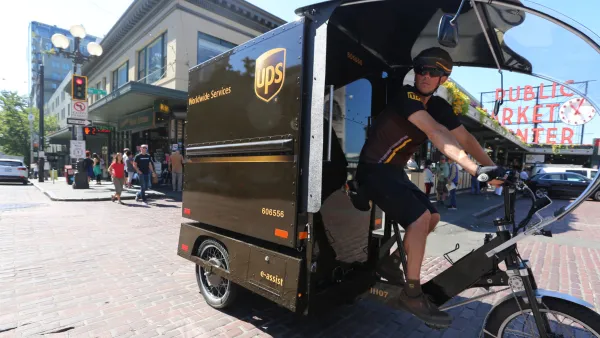
Cargo Bike Pilot Reduces Emissions by 30%
The program deployed electric cargo bikes in a small Seattle neighborhood to test the effectiveness of replacing delivery trucks with lighter vehicles in the last mile of delivery.
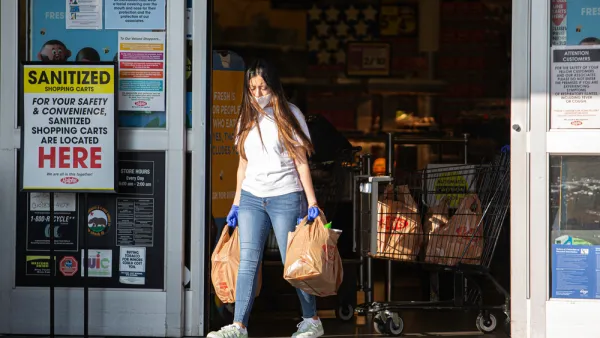
Who Really Needs 15-Minute Grocery Delivery?
New start-ups are promising ultra-fast delivery, but at a high cost to workers, the environment, and the urban fabric.
The Link Between Smart Cities, Fleet Technology, and Economics
The theoretical planning of smart cities could help make city economies stronger as purchasing becomes more straightforward.
Business Booming, Amazon Plans Big Real Estate Expansion
Amazon is moving more moving more products than ever, and the company is expanding its physical footprint to keep up with the trends.
Transportation Tech Innovation Zone Launched in Los Angeles
Urban Movement Labs (UML) is working with the office of Mayor Eric Garcetti to undertake a series of pilot programs to entice private companies to Los Angeles to develop and test innovation transportation technology.
Parking Study: Scooter Scofflaws Far Outnumbered by Car Scofflaws
The worst offenders of parking violations on the streets today aren't scooters—they're food delivery and ride-hailing drivers.
Better Maps Would Save Delivery Companies a Ton of Time and Money
A new report estimates the cost of inaccurate maps for delivery companies in the billions of dollars.
Report: Last-Mile Deliveries to Increase 78% by 2030
A new report from the World Economic Forum predicts dire consequences for congestion and carbon emissions if e-commerce delivery services proliferate unchecked.
California Clears the Way for Autonomous Delivery Vehicles
Safety driver not included.
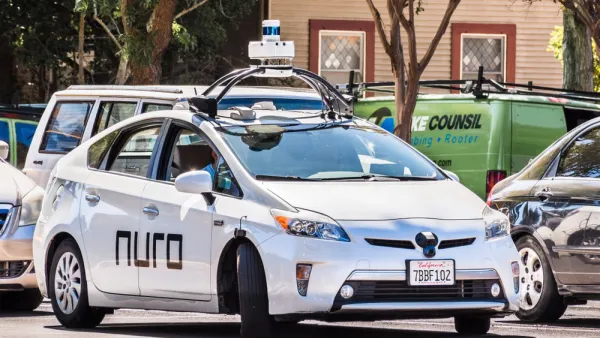
Walmart to Launch Autonomous Grocery Delivery Program in Houston
Walmart is planning on delivering groceries autonomously in Houston at some point in 2020.
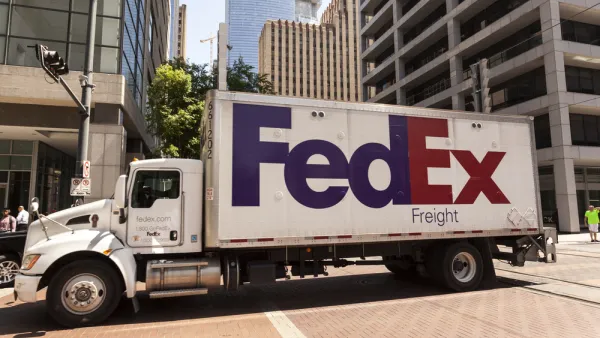
Scant Examples of Innovative Shipping Delivery Programs
Urban freight deliveries are expected to grow 40 percent by 2050, according to the 2017 Material Handling Industry’s annual report. Cities aren't yet ready to keep up with the changing times.

FREE Course: Walkable City 1: Why Walkability?
After describing his path towards focusing on walkability as the essence of good planning, Jeff Speck marches through his five principal reasons for making more walkable places.
Reinventing Malls: Planning Alchemy—Turning Gray Fields Into Gold
The course focuses on the opportunities and imperatives that shape reinvention of mall sites.

KFH Group Inc.
Greater Baltimore Committee
Eagle County Government
The Architects Foundation
University of Cincinnati Online
The Pocatello Development Authority
The Urban Renewal Agency of the City of Pocatello