A delivery drone pilot launched in Washington, D.C. in 2016 has been expanded for further deployment.


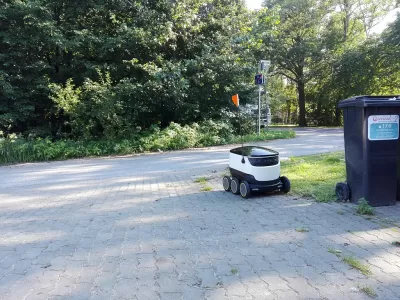
"The D.C. Council has passed legislation to permit the large-scale deployment of delivery robots across the city," reports Sara Gilgore.
According to Gilgore, the law was drafted by and for Starship Technologies, a company that has piloted the robots in D.C. since 2016.
The law removes geographic limitations, meaning Starship could seek permits to operate beyond just four ZIP codes, and enter the previously restricted central business district. It would also allow the company to have more than five robots on the streets at a time (which, as those of us familiar know, could mean more barking dogs and curious pedestrians who encounter them).
Expect to see more delivery robots on the streets and sidewalks of D.C. starting this fall. The company partners with DoorDash and Postmates, and also operated in Virginia, Idaho Wisconsin, Florida, Ohio, Utah, and several cities in California. Delivery robots are coming soon to Arizona too.
The expansion of Starship's service comes despite reports of drivers striking delivery robots with cars, as detailed in an article by Jeff Clabaugh from February 2018.
Hat tip to Chris Teale for sharing the news.
FULL STORY: More robots in D.C.? Here’s what this delivery company is planning.

More Changes Coming for Transportation
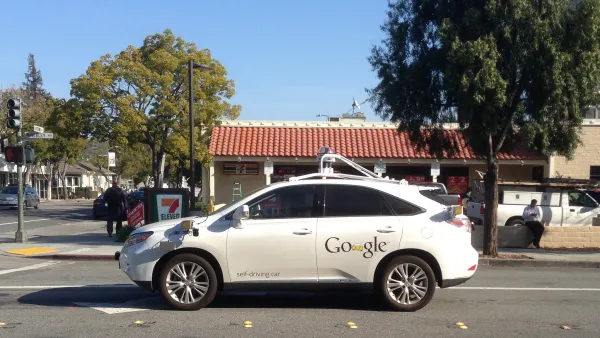
Even as cars and commuter planes look much like they did generations ago, big changes are coming for transportation, argues Timothy B. Lee in a piece for Vox.
What Would Delivery Robots Mean for Public Space?
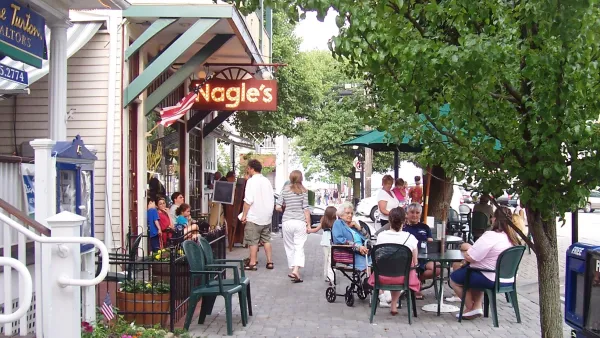
If companies like Startship and Marble get their way, sidewalks will play host to hundreds of rolling delivery bots. It's one solution to "last-mile" logistics, but are pedestrians prepared to give way?
Proposed Walmart drone pad draws backlash in North Carolina
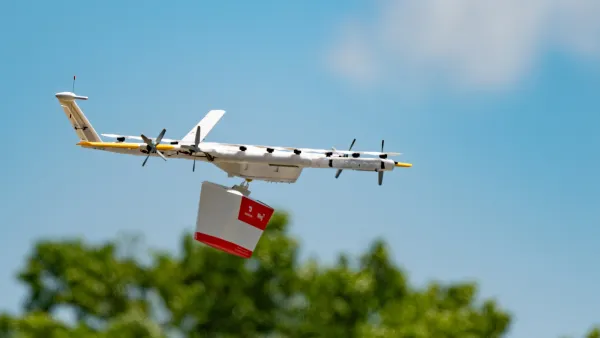
Residents opposing the Walmart delivery drone facility say they're worried about privacy and noise.

The state-sanctioned urbicide of Austin
People don’t kill cities. Freeways do.

US to reduce Colorado River water deliveries to Mexico
A new Colorado Treaty amendment reduces Mexico’s Colorado River water allocation by 250,000 acre feet.

New Jersey’s second-largest city bans standalone data centers
Jersey City will continue to allow co-location facilities, such as those meant for research institutions that store their own data.

Amtrak not solely to blame for New Jersey commuter rail's unreliability, report finds
A new study from the Garden State Initiative found that NJ Transit’s budget grew 20% across a 4 year period, but reliability declined significantly over the same period.

EPA erases limits on planet-warming pollution from power plants
Under Monday’s plan, power plants would still have some limits on how much mercury, arsenic and other contaminants they can emit.

Phoenix announces new on-demand transit service, more frequent RAPID buses
Both new services will launch in October, and are part of Phoenix's Project Effective Access Solutions for Easing Congestion.

FREE Course: Walkable City 1: Why Walkability?
After describing his path towards focusing on walkability as the essence of good planning, Jeff Speck marches through his five principal reasons for making more walkable places.
Reinventing Malls: Planning Alchemy—Turning Gray Fields Into Gold
The course focuses on the opportunities and imperatives that shape reinvention of mall sites.


Eagle County Government
Harvard University Graduate School of Design
Nashville Planning Department
The Architects Foundation
University of Cincinnati Online
The Pocatello Development Authority
The Urban Renewal Agency of the City of Pocatello
Journal of the American Planning Association