As the popularity of delivery services grows, regulation and tech can address pollution challenges and limit congestion.


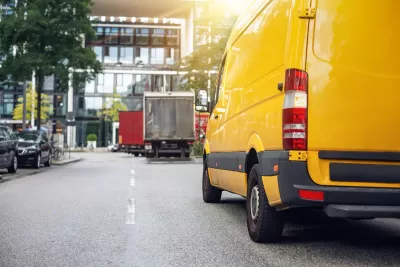
An article by Ysabelle Kempe in Smart Cities Dive highlights the efforts of eight cities and one county to reduce emissions from delivery services as part of a zero-emissions delivery challenge launched by Climate Mayors, C40, and the Los Angeles Cleantech Incubator with funding from Wells Fargo.
According to the National League of Cities, demand for delivery services could drive up emissions by 32 percent, prompting cities to assess ways to limit pollution, which often disproportionately affects low-income communities near distribution centers.
In Santa Monica, California, only clean delivery vehicles can enter a ‘zero-emissions delivery zone’ in the city’s center. New York City wants to move more freight to its rivers to reduce traffic on local roads, while “Washington, D.C., plans to leverage the support of the cohort to create a delivery microhub that supports more sustainable last-mile delivery modes, such as e-cargo bikes.” Other strategies include deliveries at off-peak hours and stricter curb management regulations.
As Kempe explains, “Through the zero-emissions delivery challenge, cities will identify innovative startup and corporate solutions to try. On top of getting access to funding for select startup solutions, participating cities will receive technical support, data analysis, peer-to-peer learnings and meetings with existing private sector delivery companies.”
FULL STORY: Delivery has a pollution problem. These cities are working to address it.

EPA Plans “Largest Deregulatory Action” in History
The agency plans to repeal a key 2009 rule that underpins the government’s authority to regulate greenhouse gas emissions.
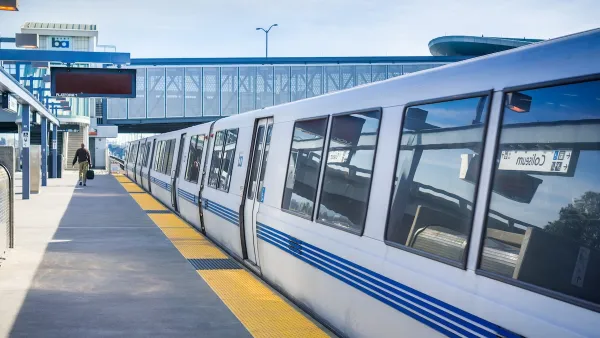
NRDC Releases State Transportation Scorecard
The Getting Transportation Right report highlights which states are making the most progress on reducing transportation emissions and improving access to clean transportation options.
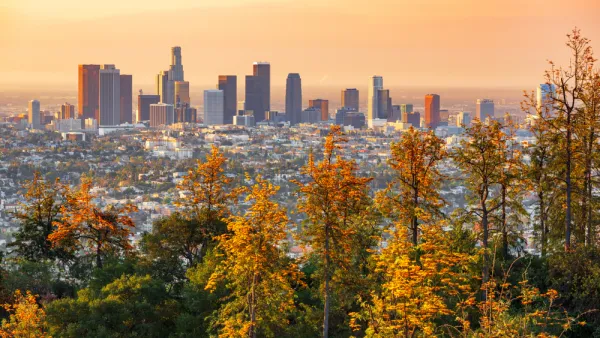
LA’s Trees Absorb More Carbon Than Expected, But Can’t Do It Alone
A USC study finds that Los Angeles’ urban trees absorb more carbon than expected, but while they provide crucial environmental benefits, they cannot replace the urgent need for systemic emissions reductions.

Planetizen Federal Action Tracker
A weekly monitor of how Trump’s orders and actions are impacting planners and planning in America.

The state-sanctioned urbicide of Austin
People don’t kill cities. Freeways do.

US to reduce Colorado River water deliveries to Mexico
A new Colorado Treaty amendment reduces Mexico’s Colorado River water allocation by 250,000 acre feet.

5 New England states march closer to 800 megawatt wind energy project
Securing federal approval for the project may be complicated under the Trump administration, which has historically been hostile towards domestic wind power.

Baltimore to break ground on $50 million Transit Priority Project
The project will bring faster bus trips, safer streets and better bike connections to Baltimore.

Airbnb launches $250 million 'last-dollar financing' housing accelerator, makes first investment in Austin
The company will put $6.4 million towards affordable housing development in Texas’ capital.

FREE Course: Walkable City 1: Why Walkability?
After describing his path towards focusing on walkability as the essence of good planning, Jeff Speck marches through his five principal reasons for making more walkable places.
Reinventing Malls: Planning Alchemy—Turning Gray Fields Into Gold
The course focuses on the opportunities and imperatives that shape reinvention of mall sites.

Eagle County Government
Harvard University Graduate School of Design
Nashville Planning Department
The Architects Foundation
University of Cincinnati Online
The Pocatello Development Authority
The Urban Renewal Agency of the City of Pocatello
Journal of the American Planning Association