Before a new bridge went in over Interstate 30, pedestrians had to traverse a dangerous roadway or use a nearby vehicle bridge that lacked a sidewalk.


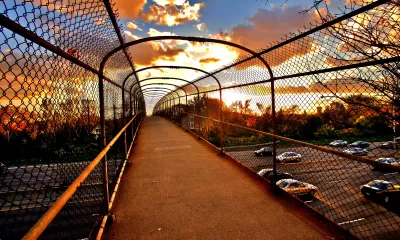
Nataly Keomoungkhoun takes a closer look at a new pedestrian bridge in Dallas spanning Interstate 30. It is part of the Texas Department of Transportation’s I-30/US 80 Project.
"[Texas Department of Transportation] data shows that on an average day in April 2016, about 164 people a day crossed the nearby St. Francis Avenue bridge, which has no true sidewalk," says Keomoungkhoun.
TxDOT advocated for the new bridge after a number of pedestrians were killed or injured trying to cross the interstate. In addition, rebuilding the St. Francis Avenue bridge to accommodate pedestrians would have been cost prohibitive.
Although pedestrians are using the bridge to cross the interstate, not everyone agrees it was the best plan. Some business owners in the area objected to the project arguing that it was a waste of money and would affect business operations.
FULL STORY: Why was a pedestrian bridge built over I-30 East? Curious Texas takes a walk

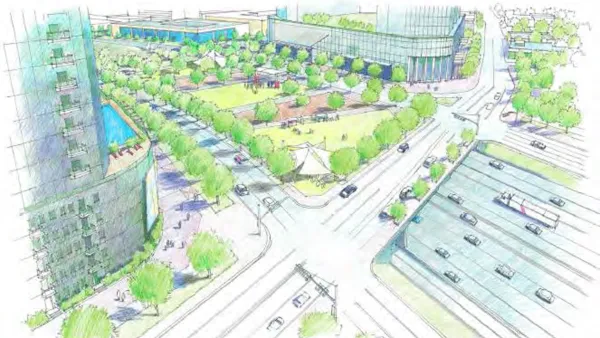
TxDOT Promises to Reverse Some of the Damage Caused by Urban Freeways in Dallas
The Texas Department of Transportation (TxDOT) is in the early stages of planning for two projects that could leverage plans to rebuild two freeways in the city with plan to reconnect the neighborhoods they severed.
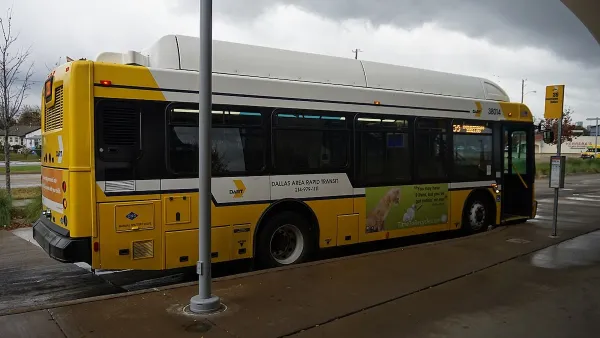
Dallas to Make Accessibility Improvements Near Bus Stops
The city approved over $30 million in contracts to fix broken sidewalks and add curb ramps near DART stations.
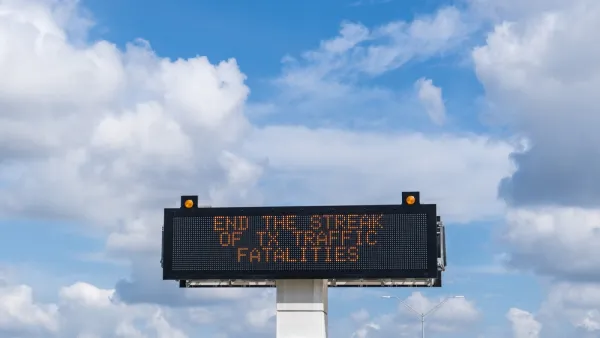
Texas Road Safety Messaging Blames Pedestrians, Ignores Structural Flaws
Critics of the state’s ‘Be Safe. Drive Smart.’ campaign say the messaging puts the onus on pedestrians and cyclists while failing to address the lack of robust pedestrian and bike infrastructure in many of its cities.

The state-sanctioned urbicide of Austin
People don’t kill cities. Freeways do.

US to reduce Colorado River water deliveries to Mexico
A new Colorado Treaty amendment reduces Mexico’s Colorado River water allocation by 250,000 acre feet.

New Jersey’s second-largest city bans standalone data centers
Jersey City will continue to allow co-location facilities, such as those meant for research institutions that store their own data.

Amtrak not solely to blame for New Jersey commuter rail's unreliability, report finds
A new study from the Garden State Initiative found that NJ Transit’s budget grew 20% across a 4 year period, but reliability declined significantly over the same period.

EPA erases limits on planet-warming pollution from power plants
Under Monday’s plan, power plants would still have some limits on how much mercury, arsenic and other contaminants they can emit.

Phoenix announces new on-demand transit service, more frequent RAPID buses
Both new services will launch in October, and are part of Phoenix's Project Effective Access Solutions for Easing Congestion.

FREE Course: Walkable City 1: Why Walkability?
After describing his path towards focusing on walkability as the essence of good planning, Jeff Speck marches through his five principal reasons for making more walkable places.
Reinventing Malls: Planning Alchemy—Turning Gray Fields Into Gold
The course focuses on the opportunities and imperatives that shape reinvention of mall sites.

Eagle County Government
Harvard University Graduate School of Design
Nashville Planning Department
The Architects Foundation
University of Cincinnati Online
The Pocatello Development Authority
The Urban Renewal Agency of the City of Pocatello
Journal of the American Planning Association