Thousands of streetlight sensors are collecting a trove of data—from traffic counts to humidity levels—and advocacy groups say the city needs to be more transparent about how the data is being used and who has access to it.


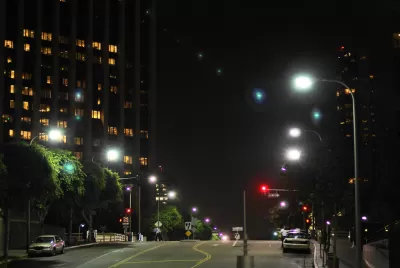
"A watchdog group is reportedly suing the City of San Diego over its Smart Streetlights Program, according to The San Diego Union-Tribune and others," reports Katie Pyzyk. The streetlights are part of a program to replace high-energy lights with more efficient LED lights.
The 4,200 intelligent sensors on the streetlights are collecting data that the city says will help with parking, traffic, and public safety. But the group, San Diegans for Open Government, says the data should be made publicly available. Advocacy groups are also concerned about the sensors being used for surveillance purposes.
"And this fall, the controversy widened as reports emerged that the city gave General Electric (GE), the streetlight camera provider, unrestricted rights to the collected data. Some council members said they wanted to stop installing additional smart streetlights until they receive information about how GE might use and sell the collected data," adds Pyzyk.
FULL STORY: San Diego faces lawsuit over streetlight data collection


How the Pandemic Is Reshaping Ideas of the 'Smart City'
Accelerated investment in smart city technologies presents increased opportunity for connection and data-driven decision making, so long as cities can avoid the common pitfalls of implementation.

Unreliable Data, Contract Issues Slow San Diego's Smart Streetlights Program
A public-private partnership between the city of San Diego and GE Current to develop a smart streetlights program started in 2017 has not lived up to expectations three years and $300 million dollars later.

Curb Data Platform Expanding Reach, With Plans for More
More cities are leveraging technology to better manage one of the most confusing and congested spaces in the public realm: the curb.

Planetizen Federal Action Tracker
A weekly monitor of how Trump’s orders and actions are impacting planners and planning in America.

The state-sanctioned urbicide of Austin
People don’t kill cities. Freeways do.

US to reduce Colorado River water deliveries to Mexico
A new Colorado Treaty amendment reduces Mexico’s Colorado River water allocation by 250,000 acre feet.

5 New England states march closer to 800 megawatt wind energy project
Securing federal approval for the project may be complicated under the Trump administration, which has historically been hostile towards domestic wind power.

Baltimore to break ground on $50 million Transit Priority Project
The project will bring faster bus trips, safer streets and better bike connections to Baltimore.

Airbnb launches $250 million 'last-dollar financing' housing accelerator, makes first investment in Austin
The company will put $6.4 million towards affordable housing development in Texas’ capital.

FREE Course: Walkable City 1: Why Walkability?
After describing his path towards focusing on walkability as the essence of good planning, Jeff Speck marches through his five principal reasons for making more walkable places.
Reinventing Malls: Planning Alchemy—Turning Gray Fields Into Gold
The course focuses on the opportunities and imperatives that shape reinvention of mall sites.

Eagle County Government
Harvard University Graduate School of Design
Nashville Planning Department
The Architects Foundation
University of Cincinnati Online
The Pocatello Development Authority
The Urban Renewal Agency of the City of Pocatello
Journal of the American Planning Association