A skyscraper proposed for land formerly owned by Tribune Media has been redesigned to assuage the concerns of neighbors.


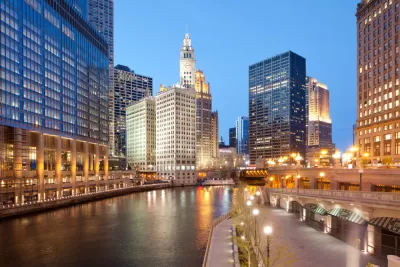
Developers Golub & Co. and CIM Group are seeking approval for a skyscraper that would become the second tallest in Chicago, trailing only the Willis Tower and climbing higher than the Trump International Hotel and Tower.
"The proposal to build the skyscraper, next to Tribune Tower takes a key step Tuesday, when the developers unveil a revised plan that addresses neighbors’ complaints," reports Ryan Ori.
"One thing that’s not expected to change is the 1,422-foot height that would make the tower, designed by Chicago-based supertall building specialists Adrian Smith and Gordon Gill, just 29 feet shorter than Willis Tower. The design features a flared top that resembles the ears of Batman’s mask."
The development is notable not just for its expected size, but also because of the real estate deal that made the project possible. "The CIM and Golub venture bought the Tribune Tower property for $240 million in 2016," explains Ori. "It was sold by broadcast company Tribune Media."
Read the full story: Developers to unveil retooled plan for Chicago’s second-tallest skyscraper, set to rise behind Tribune Tower

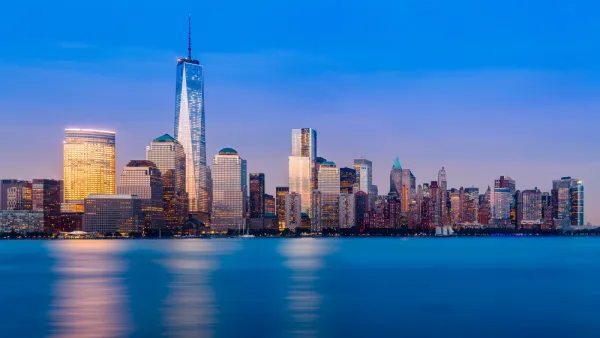
20 Years After 9/11: The 'Age of Skyscrapers' Is Nowhere Near Over
Despite predictions that the events of September 11, 2001 would be the end of skyscrapers, U.S. cities are building more tall buildings than ever.
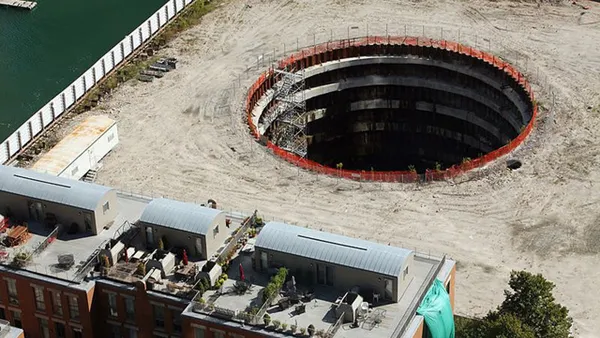
Two Skyline Changing Apartment Towers Proposed to Rise on the Site of Chicago's Failed Spire
An infamous site has new development life after developers returned to the public with a revised project proposal.

Largest Condo High-Rise Since the Recession Planned for Chicago's Michigan Ave
At 74 stories and 421 units, 1000M will be the largest condo tower built in Chicago since the Great Recession decimated the local real estate development industry.

Planetizen Federal Action Tracker
A weekly monitor of how Trump’s orders and actions are impacting planners and planning in America.

The state-sanctioned urbicide of Austin
People don’t kill cities. Freeways do.

US to reduce Colorado River water deliveries to Mexico
A new Colorado Treaty amendment reduces Mexico’s Colorado River water allocation by 250,000 acre feet.

Nation's most wind-powered state turns to coal as data centers increase energy demand
For the first time in decades, Iowa has increased its generation of coal power.

NYC cools commuters with city's first rain garden above a bus stop
New York City officials say the plants in the rain garden can absorb 16 gallons of rainwater during heavy storms.

Brightline West’s future may rely on $6 billion federal loan
The company has until Nov. 2 to make a $400 million equity investment into its proposed high-speed rail line.

FREE Course: Walkable City 1: Why Walkability?
After describing his path towards focusing on walkability as the essence of good planning, Jeff Speck marches through his five principal reasons for making more walkable places.
Reinventing Malls: Planning Alchemy—Turning Gray Fields Into Gold
The course focuses on the opportunities and imperatives that shape reinvention of mall sites.

Eagle County Government
Harvard University Graduate School of Design
Nashville Planning Department
The Architects Foundation
University of Cincinnati Online
The Pocatello Development Authority
The Urban Renewal Agency of the City of Pocatello
Journal of the American Planning Association