An infamous site has new development life after developers returned to the public with a revised project proposal.


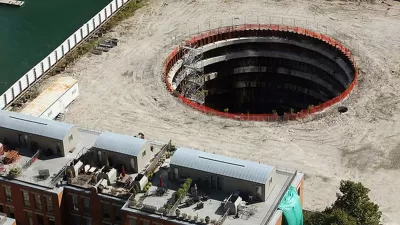
"Related Midwest hopes to start a $1 billion project to erect two skyline-changing apartment towers on the former Chicago Spire site by early next year, after revising plans to assuage neighbors," reports Ryan Ori.
The project, slated for construction at 400 Lake Shore Drive, will rise above a hole in the ground—the only sign of the failed Spire development, designed by Santiago Calatrave that ceased construction in TK.
Related Midwest's plans for the site already succumbed to local opposition once, and the revised proposal represent an attempt to win support from project opponents.
"In the revised plan for the site along Lake Michigan and the Chicago River, Related Midwest proposes towers rising 875 and 765 feet, with 1,100 combined apartments. Those heights were chopped from a previously proposed 1,100 and 850 feet," according to Ori.
Read the full story: Related Midwest eyes early 2021 start for two-tower, $1 billion project on former Chicago Spire site

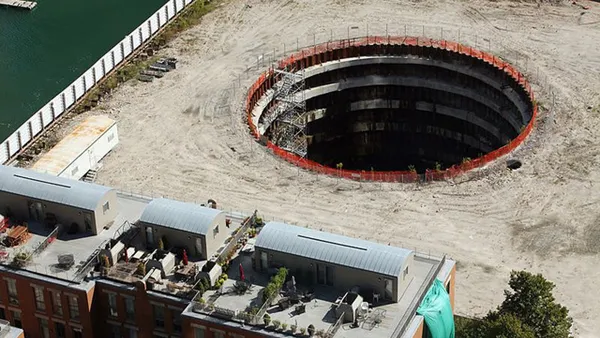
Two Skyscrapers Will Finally Rise Above the Failed Location of the Chicago Spire
Two towers, one reaching 1,100 feet and the other 850 feet, will take their place in the Chicago skyline.
Chicago's Never Built Skyscraper—Now a Hole in the Ground and a Pile of Dirt
The high-water marks showing where the last boom broke under the pressure of the Great Recession are still visible in cities all over the country. The Chicago Tribune recently checked on a particularly poignant example in Chicago.
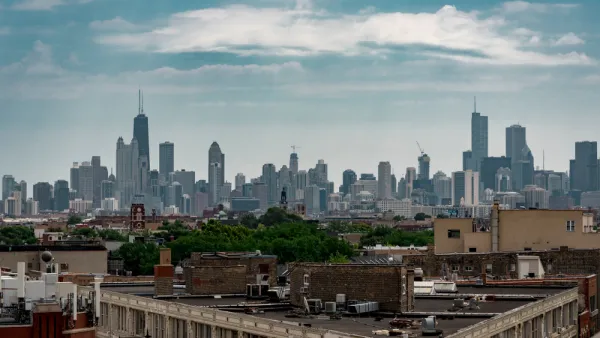
Envisioning the Chicago Skyline of the Near Future
An already impressive skyline will be gaining some very tall additions by 2023.

Planetizen Federal Action Tracker
A weekly monitor of how Trump’s orders and actions are impacting planners and planning in America.

California plans to bury El Niño’s downpour
If the state plays its cards right, it may be able to store a billion acre-feet of El Niño’s water in aquifers.

Desperate measures: Advocates weigh draining Lake Powell to fill Colorado River
Draining the reservoir could reduce evaporation losses by a couple hundred thousand acre-feet.

How a Chicago-sized wind farm beat the odds and powered on
The project spanned five presidential administrations and a standoff with a U.S. military base.

MTA gives itself 30 days to transform pit into basketball court
The site has been under construction since 2022; the city originally estimated it would finish the court in 2024.

Non-stop party: Chicago voters weigh permanent festival grounds
A stable place for bleachers, stages and drainage may streamline the setup and teardown of large events.

FREE Course: Walkable City 1: Why Walkability?
After describing his path towards focusing on walkability as the essence of good planning, Jeff Speck marches through his five principal reasons for making more walkable places.
Reinventing Malls: Planning Alchemy—Turning Gray Fields Into Gold
The course focuses on the opportunities and imperatives that shape reinvention of mall sites.

City of Rosemead
Rutgers University, Edward J. Bloustein School of Planning and Public Policy
One Hundred Miles
Hunter College, City University of New York (CUNY)
The Architects Foundation
University of Cincinnati Online
City of Cambridge
Montrose County
The Pocatello Development Authority