Despite efforts by federal regulators to curtail painted crosswalks, Cincinnati is moving forward with a unique program to paint murals on streets to slow traffic.


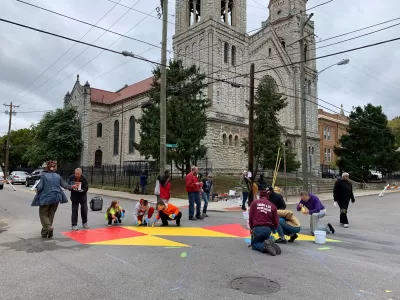
"Cincinnati launched a program last week, Paint the Streets, which allows citizen groups to paint neighborhood street murals intended to calm traffic," reports Katie Pyzyk.
The Paint the Streets program is intended to improve pedestrian safety as part of the city's Vision Zero efforts, but it features an important distinction from other programs, according to Pyzyk. "Cincinnati's program is a bit different from those in some other cities because it keeps the pavement art out of crosswalks, an area where many other cities have focused their efforts."
As noted by Pyzyk, the Paint the Streets program emerges at a controversial time for projects that add colorful treatments to streets in the name of traffic safety, after the Federal Highway Administration's (FHWA)recent efforts to curtail rainbow crosswalks in cities like Ames, Iowa.
Cincinnati isn't waiting to hear what the FHWA has to say about its programs, and painted its first mural in October.
FULL STORY: Cincinnati wants to calm traffic with street mural program

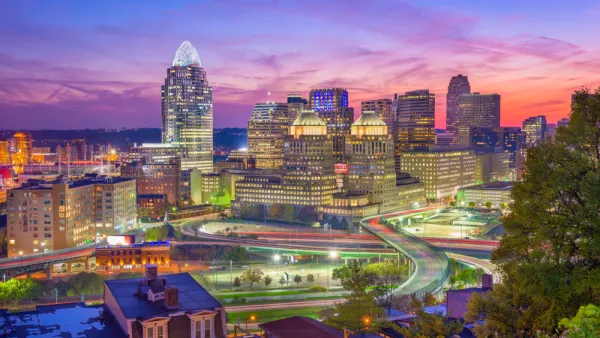
Cincinnati Gets Serious About Pedestrian Safety
A new in-house team dedicated to pedestrian safety at Cincinnati City Hall and a new complete streets ordinance are some of the changes underway in Cincinnati.
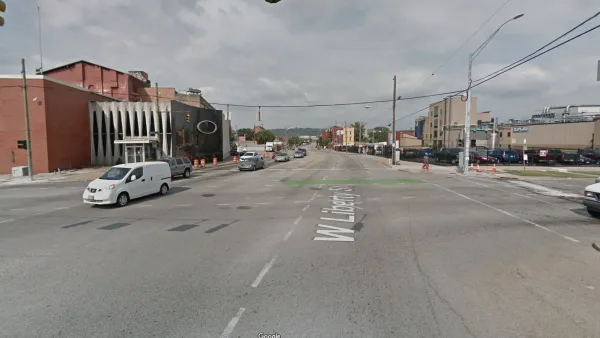
Cincinnati To Consider $1 Million Traffic Calming Program
A proposal before Cincinnati's city council would boost traffic calming initiatives and use innovative technology to slow traffic on some of the city's most dangerous streets.
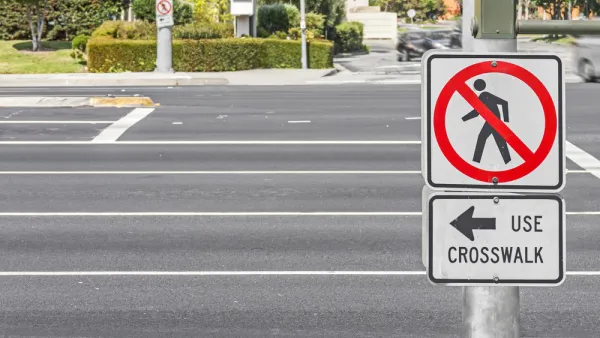
Where Pedestrians Feel Invisible to Drivers
A call for more advocacy by citizens and more action cities in the name of cautious driving and pedestrian safety.

The state-sanctioned urbicide of Austin
People don’t kill cities. Freeways do.

US to reduce Colorado River water deliveries to Mexico
A new Colorado Treaty amendment reduces Mexico’s Colorado River water allocation by 250,000 acre feet.

New Jersey’s second-largest city bans standalone data centers
Jersey City will continue to allow co-location facilities, such as those meant for research institutions that store their own data.

Amtrak not solely to blame for New Jersey commuter rail's unreliability, report finds
A new study from the Garden State Initiative found that NJ Transit’s budget grew 20% across a 4 year period, but reliability declined significantly over the same period.

EPA erases limits on planet-warming pollution from power plants
Under Monday’s plan, power plants would still have some limits on how much mercury, arsenic and other contaminants they can emit.

Phoenix announces new on-demand transit service, more frequent RAPID buses
Both new services will launch in October, and are part of Phoenix's Project Effective Access Solutions for Easing Congestion.

FREE Course: Walkable City 1: Why Walkability?
After describing his path towards focusing on walkability as the essence of good planning, Jeff Speck marches through his five principal reasons for making more walkable places.
Reinventing Malls: Planning Alchemy—Turning Gray Fields Into Gold
The course focuses on the opportunities and imperatives that shape reinvention of mall sites.

Eagle County Government
Harvard University Graduate School of Design
Nashville Planning Department
The Architects Foundation
University of Cincinnati Online
The Pocatello Development Authority
The Urban Renewal Agency of the City of Pocatello
Journal of the American Planning Association