The idea of free transit is sold as a benefit to the environment and the city's most vulnerable residents in this editorial by the Kansas City Star.


According to a Kansas City Star editorial, the Kansas City City Council's Transportation Committee this week will consider a resolution that would move the city closer to delivering free public transit service on Kansas City Area Transportation Authority buses.
The free fares are included in a larger package of "priority policy" for public transit, which would fund free transit and other programs in next year's budget. Kansas City Mayor Quinton Lucas sponsored the resolution, so the idea comes from the top of the city government.
"Finding that money will be challenging but not impossible," according to the editorial. "A good first step would be to stop giving away tax revenue to developers. Other efficiencies, including elimination of fare boxes on buses, could help. So could reclaiming sales tax dollars now subsidizing the streetcar."
A political key for the free transit program, according to the editorial: not waiting for surrounding suburban communities to get on board with the idea. The editorial cites the examples of Denver and Salt Lake City as evidence for the viability of the idea in other cities, and as a possibly emerging trend in the world of transportation planning.
Read the full story: Will Kansas City become the first major city with free bus service?

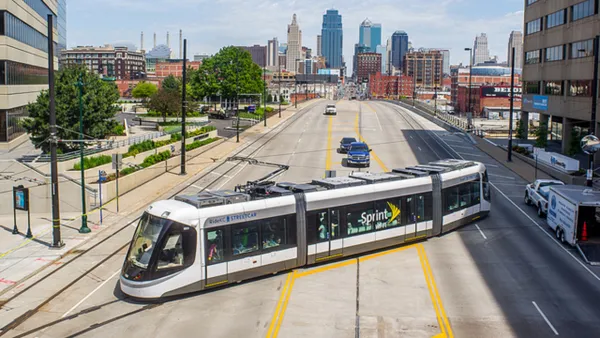
Zero Fare Transit Approved in Kansas City, Missouri
While the details of funding are undetermined, Kansas City, Missouri took a monumental step in the history of U.S. public transit yesterday.
Report: Reduced Fare Transit Programs Reach Less Than Half of Eligible Riders
Discount programs designed to help low-income transit riders have participation rates that rarely hit 50%, signaling a lack of effective outreach to eligible households.

A Brief History of Kansas City’s Microtransit
The city’s costly experiment with on-demand transit is yielding to more strategic investment.

Planetizen Federal Action Tracker
A weekly monitor of how Trump’s orders and actions are impacting planners and planning in America.

The state-sanctioned urbicide of Austin
People don’t kill cities. Freeways do.

US to reduce Colorado River water deliveries to Mexico
A new Colorado Treaty amendment reduces Mexico’s Colorado River water allocation by 250,000 acre feet.

Nation's most wind-powered state turns to coal as data centers increase energy demand
For the first time in decades, Iowa has increased its generation of coal power.

NYC cools commuters with city's first rain garden above a bus stop
New York City officials say the plants in the rain garden can absorb 16 gallons of rainwater during heavy storms.

Brightline West’s future may rely on $6 billion federal loan
The company has until Nov. 2 to make a $400 million equity investment into its proposed high-speed rail line.

FREE Course: Walkable City 1: Why Walkability?
After describing his path towards focusing on walkability as the essence of good planning, Jeff Speck marches through his five principal reasons for making more walkable places.
Reinventing Malls: Planning Alchemy—Turning Gray Fields Into Gold
The course focuses on the opportunities and imperatives that shape reinvention of mall sites.

Eagle County Government
Harvard University Graduate School of Design
Nashville Planning Department
The Architects Foundation
University of Cincinnati Online
The Pocatello Development Authority
The Urban Renewal Agency of the City of Pocatello
Journal of the American Planning Association