A renewed commitment to pedestrian friendly infrastructure is changing the face of Vancouver and making space for more density.


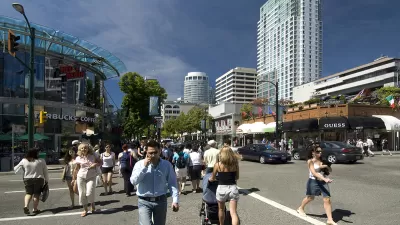
Frances Bula reports on the visible signs of pedestrian-oriented planning in the city of Vancouver.
In the past ten years, according to Bula, the city has added "100 curb bulges (corners where the sidewalk is extended into the usual crosswalk space to reduce the street-crossing time), 10 raised crosswalks, 730 intersections with countdown timers, at least three street closings to create new public hanging-out spaces, several street parklets that convert parking spaces to patios and dozens of new curb ramps, along with the requirement for wider sidewalks…"
The city has also required buildings to be setback to allow more space for sidewalks on busy commercial streets, or taking space from cars.
All of those changes have been implemented with a minimal amount of controversy in the public, according to Bula, in a city where new bike lanes can still cause controversies.
FULL STORY: Vancouver widens sidewalks in bid to adapt to city’s density

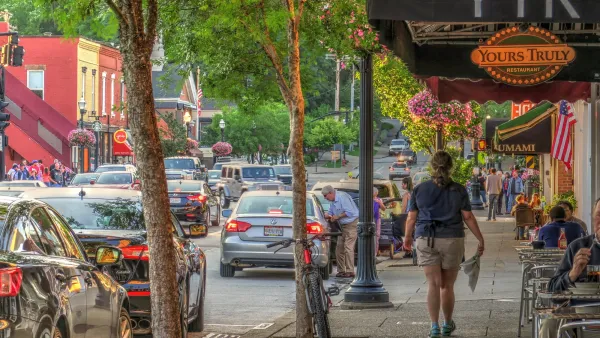
Why Walk Scores Don’t Tell the Whole Story
A popular measure of walkability only measures proximity, not safety or comfort.
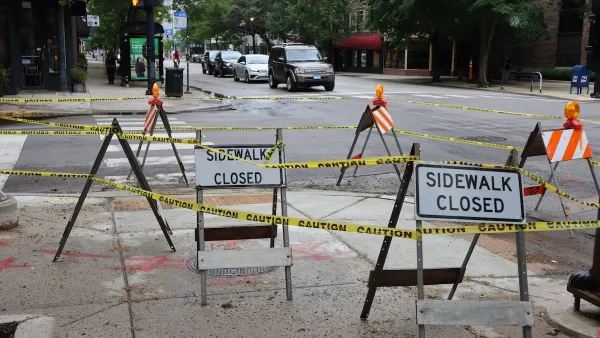
Chicago Residents Sue City Over Inaccessible Sidewalks
The suit alleges the city has failed to create a “coordinated, proactive system” for complying with ADA and ensuring accessibility on the city’s sidewalks and crosswalks.
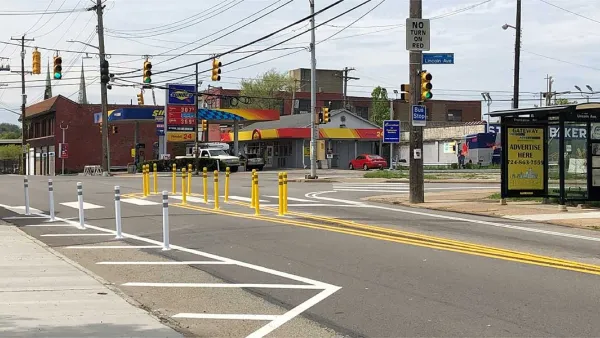
Pittsburgh Improves Road Safety With ‘Quick-Build’ Solutions
The city’s efforts to reduce crashes through traffic calming and crosswalk improvements is yielding positive results.

Planetizen Federal Action Tracker
A weekly monitor of how Trump’s orders and actions are impacting planners and planning in America.

The state-sanctioned urbicide of Austin
People don’t kill cities. Freeways do.

US to reduce Colorado River water deliveries to Mexico
A new Colorado Treaty amendment reduces Mexico’s Colorado River water allocation by 250,000 acre feet.

Colorado’s Largest Data Center Could Rise Next to Homes — Without a Public Hearing
The proposed campus would consume 11 times the power of Denver International Airport; as it has across the country, opposition mounts.

5 New England states march closer to 800 megawatt wind energy project
Securing federal approval for the project may be complicated under the Trump administration, which has historically been hostile towards domestic wind power.

Baltimore to break ground on $50 million Transit Priority Project
The project will bring faster bus trips, safer streets and better bike connections to Baltimore.

FREE Course: Walkable City 1: Why Walkability?
After describing his path towards focusing on walkability as the essence of good planning, Jeff Speck marches through his five principal reasons for making more walkable places.
Reinventing Malls: Planning Alchemy—Turning Gray Fields Into Gold
The course focuses on the opportunities and imperatives that shape reinvention of mall sites.

Eagle County Government
Harvard University Graduate School of Design
Nashville Planning Department
The Architects Foundation
University of Cincinnati Online
The Pocatello Development Authority
The Urban Renewal Agency of the City of Pocatello
Journal of the American Planning Association