More people are using the A-Line, Uber, and Lyft to travel to and from Denver International Airport (DIA). With parking numbers down, DIA has scrapped plans for two new parking garages.


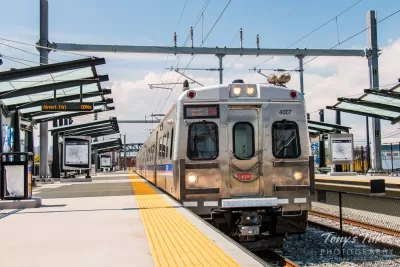
Rail and ride hailing trips to and from the Denver International Airport have increased, and fewer people are parking at the airport, reports Jon Murray. The shift has happened even as the Denver International Airport (DIA) experienced a 20 percent increase in passenger travel between 2014 and 2108.
The result has led to the nixing of plans to build two new parking garages, writes Murray. "DIA doesn’t need them, because its existing garages, close-in economy lots and the shuttle lots are seeing less use in recent years, despite the explosive passenger growth."
While parking has decreased by 2 percent since 2016, 4.7 million people still parked at DIA in 2018, notes Murray. Transportation advocates would like to see more changes to help people get to and from the airport other ways, including expanded regional bus service, discounted rates for pooled ride-hailing trips, and lower fares on the A-Line.
FULL STORY: Uber, Lyft and the A-Line train have changed the game at DIA — shelving plans for more airport parking


Ride-Hailing Prices Skyrocket as the U.S. Emerges From the Pandemic
A shortage of drivers and spiking demand are driving Uber and Lyft prices higher than ever as the companies struggle to achieve profitability.

The Post-Pandemic Future of Rideshare
With pooled services suspended through the pandemic and research showing most users prefer private rides, will shared rides continue to play a role in urban transportation?

Uber Tests Subscription Bundling of its Services
Uber is selling a package that includes its delivery service, bikes, scooters, and a discount on ride hailing for one price.

Planetizen Federal Action Tracker
A weekly monitor of how Trump’s orders and actions are impacting planners and planning in America.

The state-sanctioned urbicide of Austin
People don’t kill cities. Freeways do.

US to reduce Colorado River water deliveries to Mexico
A new Colorado Treaty amendment reduces Mexico’s Colorado River water allocation by 250,000 acre feet.

5 New England states march closer to 800 megawatt wind energy project
Securing federal approval for the project may be complicated under the Trump administration, which has historically been hostile towards domestic wind power.

Baltimore to break ground on $50 million Transit Priority Project
The project will bring faster bus trips, safer streets and better bike connections to Baltimore.

Airbnb launches $250 million 'last-dollar financing' housing accelerator, makes first investment in Austin
The company will put $6.4 million towards affordable housing development in Texas’ capital.

FREE Course: Walkable City 1: Why Walkability?
After describing his path towards focusing on walkability as the essence of good planning, Jeff Speck marches through his five principal reasons for making more walkable places.
Reinventing Malls: Planning Alchemy—Turning Gray Fields Into Gold
The course focuses on the opportunities and imperatives that shape reinvention of mall sites.

Eagle County Government
Harvard University Graduate School of Design
Nashville Planning Department
The Architects Foundation
University of Cincinnati Online
The Pocatello Development Authority
The Urban Renewal Agency of the City of Pocatello
Journal of the American Planning Association