Fargo-Moorhead, the metropolitan statistical area straddling North Dakota and Minnesota, has seen the quickest growth in land value in the Upper Midwest for the span of years between 2012 and 2017.


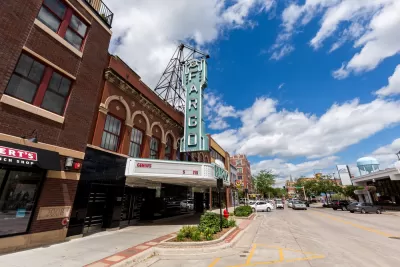
"Land values in Fargo-Moorhead rose 74 percent from 2012 to 2017, from $138,000 per acre to $241,000 per acre, outpacing rates of increase in the Twin Cities (42 percent) and other Midwestern cities — as well as Santa Barbara, California (67 percent), Austin, Texas (68 percent) and Denver, Colorado (62 percent)," reports Greta Kaul.
Kaul is sharing data found in the new "The State of the Nation's Housing" report published by the Joint Center for Housing Studies of Harvard University. The Fargo-Moorhead area is exceedingly conspicuous on this interactive map of residential land value increases created for the report.
When tracing the causes of the boom in residential land value, Kaul credits more jobs, thanks to the region's universities, the tech industry ("Unbeknownst to many outsiders, Fargo is also home to one of Microsoft’s biggest corporate campuses outside suburban Seattle"), and agriculture. Those jobs have attracted more people, and residential land values have responded.
FULL STORY: What’s behind Fargo-Moorhead’s boom?

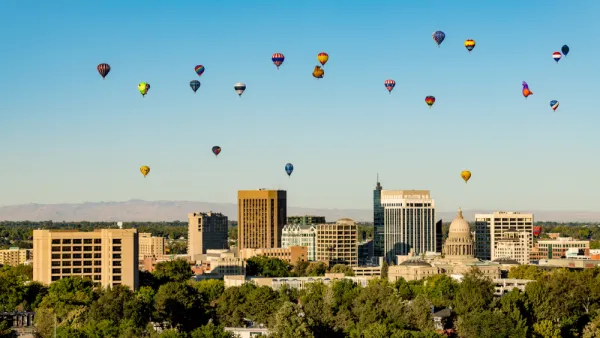
The 'Mountain Lion' Cities Rising in the U.S. West
An economist identifies the growth in nine U.S. cities—scattered from Utah to Texas, Arizona, Washington, and Idaho—as similar to the economic power generated in parts of Asia.
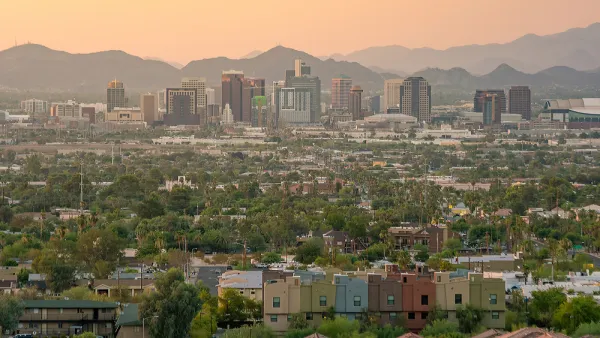
Major U.S. Metro Areas in a Transition Period, According to Census Analysis
The nation's growth slowed from 2010 and 2020, according to 2020 Census data, and demographers are still trying to figure out what population trends mean for the future of country's major metropolitan areas.

Census: Big Cities Lost Population During the Pandemic
For the first time in at least three decades, major metropolitan areas in the U.S. showed negative population growth during the peak of the COVID-19 pandemic.

Planetizen Federal Action Tracker
A weekly monitor of how Trump’s orders and actions are impacting planners and planning in America.

The state-sanctioned urbicide of Austin
People don’t kill cities. Freeways do.

US to reduce Colorado River water deliveries to Mexico
A new Colorado Treaty amendment reduces Mexico’s Colorado River water allocation by 250,000 acre feet.

Mamdani overhauls NYC's Vision Zero plan with 100 new policy goals
The overhaul aims to reduce traffic deaths and make streets safer for pedestrians, cyclists and drivers through lower speed limits, new safety infrastructure and more.

Amtrak not solely to blame for New Jersey commuter rail's unreliability, report finds
A new study from the Garden State Initiative found that NJ Transit’s budget grew 20% across a 4 year period, but reliability declined significantly over the same period.

EPA erases limits on planet-warming pollution from power plants
Under Monday’s plan, power plants would still have some limits on how much mercury, arsenic and other contaminants they can emit.

FREE Course: Walkable City 1: Why Walkability?
After describing his path towards focusing on walkability as the essence of good planning, Jeff Speck marches through his five principal reasons for making more walkable places.
Reinventing Malls: Planning Alchemy—Turning Gray Fields Into Gold
The course focuses on the opportunities and imperatives that shape reinvention of mall sites.

Eagle County Government
Harvard University Graduate School of Design
Nashville Planning Department
The Architects Foundation
University of Cincinnati Online
The Pocatello Development Authority
The Urban Renewal Agency of the City of Pocatello
Journal of the American Planning Association