A new attempt at mitigating the social impact of short-term rentals and mass tourism.


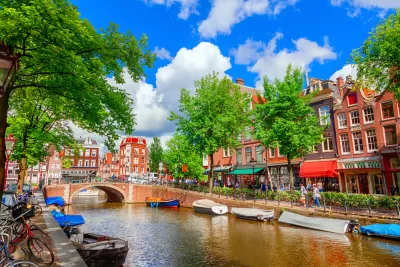
Short-term rentals have exacerbated the affordability of housing in neighborhoods all over the country, according to researchers, and have also been accused of ruining neighborhood character in many others.
Feargus O'Sullivan reports on the emergence of a new short-rental company called Fairbnb that makes an attempt at a more ethical business model.
"It’s called Fairbnb, and it’s trying to refashion the home-sharing model so that short-stay apartment rentals can enrich the amenities and housing choices of the communities that host them," according to O'Sullivan.
The company was founded in Amsterdam, and has spread its co-op membership to several European cities in recent years. A full launch if the platform is imminent:
While it is only just preparing to accept registrations from hosts, its community-building exercises have attracted more than 700 people who are ready to list their homes. As its launch date nears, Fairbnb is now going through a crowdfunding push, mainly to fast-track technology development, such as a mobile counterpart to its upcoming online site.
As for how Fairbnb aims to transform the short-term rental business, O'Sullivan also provides this explanation, and more, in the article,
Fairbnb’s model diverges from the standard model in several key ways. Like other home-share sites, it plans to levy a commission on bookings (in Fairbnb’s case, of 15 percent, which is broadly similar to Airbnb). Half of this money would be fed back into the local community where a unit is rented out.
FULL STORY: ‘Fairbnb’ Wants to Be the Unproblematic Alternative to Airbnb


New Orleans Already Rethinking its Short-Term Rental Regulations
New Orleans passed short-term rental regulations into law in October 2016, and launched a permitting process launched in April 2017. By May 2018, some city councilmembers are already proposing change.
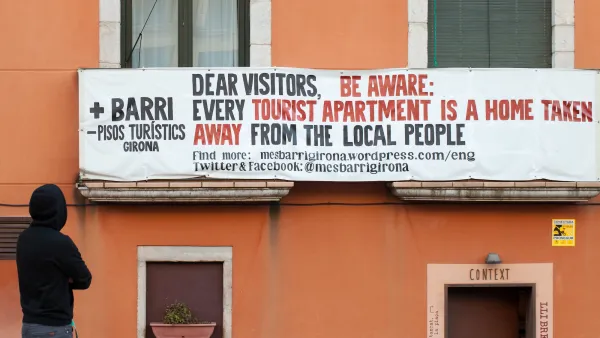
Spain Fines Airbnb $75 Million After Crackdown on Unlicensed Rentals
The government took action after residents in tourist centers protested, blaming tourist rentals for a growing housing crisis.

Spain Moves to Ban 66,000 Airbnbs
The national government is requiring the short-term rental operator to remove thousands of illegal listings from its site as part of an effort to stem a growing housing crisis.

Planetizen Federal Action Tracker
A weekly monitor of how Trump’s orders and actions are impacting planners and planning in America.

The state-sanctioned urbicide of Austin
People don’t kill cities. Freeways do.

US to reduce Colorado River water deliveries to Mexico
A new Colorado Treaty amendment reduces Mexico’s Colorado River water allocation by 250,000 acre feet.

5 New England states march closer to 800 megawatt wind energy project
Securing federal approval for the project may be complicated under the Trump administration, which has historically been hostile towards domestic wind power.

Baltimore to break ground on $50 million Transit Priority Project
The project will bring faster bus trips, safer streets and better bike connections to Baltimore.

Airbnb launches $250 million 'last-dollar financing' housing accelerator, makes first investment in Austin
The company will put $6.4 million towards affordable housing development in Texas’ capital.

FREE Course: Walkable City 1: Why Walkability?
After describing his path towards focusing on walkability as the essence of good planning, Jeff Speck marches through his five principal reasons for making more walkable places.
Reinventing Malls: Planning Alchemy—Turning Gray Fields Into Gold
The course focuses on the opportunities and imperatives that shape reinvention of mall sites.

Eagle County Government
Harvard University Graduate School of Design
Nashville Planning Department
The Architects Foundation
University of Cincinnati Online
The Pocatello Development Authority
The Urban Renewal Agency of the City of Pocatello
Journal of the American Planning Association