Northern Virginia's housing market won't follow the path of the Seattle housing market, according to Amazon officials, because they have a new growth plan.


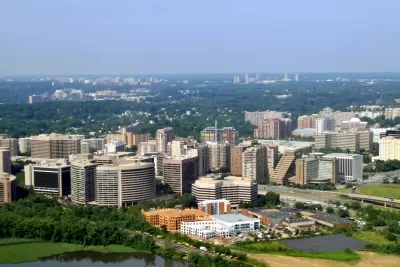
"Amazon said its second headquarters in Arlington will not aggravate housing problems as much as the company has in Seattle because it will be able to plan for growth here in a way that it couldn’t in earlier years in its home base," report Robert McCartney and Patricia Sullivan.
Jay Carney, a senior vice president with Amazon, revealed those insights in a "wide-ranging" meeting last week with Washington Post editors and reporters.
Carney was responding to a chorus of criticisms about the company's potential to "drive up housing costs and displace low- and middle-income residents," according to McCartney and Sullivan. Part of Carney's reasoning is that the company has a plan for its growth in mind, but "when Amazon was starting out in Seattle, officials didn’t know the company would undergo explosive growth and create 45,000 jobs."
The Amazon second headquarters is already, and quickly, expanding its footprint on the Crystal City area of Arlington County, Virginia. The meeting comes days after Amazon listed its first job openings in the area. "The company has leased temporary space in Crystal City and will start operations in June instead of October, as originally planned," according to the article.
In related news, Patricia Sullivan also reported in a separate article posted on the same day that thousands of documents released under a Freedom of Information Act request by the Washington Business Journal and now posted on the county’s website, revealed the details of negotiations between Amazon and Arlington County officials to bring the headquarters to Northern Virginia.
FULL STORY: Amazon says it will avoid a housing crunch with HQ2 by planning better than it did in Seattle


New Amazon HQ2 Renderings Revealed
New details of the second phase of Amazon HQ2 in Northern Virginia were released last week ahead of a planning committee hearing.

New Amazon HQ2 Renderings Reveal a Futuristic Look for Northern Virginia
Renderings for the second phase of Amazon's second headquarters in Northern Virginia grabbed a lot of attention today.
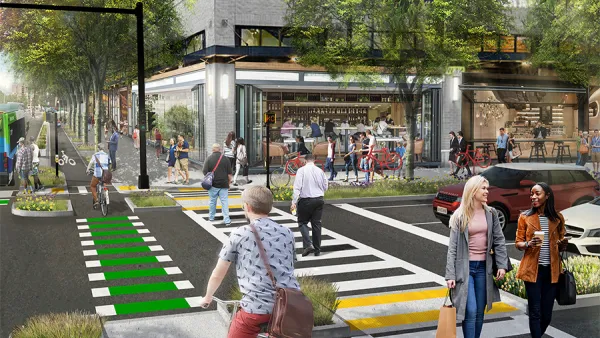
Virginia DOT's Route 1 Plans Might Upset Amazon's Vision for National Landing
The National Landing BID this week launched a "People Over Cars" awareness campaign in response to the Virginia Department of Transportation's plans for Route 1 in Northern Virginia.

Planetizen Federal Action Tracker
A weekly monitor of how Trump’s orders and actions are impacting planners and planning in America.

The state-sanctioned urbicide of Austin
People don’t kill cities. Freeways do.

US to reduce Colorado River water deliveries to Mexico
A new Colorado Treaty amendment reduces Mexico’s Colorado River water allocation by 250,000 acre feet.

5 New England states march closer to 800 megawatt wind energy project
Securing federal approval for the project may be complicated under the Trump administration, which has historically been hostile towards domestic wind power.

Baltimore to break ground on $50 million Transit Priority Project
The project will bring faster bus trips, safer streets and better bike connections to Baltimore.

Airbnb launches $250 million 'last-dollar financing' housing accelerator, makes first investment in Austin
The company will put $6.4 million towards affordable housing development in Texas’ capital.

FREE Course: Walkable City 1: Why Walkability?
After describing his path towards focusing on walkability as the essence of good planning, Jeff Speck marches through his five principal reasons for making more walkable places.
Reinventing Malls: Planning Alchemy—Turning Gray Fields Into Gold
The course focuses on the opportunities and imperatives that shape reinvention of mall sites.

Eagle County Government
Harvard University Graduate School of Design
Nashville Planning Department
The Architects Foundation
University of Cincinnati Online
The Pocatello Development Authority
The Urban Renewal Agency of the City of Pocatello
Journal of the American Planning Association