The One Central development would transform 34 acres over Metro tracks near Soldier Field.


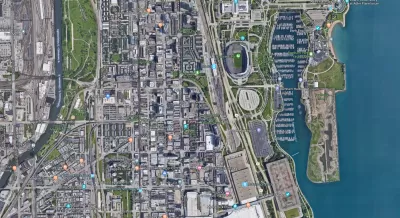
"Chicago’s skyline could extend all the way south to McCormick Place, under a multibillion-dollar development plan unveiled Wednesday that would create a row of gleaming skyscrapers atop a massive new transit center," reports Ryan Ori.
Landmark Development, owned by Wisconsin-based developer Bob Dunn, "envisions millions of square feet of high-rises constructed on a platform covering Metra tracks above the level of Lake Shore Drive. The site runs just west of Lake Shore Drive between the Field Museum and McCormick," according to Ori.
"The centerpiece of the development would be a transit center southwest of Soldier Field, across Lake Shore Drive. It would link Metra, CTA and Amtrak trains, as well as a wheeled tram route, topped by a few floors of restaurant, retail and entertainment space," adds Ori.
The article include a lot more description of the project, as well as effort to place the proposal in context of a "building boom" that has outlasted a decade, according to Ori. Lincoln Yards and The 78 are cited as other examples of mega-project to illustrate the claim about the city's ongoing boom.
FULL STORY: Skyscrapers, massive transit center could reshape area around Soldier Field

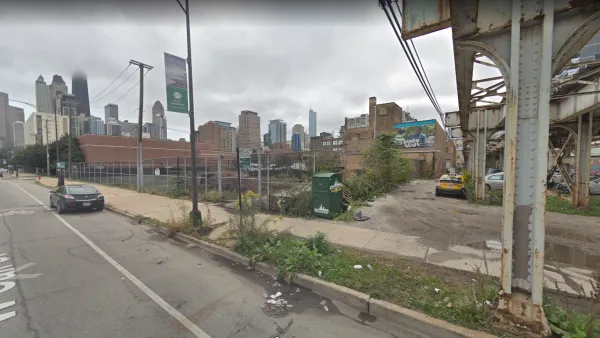
Massive Residential Development Revealed in Chicago's Near North Side
New details have emerged on a project the Chicago Tribune is calling this one of Chicago's most ambitious development proposals in decades.

Revealed: $2.2 Billion Redevelopment Plan for Philadelphia's Waterfront
The city of Philadelphia has a new, highly anticipated plan for a valuable site on the Delaware River waterfront.
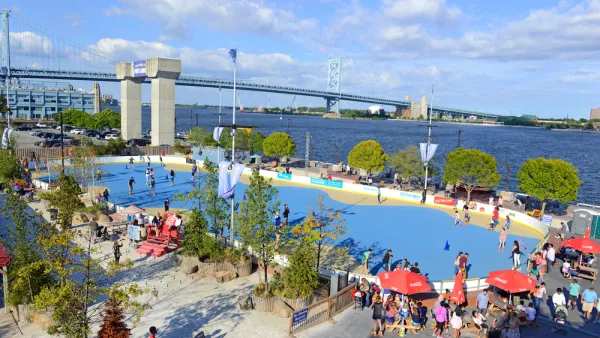
A Development Bonanza in Philadelphia
The Philadelphia 76ers are one of the real estate interests with designs on remaking the Penn's Landing site on the Delaware River in Philadelphia. But the team's vision for the waterfront reaches far beyond a single parcel.

The state-sanctioned urbicide of Austin
People don’t kill cities. Freeways do.

US to reduce Colorado River water deliveries to Mexico
A new Colorado Treaty amendment reduces Mexico’s Colorado River water allocation by 250,000 acre feet.

New Jersey’s second-largest city bans standalone data centers
Jersey City will continue to allow co-location facilities, such as those meant for research institutions that store their own data.

Amtrak not solely to blame for New Jersey commuter rail's unreliability, report finds
A new study from the Garden State Initiative found that NJ Transit’s budget grew 20% across a 4 year period, but reliability declined significantly over the same period.

EPA erases limits on planet-warming pollution from power plants
Under Monday’s plan, power plants would still have some limits on how much mercury, arsenic and other contaminants they can emit.

Phoenix announces new on-demand transit service, more frequent RAPID buses
Both new services will launch in October, and are part of Phoenix's Project Effective Access Solutions for Easing Congestion.

FREE Course: Walkable City 1: Why Walkability?
After describing his path towards focusing on walkability as the essence of good planning, Jeff Speck marches through his five principal reasons for making more walkable places.
Reinventing Malls: Planning Alchemy—Turning Gray Fields Into Gold
The course focuses on the opportunities and imperatives that shape reinvention of mall sites.

Eagle County Government
Harvard University Graduate School of Design
Nashville Planning Department
The Architects Foundation
University of Cincinnati Online
The Pocatello Development Authority
The Urban Renewal Agency of the City of Pocatello
Journal of the American Planning Association