The mayor wants to implement a series of measures to eliminate traffic fatalities and make city streets safer for pedestrians.


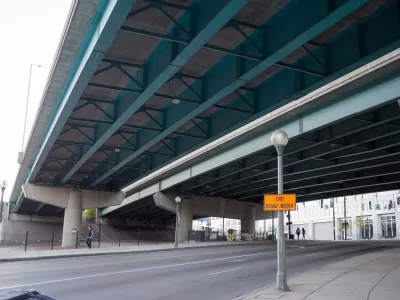
Seth Weber writes that Cincinnati is stepping up efforts to improve pedestrian safety. Mayor John Cranley wants to take a Vision Zero approach and says the city will increase traffic enforcement and fund street improvements, including curb extensions, flashing lights at crosswalks, and new crosswalks.
The city has also seen improvements with the lifting of rush-hour parking restrictions as a way to decrease road capacity and slow traffic. In addition, the mayor wants to see the city pass an ordinance allowing volunteer crossing guards to help children get to their schools safely.
Cincinnati pedestrian advocates welcome the changes but wish they had happened sooner. One of the more recent pedestrian fatalities was a hit-and-run incident in September 2018 involving a 15-year-old girl. "In order to get to her bus stop before school, Gabby [Rodriguez] had to walk across the four lanes of Harrison Avenue. Gabby had just started taking the Metro for the first time this school year, Shawna [Rodriguez] said," writes Weber.
FULL STORY: Here is What Cincinnati is Doing to Boost Pedestrian Safety


Cincinnati Gets Serious About Pedestrian Safety
A new in-house team dedicated to pedestrian safety at Cincinnati City Hall and a new complete streets ordinance are some of the changes underway in Cincinnati.
Report: Top US Cities for Pedestrian Safety
The East Coast takes the top three spots, while the South and Southwest dominate the bottom of the list.
Cincinnati To Consider $1 Million Traffic Calming Program
A proposal before Cincinnati's city council would boost traffic calming initiatives and use innovative technology to slow traffic on some of the city's most dangerous streets.

Planetizen Federal Action Tracker
A weekly monitor of how Trump’s orders and actions are impacting planners and planning in America.

The state-sanctioned urbicide of Austin
People don’t kill cities. Freeways do.

US to reduce Colorado River water deliveries to Mexico
A new Colorado Treaty amendment reduces Mexico’s Colorado River water allocation by 250,000 acre feet.

5 New England states march closer to 800 megawatt wind energy project
Securing federal approval for the project may be complicated under the Trump administration, which has historically been hostile towards domestic wind power.

Baltimore to break ground on $50 million Transit Priority Project
The project will bring faster bus trips, safer streets and better bike connections to Baltimore.

Airbnb launches $250 million 'last-dollar financing' housing accelerator, makes first investment in Austin
The company will put $6.4 million towards affordable housing development in Texas’ capital.

FREE Course: Walkable City 1: Why Walkability?
After describing his path towards focusing on walkability as the essence of good planning, Jeff Speck marches through his five principal reasons for making more walkable places.
Reinventing Malls: Planning Alchemy—Turning Gray Fields Into Gold
The course focuses on the opportunities and imperatives that shape reinvention of mall sites.

.jpeg)
Eagle County Government
Harvard University Graduate School of Design
Nashville Planning Department
The Architects Foundation
University of Cincinnati Online
The Pocatello Development Authority
The Urban Renewal Agency of the City of Pocatello
Journal of the American Planning Association