Democratic Gov. Ralph Northam announced he is backing Republican legislation to toll all lanes of Interstate 81 to fund $2.2 billion in improvements along the 325-mile corridor, heavily used by trucks, from West Virginia to Tennessee.


"The plan, to be introduced in the Virginia General Assembly session that starts Wednesday [Jan. 9], would establish tolls as a source of revenue for 'critical improvements' identified in a state study [pdf] of the route that...suffers from major safety and reliability problems," reports Luz Lazo for The Washington Post.
With the proposal, Northam and lawmakers representing the western part of the state are choosing to push a toll system over establishing a regional gas tax [and sales and use tax] to pay for the I-81 improvements and in doing so declaring broader support for expanding the state’s toll network.
"It’s time we take decisive action to enhance the safety and improve the reliability of this key corridor,” Northam said in announcing the proposal, which he said would be introduced by state Sens. Mark D. Obenshain (R-Harrisonburg) and Charles W. Carrico Sr. (R-Grayson) and Dels. R. Steven Landes (R-Augusta) and Terry L. Austin (R-Botetourt).
Variable tolls, but not congestion nor dynamically priced
"Electronic toll gantries are expected to be set every 40 to 60 miles or so along I-81, with regular rates set at up to 11 cents a mile for cars and 17 cents a mile for trucks," reports Max Smith for WTOP News.
That would equate to about $55 for trucks to travel the length of I-81 during daylight hours. Tolls would be discounted overnight to encourage truck drivers and others to travel at less-busy times, but the tolls would be a fixed price, unlike the variable cost of lanes on interstates 66, 95 and 495.
Frequent travelers who are Virginia residents could significantly reduce their I-81 toll charges by opting to purchase an unlimited use pass, potentially $30 per year.
Smith adds that high occupancy toll (HOT) lanes and truck-only toll lanes, as Rhode Island is doing, were considered as well. Truck traffic is expected to outpace growth of passenger vehicle traffic on the corridor.
What about authorization from Federal Highway Administration?
Last month, Oregon transportation officials submitted an application to the Federal Highway Authority (FHWA) under the Value Pricing Pilot Program to toll all lanes on stretches of two Portland interstate highways. This correspondent was unable to determine if the I-81 Corridor Improvement Plan requires the Virginia Department of Transportation to apply for an exception to the Title 23 of the United States Code (Highways) general prohibition on the imposition of tolls on Federal-aid highways.
According to FHWA's Center for Innovative Finance Support, the Interstate System Reconstruction and Rehabilitation Pilot Program "allows up to three existing Interstate facilities (highway, bridge, or tunnel) to be tolled to fund needed reconstruction or rehabilitation on Interstate corridors that could not otherwise be adequately maintained or functionally improved without the collection of tolls."
Other revenue options not ruled out
“Everything is on the table right now," Gov. Northam told Jeff Sturgeon of The Roanoke Times on Tuesday. "I would say the consensus is to go more with tolls than taxes,” the governor said.
-
Big Changes Proposed for I-81 in Virginia, October 28, 2018
-
Advocates and Opponents Struggle Over Interstate Tolling, April 7, 2014
Hat tip to IBTTA Smart Brief.
FULL STORY: Next on Virginia’s toll network: Interstate 81

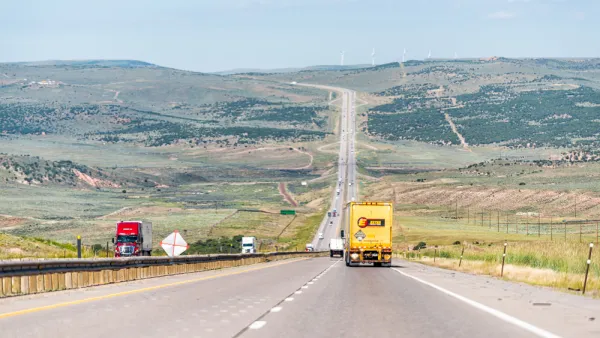
Wyoming Legislation Would Add Tolls to Interstate 80
A new bill would grant the Wyoming Transportation Commission the authority to impose tolls on all lanes of over 400 miles of I-80 to fund infrastructure needs on the roadway.
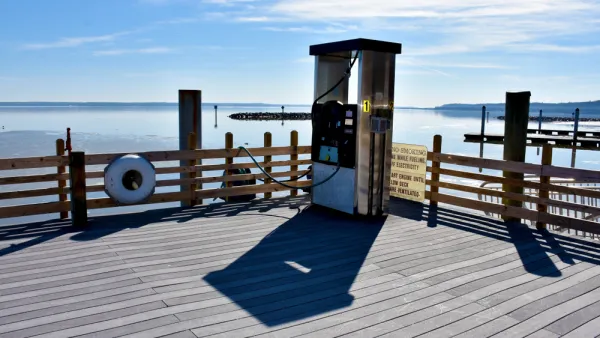
Virginia Legislators Agree to Fuel Taxes, not Tolls, to Fund I-81 Improvements
Motorists who purchase gas along the I-81 corridor will pay an additional 2.1 percent gas tax, about seven cents a gallon. Trucks, which disproportionately use the corridor, will see increases to registration fees and road and diesel taxes.
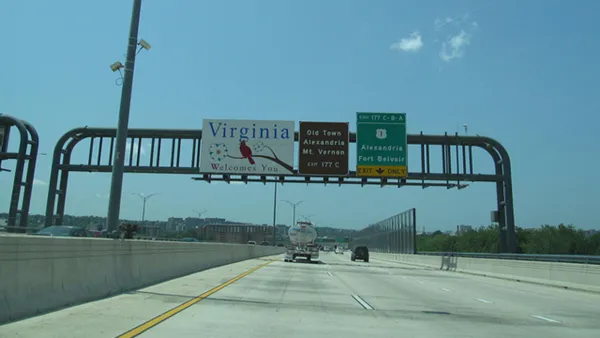
Popularity of Express Lanes Spreads Beyond Virginia
Dan Vock of Governing takes a broad look at congestion pricing, beginning with the success of Virginia's 66 Express Lanes, the ones where tolls initially topped $40. Notwithstanding complaints, managed lanes are spreading, but challenges remain.

Planetizen Federal Action Tracker
A weekly monitor of how Trump’s orders and actions are impacting planners and planning in America.

The state-sanctioned urbicide of Austin
People don’t kill cities. Freeways do.

US to reduce Colorado River water deliveries to Mexico
A new Colorado Treaty amendment reduces Mexico’s Colorado River water allocation by 250,000 acre feet.

Baltimore to break ground on $50 million Transit Priority Project
The project will bring faster bus trips, safer streets and better bike connections to Baltimore.

Airbnb launches $250 million 'last-dollar financing' housing accelerator, makes first investment in Austin
The company will put $6.4 million towards affordable housing development in Texas’ capital.

Guerilla urbanists are building DIY bus stop benches in Chicago
A before-and-after of one of the bus stops with a new bench. The new benches are not officially sanctioned or permitted, but the residents who placed them hope they will be the start of a network of DIY benches across the city.

FREE Course: Walkable City 1: Why Walkability?
After describing his path towards focusing on walkability as the essence of good planning, Jeff Speck marches through his five principal reasons for making more walkable places.
Reinventing Malls: Planning Alchemy—Turning Gray Fields Into Gold
The course focuses on the opportunities and imperatives that shape reinvention of mall sites.

Eagle County Government
Harvard University Graduate School of Design
Nashville Planning Department
The Architects Foundation
University of Cincinnati Online
The Pocatello Development Authority
The Urban Renewal Agency of the City of Pocatello
Journal of the American Planning Association