The Swedish city of Kiruna will have to move after one of the world's largest iron mines opens a crack in the earth that is spreading straight for the city.


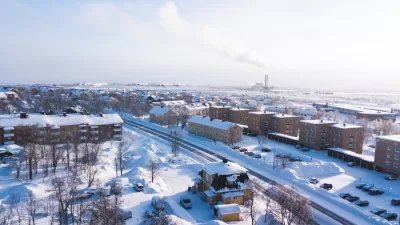
Chris Michael provides a dispatch from Sweden, where the Kiirunavaara mine is changing the fate of a city, again.
The mine, Kiirunavaara, is the reason this Swedish town of roughly 20,000 people deep in northern Lapland exists at all. It is one the world’s largest underground iron ore mines, and it dominates both economically and visually, the smokestacks sending up twin plumes of black smoke from the denuded mountain like a kind of Arctic Mordor.
Over a century, the miners have tunnelled so deep into the earth – 2km at some points – that they have now literally undermined the town. The caverns are causing subsidence, weakening the structure of the buildings, and opening a great crack in the earth itself, which grows wider and several metres closer to the city every year. Kiruna is about to be swallowed by the very mine that gave it life.
Michael provides details on how the planners tasked with moving the people who live in the condemned section of the city have managed a relocation project of unprecedented size.
Read the full story: 'Will I have existed?' The unprecedented plan to move an Arctic city

Reuters: Tesla showed European regulators 'misleading' safety data to get FSD approved
A Reuters investigation showed that Tesla inflated safety claims in its self-reported data to Dutch and Swedish regulators.
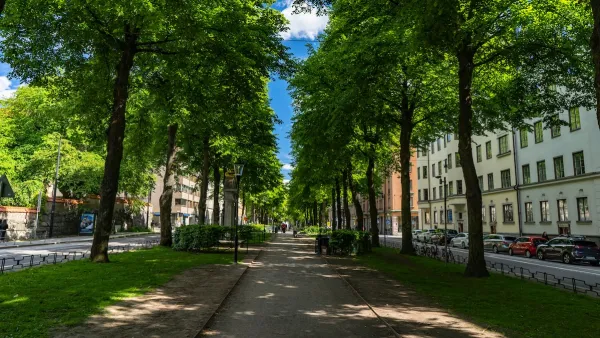
‘Stockholm Tree Pit’ Saves Dying Urban Trees
After noticing that two-thirds of its trees were dying, Stockholm developed a new planting method to protect trees surrounded by concrete.
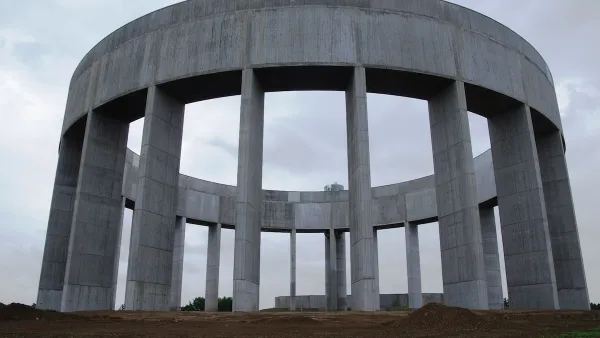
Innovative Water Towers Popping Up in Sweden
Swedish cities are encouraging designers to dramatically reimagine the humble water tower.

Planetizen Federal Action Tracker
A weekly monitor of how Trump’s orders and actions are impacting planners and planning in America.

California plans to bury El Niño’s downpour
If the state plays its cards right, it may be able to store a billion acre-feet of El Niño’s water in aquifers.

Desperate measures: Advocates weigh draining Lake Powell to fill Colorado River
Draining the reservoir could reduce evaporation losses by a couple hundred thousand acre-feet.

Housing is the top priority of Seattle’s sole new councilmember
Jenks campaigned on building 1,000 new units of affordable housing.

New tax cuts may slash $1.5 billion in funding for Miami transit, public parks
Amendment 3 will save Miami-Dade homeowners $2,700 in 2028.

Arizona, Wisconsin, Pennsylvania hope to finally advance climate goals post-midterms
The three states have spent years under Republican or divided control.

FREE Course: Walkable City 1: Why Walkability?
After describing his path towards focusing on walkability as the essence of good planning, Jeff Speck marches through his five principal reasons for making more walkable places.
Reinventing Malls: Planning Alchemy—Turning Gray Fields Into Gold
The course focuses on the opportunities and imperatives that shape reinvention of mall sites.

City of Rosemead
Rutgers University, Edward J. Bloustein School of Planning and Public Policy
One Hundred Miles
University of Michigan School for Environment and Sustainability (SEAS)
Hunter College, City University of New York (CUNY)
The Architects Foundation
City of Cambridge
Montrose County
The Pocatello Development Authority