Maryland's new FLASH bus rapid transit line will cost $31 million, with $10 million in funding from a U.S. Department of Transportation TIGER grant. It's also the first bus rapid transit line in the state.


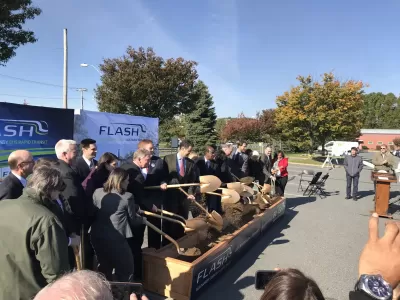
"Maryland officials held a groundbreaking ceremony Thursday to mark the start of construction for the state's first Bus Rapid Transit (BRT) line," reports Alessia Grunberger.
The new BRT line, called the FLASH, will run for 14 miles along U.S. 29, with 11 stations between Burtonsville and Silver Spring.
"Montgomery County officials say that each bus – which can carry as many as 90 riders – will operate more frequently and make fewer stops than existing Ride On buses. FLASH will run every seven-and-a-half minutes during rush hours and every 15 minutes during off-peak hours," according to Grunberger.
According to the FLASH website, additional routes are planned for Maryland Route 355 and Route 586.
FULL STORY: Maryland's First Bus Rapid Transit Line Breaks Ground

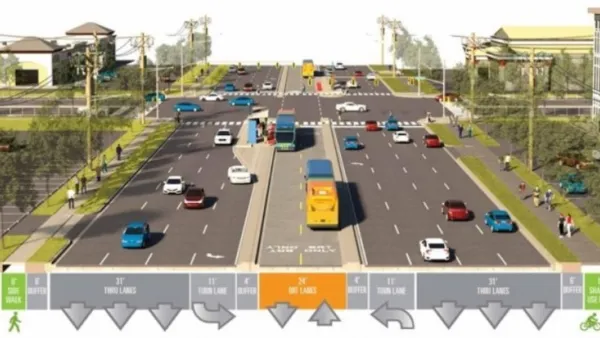
'Flash' Bus Rapid Transit Coming to Maryland
The "Flash" bus rapid transit system proposed in Montgomery County, Maryland took a crucial step forward at the end of July.
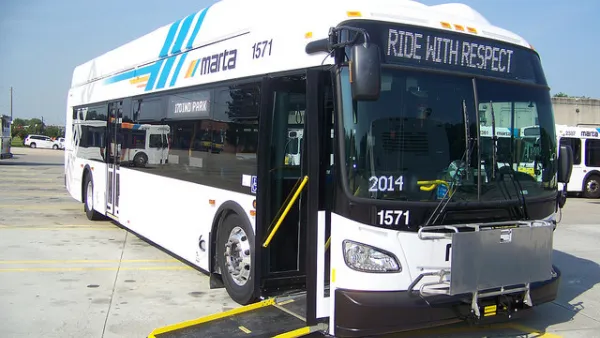
Georgia' First Bus Rapid Transit Route Wins Federal Funding
The Summerhill Bus Rapid Transit Project—on track to become the first bus rapid transit line in the state of Georgia—received a critical bath of funding from the federal government this week in the form of a $12.6 million TIGER grant.
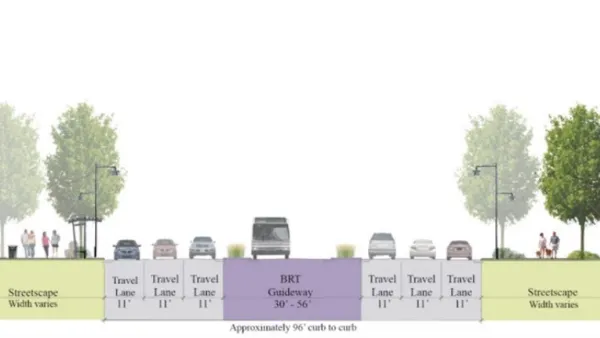
Fairfax County Makes Space for Bus Rapid Transit
A recent decision by the Fairfax, Virginia County Board of Supervisors will ensure that any widening of Route 7 will be reserved for bus rapid transit (BRT).

Planetizen Federal Action Tracker
A weekly monitor of how Trump’s orders and actions are impacting planners and planning in America.

The state-sanctioned urbicide of Austin
People don’t kill cities. Freeways do.

US to reduce Colorado River water deliveries to Mexico
A new Colorado Treaty amendment reduces Mexico’s Colorado River water allocation by 250,000 acre feet.

Guerilla urbanists are building DIY bus stop benches in Chicago
A before-and-after of one of the bus stops with a new bench. The new benches are not officially sanctioned or permitted, but the residents who placed them hope they will be the start of a network of DIY benches across the city.

Mamdani overhauls NYC's Vision Zero plan with 100 new policy goals
The overhaul aims to reduce traffic deaths and make streets safer for pedestrians, cyclists and drivers through lower speed limits, new safety infrastructure and more.

Amtrak not solely to blame for New Jersey commuter rail's unreliability, report finds
A new study from the Garden State Initiative found that NJ Transit’s budget grew 20% across a 4 year period, but reliability declined significantly over the same period.

FREE Course: Walkable City 1: Why Walkability?
After describing his path towards focusing on walkability as the essence of good planning, Jeff Speck marches through his five principal reasons for making more walkable places.
Reinventing Malls: Planning Alchemy—Turning Gray Fields Into Gold
The course focuses on the opportunities and imperatives that shape reinvention of mall sites.

Eagle County Government
Harvard University Graduate School of Design
Nashville Planning Department
The Architects Foundation
University of Cincinnati Online
The Pocatello Development Authority
The Urban Renewal Agency of the City of Pocatello
Journal of the American Planning Association