The Federal Transit Administration was withholding funding for the beleaguered Honolulu Rail Transit project until the Honolulu Authority for Rapid Transportation came up with a financial plan to get the project to its long-delayed completion.


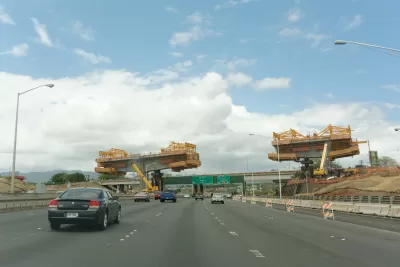
"The rail authority expects to collect $188 million more in taxes than previously projected to help finance the Honolulu rail project, but the city is still making plans to cut costs if necessary, including possibly deferring construction of the $315 million Pearl Highlands Parking Structure and Transit Center," according to an article by Kevin Dayton that might be behind a pay wall for some readers.
A non-pay walled version of the story is available on the Mass Transit magazine website. The article provides details into the Honolulu Authority for Rapid Transportation's recovery plan for the project as a response to a 30-day deadline set at the end of September by the Federal Transit Administration.
Cost-cutting steps listed in the recovery plan include "eliminating lighting between stations along the 20-mile rail line, modifying sound barriers downtown and redesigning the overhead canopies that will provide shelter at the eight urban Honolulu rail stations, according to a draft plan," reports Dayton.
"The FTA committed to provide $1.55 billion in federal funding to help Honolulu build the rail line, but has withheld nearly $744 million of that money until the Honolulu Authority for Rapid Transportation develops an acceptable recovery plan," adds Dayton. Another article from September details the FTA's decision to withhold the funding when it set the deadline in September.
FULL STORY: Rail draft plan reveals potential cost-cutting measures

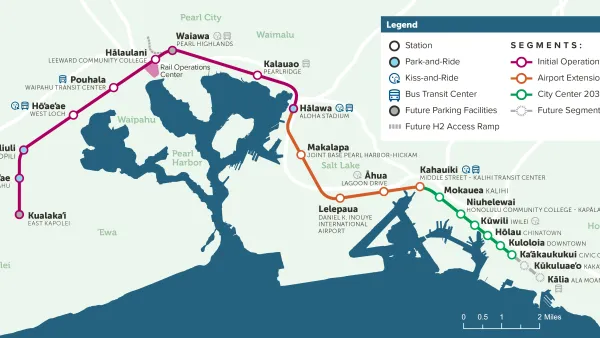
Skyline Rail, Now Serving Honolulu
In a historic day for public transit, Skyline Rail, a project once deemed the worst transit project in the United States due to extreme cost overruns and construction delays, finally opened to the public at the end of June.
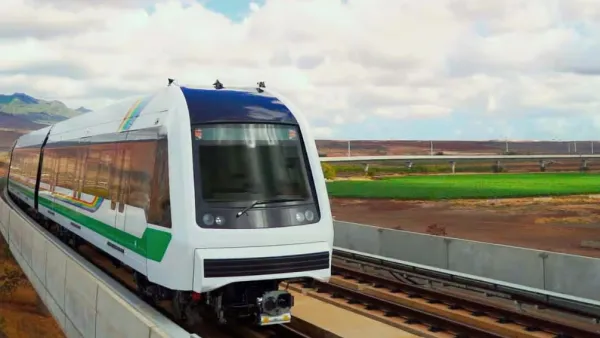
Honolulu Light Rail to Open in June
The city’s first light rail line will finally begin service after more than a half century of planning.
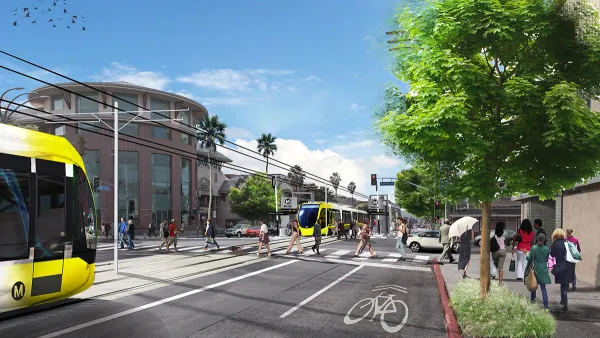
L.A.'s San Fernando Valley $909 Million Closer to Light Rail
The last time rail transit crossed L.A.'s San Fernando Valley was in the early 1950s.

The state-sanctioned urbicide of Austin
People don’t kill cities. Freeways do.

US to reduce Colorado River water deliveries to Mexico
A new Colorado Treaty amendment reduces Mexico’s Colorado River water allocation by 250,000 acre feet.

New Jersey’s second-largest city bans standalone data centers
Jersey City will continue to allow co-location facilities, such as those meant for research institutions that store their own data.

Amtrak not solely to blame for New Jersey commuter rail's unreliability, report finds
A new study from the Garden State Initiative found that NJ Transit’s budget grew 20% across a 4 year period, but reliability declined significantly over the same period.

EPA erases limits on planet-warming pollution from power plants
Under Monday’s plan, power plants would still have some limits on how much mercury, arsenic and other contaminants they can emit.

Phoenix announces new on-demand transit service, more frequent RAPID buses
Both new services will launch in October, and are part of Phoenix's Project Effective Access Solutions for Easing Congestion.

FREE Course: Walkable City 1: Why Walkability?
After describing his path towards focusing on walkability as the essence of good planning, Jeff Speck marches through his five principal reasons for making more walkable places.
Reinventing Malls: Planning Alchemy—Turning Gray Fields Into Gold
The course focuses on the opportunities and imperatives that shape reinvention of mall sites.

Eagle County Government
Harvard University Graduate School of Design
Nashville Planning Department
The Architects Foundation
University of Cincinnati Online
The Pocatello Development Authority
The Urban Renewal Agency of the City of Pocatello
Journal of the American Planning Association