If Brooklyn keeps up the pace of current growth, it could pass Chicago in population in the next few years.


Two new towers planned for Brooklyn have provoked a controversy. The 80 Flatbush project would include, "two high-rise towers, with offices below and 900 residences above. Twenty percent of its apartments will be affordable, and two existing historic brick buildings will be repurposed as a cultural facility and retail space," writes Alexandra Lange. Getting the city and the neighborhood on board with the project has proven difficult. "The developers are seeking a change to the city’s zoning laws in order to build bigger and more dense, but have run into opposition from some Boerum Hill residents, who view the project as out of scale with their low-slung neighborhood," according to Lange.
Housing advocates point out that new housing is being built in New York, but lower income neighborhoods have shouldered the majority of the additions, including subsidized housing in far-flung part of the city. Meanwhile, wealthy areas like the one around 80 Flatbush has been able to mobilize NIMBYism to keep housing out.
Read the full story: Is America’s densest city ready to make room?


NYC Council Approves Brooklyn Rezoning Plan
The Atlantic Avenue Mixed Use Plan includes infrastructure investments and could bring 4,600 new housing units to parts of Brooklyn.
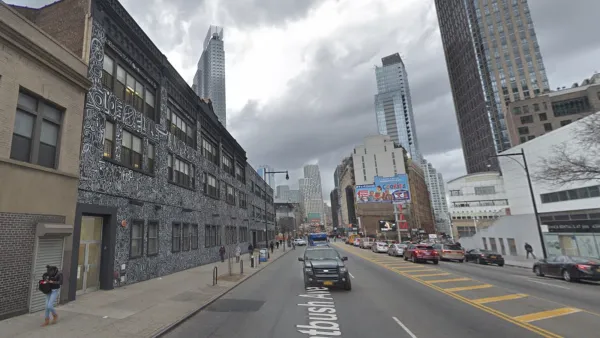
Controversial High Rise Wins Key Approval in Brooklyn
80 Flatbush has been one of the most closely watched, and hotly debated, proposed developments in the country.
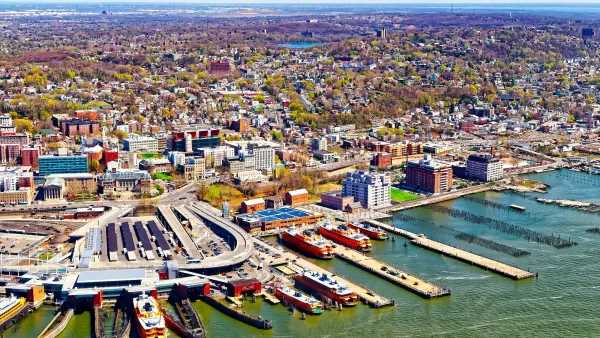
Staten Island Resists ‘City of Yes’ Zoning Reforms
One year after New York City approved major zoning changes, some residents continue to fight increased density.

Planetizen Federal Action Tracker
A weekly monitor of how Trump’s orders and actions are impacting planners and planning in America.

California plans to bury El Niño’s downpour
If the state plays its cards right, it may be able to store a billion acre-feet of El Niño’s water in aquifers.

Chicago breaks ground on $3 billion megadevelopment
The new neighborhood, titled Foundry Park, will one day host 3,700 residences.

Satanic place names
From streams and lakes to valleys and canyons, I mapped more than 1,000 places named after the Devil.

California High-Speed Rail Authority CEO resigns after $600,000 scandal
Under Ian Choudri, the authority used taxpayer dollars to fund first class flights and trips to nightclubs.

Want to study the Missouri River? Soon, you may need unanimous approval from 10 states
Legislation would require 10 governors’ permission to study or build projects moving water outside the basin.

FREE Course: Walkable City 1: Why Walkability?
After describing his path towards focusing on walkability as the essence of good planning, Jeff Speck marches through his five principal reasons for making more walkable places.
Reinventing Malls: Planning Alchemy—Turning Gray Fields Into Gold
The course focuses on the opportunities and imperatives that shape reinvention of mall sites.

City of Rosemead
Rutgers University, Edward J. Bloustein School of Planning and Public Policy
One Hundred Miles
Hunter College, City University of New York (CUNY)
The Architects Foundation
University of Cincinnati Online
City of Cambridge
Montrose County
The Pocatello Development Authority