A new dockless expansion will grow the city’s bikeshare network but without the disorder that has plagued ventures in other cities.


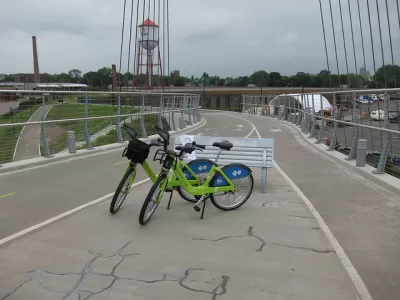
Minneapolis is moving forward with a plan to bring dockless bike sharing to the Twin Cities. Nice Ride MN hopes to avoid the problems that have cropped up with dockless bikes in other cities, including vandalism and sidewalk clutter. Andrew Small explains:
Now a new pilot proposal in Minneapolis is attempting a hybrid between docked and dockless systems. The nonprofit Nice Ride MN wants to add 1,500 dockless bikes to its existing docked network. The key feature is a low-tech but intuitive fix for keeping free-range bikes under control: put down some damn parking spots.
The designated parking will be easy to install, low cost, and decidedly simple, using just tape and signage. While some of the parking will be next to existing docking stations, the real advantage is the ability to fill in the gaps in the network and expand to currently underserved areas. The expansion will also be substantial. After the initial 1,500 dockless bikes are added to the 1,700 docked ones, bikes will be added annually with a plan to have 7,700 bikes in the system by 2021.
FULL STORY: Can Minnesota Get Dockless Bikesharing to Play Nice?

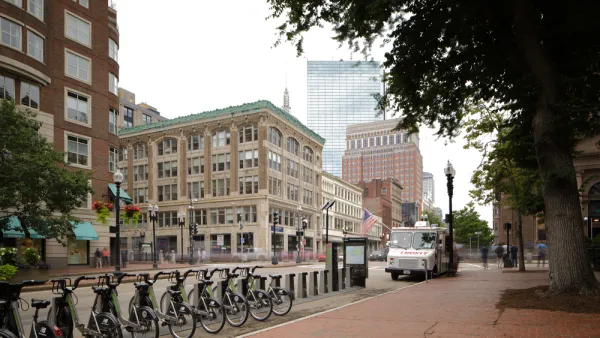
Boston Installs New Bike Lanes as Part of GoBoston 2030 Initiative
The city wants to cut its car use in half by 2030 as part of an aggressive set of "aspirational" goals.

One Expert's Response to Misinformation from Bike Lane Opponents
Swatting down untruths and misinformation by bike lane opponents in St. Paul doesn't require a PhD, but it helps.
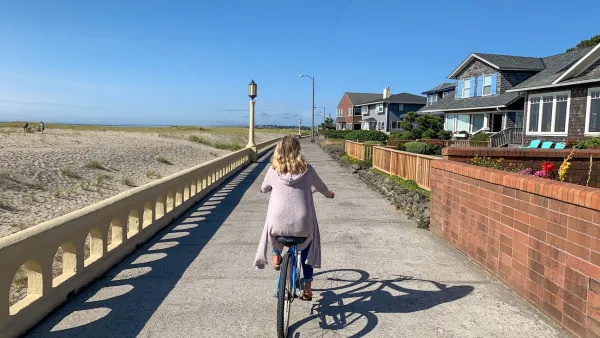
Oregon updates coastal bike map for the first time in a decade
The printed guide helps cyclists navigate the coastal region where cellular service can be unpredictable.

Planetizen Federal Action Tracker
A weekly monitor of how Trump’s orders and actions are impacting planners and planning in America.

The state-sanctioned urbicide of Austin
People don’t kill cities. Freeways do.

US to reduce Colorado River water deliveries to Mexico
A new Colorado Treaty amendment reduces Mexico’s Colorado River water allocation by 250,000 acre feet.

5 New England states march closer to 800 megawatt wind energy project
Securing federal approval for the project may be complicated under the Trump administration, which has historically been hostile towards domestic wind power.

Baltimore to break ground on $50 million Transit Priority Project
The project will bring faster bus trips, safer streets and better bike connections to Baltimore.

Airbnb launches $250 million 'last-dollar financing' housing accelerator, makes first investment in Austin
The company will put $6.4 million towards affordable housing development in Texas’ capital.

FREE Course: Walkable City 1: Why Walkability?
After describing his path towards focusing on walkability as the essence of good planning, Jeff Speck marches through his five principal reasons for making more walkable places.
Reinventing Malls: Planning Alchemy—Turning Gray Fields Into Gold
The course focuses on the opportunities and imperatives that shape reinvention of mall sites.

Eagle County Government
Harvard University Graduate School of Design
Nashville Planning Department
The Architects Foundation
University of Cincinnati Online
The Pocatello Development Authority
The Urban Renewal Agency of the City of Pocatello
Journal of the American Planning Association