Secretary Ben Carson in his own words, discussing the Department of Housing and Urban Development's recently proposed set of reforms to federal housing assistance policies.


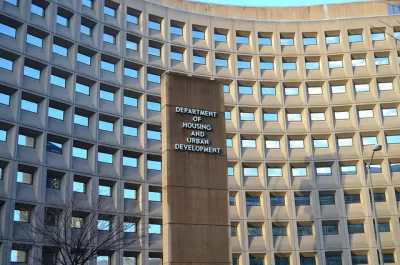
The Department of Housing and Urban Development recently proposed a large increase in the amount of rent that would be paid by people receiving assistance for public housing. In a recent interview, with the Daily Signal, a media mouthpiece for the conservative Heritage Foundation think tank, HUD Secretary Ben Carson explains the reasoning behind the proposal and other reforms and programs he has sought for HUD since taking office a year and a half ago.
Here's a breakdown of the subject matter covered in the interview:
- 0:00 - 1:20 – Staffing shortfalls and need for fiscal reform at HUD.
- 1:20 - 2:37 – Proposed changes to assistance for public housing.
- 2:37 - 4:33 – Discussion of budget concerns versus political philosophy in driving policy changes at HUD.
- 4:33 - 5:56 – Carson lists his proposed reforms to achieve the goals of his administration. This section includes a brief mention of work requirements.
- 5:56 - 6:23 – What's Carson's larger goal for public housing, relative to larger questions about welfare reform?
- 6:23 - 7:58 – Discussion of Secretary Carson's role in the Trump Administration.
- 7:58 - 8:23 – Discussion about President Trump's leadership.
- 8:23 - Conclusion – Question about Kanye West. Secretary Carson discusses race and politics.
The key quote provided by Secretary Carson regarding the thinking behind the proposed changes: "The federal government has created a system that causes people not to necessarily want to work. If they make more money, because if they make more money…their rent goes up or they may no longer be eligible for their apartment."
According to his own words in the interview, Secretary Carson views the changes as a way to make sure that the federal government is providing incentives to move up the economic ladder, without then "pulling the rug out from under them," and making sure people don't elect to receive aid instead of work.
FULL STORY: The Daily Signal Interviews Ben Carson

Local Public Housing Agencies Resist HUD's Proposed Section 8 Rule
A proposed rule to disqualify all families living with an undocumented person from receiving federal housing aid is available for comment. We know a few people who oppose the rule.

Study Reveals Ineffectiveness of Work Requirements for Housing Assistance
Work requirement programs achieve very little in helping housing assistance recipients find work, according to a recent study.
The Potential Costs of the Trump Administration's Proposed Cuts to HUD Funding
Housing advocates blame the neglect of the federal government on the state of public housing in the United States. The Trump administration says government can't keep throwing money at the problems of public housing.

The state-sanctioned urbicide of Austin
People don’t kill cities. Freeways do.

US to reduce Colorado River water deliveries to Mexico
A new Colorado Treaty amendment reduces Mexico’s Colorado River water allocation by 250,000 acre feet.

New Jersey’s second-largest city bans standalone data centers
Jersey City will continue to allow co-location facilities, such as those meant for research institutions that store their own data.

Amtrak not solely to blame for New Jersey commuter rail's unreliability, report finds
A new study from the Garden State Initiative found that NJ Transit’s budget grew 20% across a 4 year period, but reliability declined significantly over the same period.

EPA erases limits on planet-warming pollution from power plants
Under Monday’s plan, power plants would still have some limits on how much mercury, arsenic and other contaminants they can emit.

Phoenix announces new on-demand transit service, more frequent RAPID buses
Both new services will launch in October, and are part of Phoenix's Project Effective Access Solutions for Easing Congestion.

FREE Course: Walkable City 1: Why Walkability?
After describing his path towards focusing on walkability as the essence of good planning, Jeff Speck marches through his five principal reasons for making more walkable places.
Reinventing Malls: Planning Alchemy—Turning Gray Fields Into Gold
The course focuses on the opportunities and imperatives that shape reinvention of mall sites.

Eagle County Government
Harvard University Graduate School of Design
Nashville Planning Department
The Architects Foundation
University of Cincinnati Online
The Pocatello Development Authority
The Urban Renewal Agency of the City of Pocatello
Journal of the American Planning Association