With piles of them strewn around stations, the transit agency is "cracking down" on bikeshare companies.


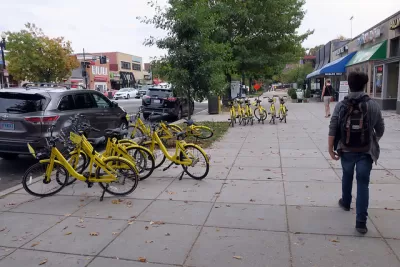
The Bay Area is currently facing what seems to be the inevitable result of dockless bikeshares: lots of them, and in great piles around transit stations and other popular destinations.
Before it starts to look like China, BART is aiming to make the companies accountable for the mess left by their product.
From the San Jose Mercury News:
"The transit agency is cracking down on the growing phenomenon, said Steve Beroldo, BART’s bike program manager, by forcing LimeBike and similar companies to remove recklessly discarded or broken bikes, paint bike parking areas at stations so it’s clear where users should leave them and ensure the companies have enough insurance in case someone trips over a bike and wants to sue BART."
A variety of dockless bikeshare companies, permitted or otherwise, have set up in cities across the county, and set off debates about how to prevent the mounds of discarded bicycles that seem to go with them, even if the piles themselves are evidence of how popular the bikes have been.
Last week, the CEO of Bird—a dockless scooter company that just launched in the Bay Area—wrote a public letter to several other companies suggesting they take a "Save Our Sidewalks" pledge to “build more bike lanes, promote safe riding, and maintain our shared infrastructure.”
Read the full story: BART to crack down on LimeBikes left at stations

San Diego Merchants Call for Halt to Dockless Bikeshare Operations
Public bikeshare arrived in San Diego in 2014. Last month, three companies unleashed thousands of dockless bikes, cluttering sidewalks in three business districts to the chagrin of merchants who want a time-out so the city can develop regulations.
An Atlas of E-Scooter Policies
Introducing the Micromobility Policy Atlas.
Bikeshare Startup Ofo’s Future Is Looking Dim. What Went Wrong?
The Chinese company seemed to be dominating its corner of the shared mobility market—until its dramatic downfall.

Planetizen Federal Action Tracker
A weekly monitor of how Trump’s orders and actions are impacting planners and planning in America.

‘Going backwards:’ Baltimore mayor, students rally against state's transit funding plan
Maryland's proposed six-year plan provides no funding for Baltimore’s BMORE bus program and reduces its road maintenance funding.

Detroit to transform waterfront with $2.2 billion investment
Developers will convert about 18 acres of unused parking lot space into civic spaces.

Planned $2 billion courthouse in MA sparks tension with local government
Springfield owns an essential piece of the land developers intend to build on, and some city officials do not want to see the project come to fruition.

Californians can now transform balconies into power generators
Gov. Gavin Newsom has legalized plug-in solar technology, which allows residents to plug solar panels directly into their outlets

This 85-year-old ranch is Texas’ newest state park
The 650 acre ranch is one of the largest parcels of land along Lake Palestine.

FREE Course: Walkable City 1: Why Walkability?
After describing his path towards focusing on walkability as the essence of good planning, Jeff Speck marches through his five principal reasons for making more walkable places.
Reinventing Malls: Planning Alchemy—Turning Gray Fields Into Gold
The course focuses on the opportunities and imperatives that shape reinvention of mall sites.

City of Thousand Oaks
City of Wisconsin Rapids
Harvard University Graduate School of Design
The Architects Foundation
University of Cincinnati Online
Northern Illinois Transit Authority (NITA)
The Pocatello Development Authority
The Urban Renewal Agency of the City of Pocatello