You might have read about the oceans of impounded dockless bikes, piling up around cities in China, but you've never seen them like this.


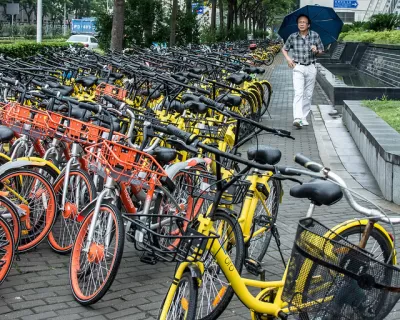
As explained by Alan Taylor, the dockless bikeshare industry was quick to flood the streets of China, supply outpacing demand before regulators could catch up.
Riders would park bikes anywhere, or just abandon them, resulting in bicycles piling up and blocking already-crowded streets and pathways. As cities impounded derelict bikes by the thousands, they moved quickly to cap growth and regulate the industry. Vast piles of impounded, abandoned, and broken bicycles have become a familiar sight in many big cities.
Taylor's team at The Atlantic deployed a photographer to China to capture the sights of dockless bikeshare's high water mark. This slideshow has some truly jaw-dropping photos.
Read the full story: The Bike-Share Oversupply in China: Huge Piles of Abandoned and Broken Bicycles


Friday Eye Candy: AI Envisions Solutions to the Challenges Facing Cities
Phoenix reimagined for shade. Los Angeles as a place where everybody walks. San Francisco with affordable housing. AI makes a vision of the future possible.
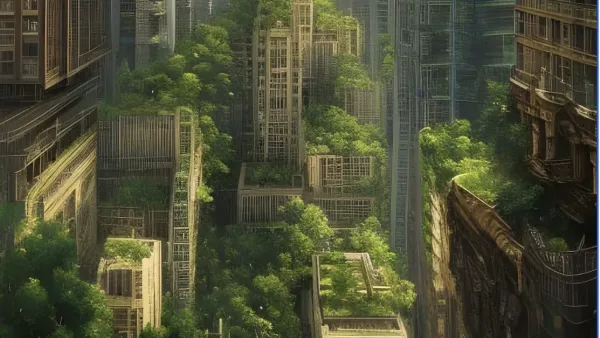
Friday Eye Candy: 20 AI-Generated Cityscapes
AI-generated images are creating new landscapes and cityscapes, capable of inspiring awe or fear.
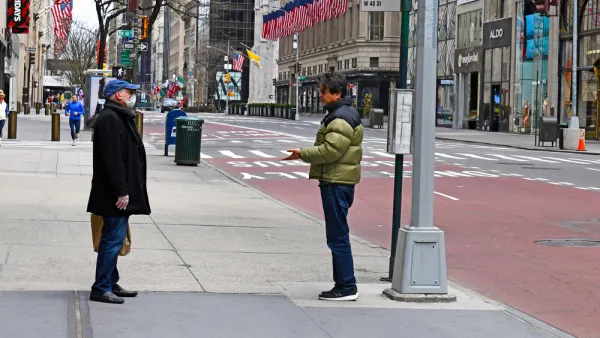
Friday Eye Candy: Covid-19, Then and Now
The New York Times compared images from readers portraying similar scenes in 2020 and 2022.

Planetizen Federal Action Tracker
A weekly monitor of how Trump’s orders and actions are impacting planners and planning in America.

California plans to bury El Niño’s downpour
If the state plays its cards right, it may be able to store a billion acre-feet of El Niño’s water in aquifers.

Desperate measures: Advocates weigh draining Lake Powell to fill Colorado River
Draining the reservoir could reduce evaporation losses by a couple hundred thousand acre-feet.

In Texas, data centers are swallowing promised parkland
Residents who moved to Taylor, Texas for a rural community now have to contend with three data centers in their backyard.

How a Chicago-sized wind farm beat the odds and powered on
The project spanned five presidential administrations and a standoff with a U.S. military base.

MTA gives itself 30 days to transform pit into basketball court
The site has been under construction since 2022; the city originally estimated it would finish the court in 2024.

FREE Course: Walkable City 1: Why Walkability?
After describing his path towards focusing on walkability as the essence of good planning, Jeff Speck marches through his five principal reasons for making more walkable places.
Reinventing Malls: Planning Alchemy—Turning Gray Fields Into Gold
The course focuses on the opportunities and imperatives that shape reinvention of mall sites.

City of Rosemead
Rutgers University, Edward J. Bloustein School of Planning and Public Policy
One Hundred Miles
Hunter College, City University of New York (CUNY)
The Architects Foundation
University of Cincinnati Online
City of Cambridge
Montrose County
The Pocatello Development Authority