App-driven bikeshare, without the station, has been spreading rapidly, especially in China. But the system comes with its share of problems, including its own version of the tragedy of the commons.


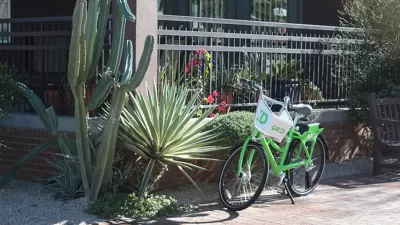
With two Chinese companies leading the charge, dockless bikeshare is popping up in cities the world over. New York City, San Francisco, and Washington D.C. are all experimenting with the technology. But there are potential pitfalls. Dominic Rushe writes, "Unlike docking rental services, which require bikes to be returned to a fixed docking station, you can leave your ride wherever your journey ends, practically. And therein lies the problem."
Large-scale dockless bikeshare is vulnerable to vandals and thieves, and legitimate riders have little reason to treat the ubiquitous bikes well. "In China, where there are some 16 million shared bikes on the street and MoBike alone now has over a million, the authorities have been forced to clear up ziggurats of discarded bikes."
Read the full story: Why we can't have nice things: dockless bikes and the tragedy of the commons
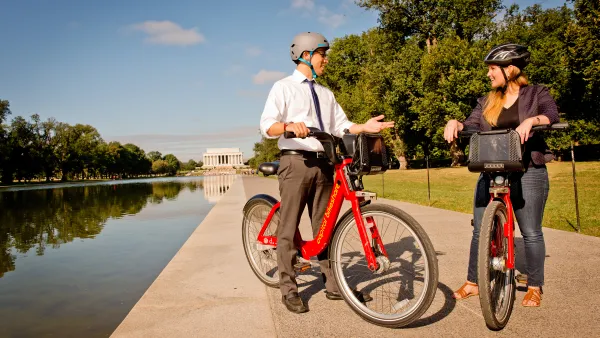
Dockless Bikeshare Coming to the Nation's Capital
Bikeshare has been a breeze, for the most part, in Washington, D.C. But the District Department of Transportation is making room for innovation anyways.
Next From China: Bikeshare Without the Station
Led by the companies Mobike and Ofo, so-called "dockless" bike sharing is all the rage in Chinese cities. Unlocked by app, the bikes can be left anywhere for the next user to pick up. There have been some hiccups.
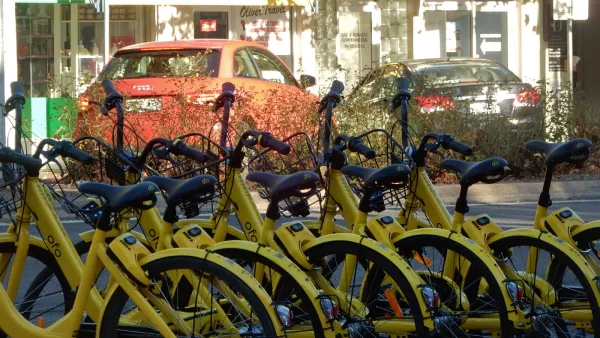
Bikeshare Startup Ofo’s Future Is Looking Dim. What Went Wrong?
The Chinese company seemed to be dominating its corner of the shared mobility market—until its dramatic downfall.

Planetizen Federal Action Tracker
A weekly monitor of how Trump’s orders and actions are impacting planners and planning in America.

California plans to bury El Niño’s downpour
If the state plays its cards right, it may be able to store a billion acre-feet of El Niño’s water in aquifers.

Desperate measures: Advocates weigh draining Lake Powell to fill Colorado River
Draining the reservoir could reduce evaporation losses by a couple hundred thousand acre-feet.

Seattle passes record-breaking transit services expansion
Proposition 1 will double the city’s transit tax to add 95,000 more bus trips and preserve 180,000 bus trips annually.

Post election, Texas is no longer Musk’s 'AI oasis'
Elon Musk dolled out $446 million on the 2026 midterms, the most ever spent by a non-canidate.

Chicago voters approve permanent festival grounds, penalty for vacant property owners
Currently, major summer and fall festivals take over public parks for weeks at a time, drawing criticism from nearby residents

FREE Course: Walkable City 1: Why Walkability?
After describing his path towards focusing on walkability as the essence of good planning, Jeff Speck marches through his five principal reasons for making more walkable places.
Reinventing Malls: Planning Alchemy—Turning Gray Fields Into Gold
The course focuses on the opportunities and imperatives that shape reinvention of mall sites.

City of Rosemead
Rutgers University, Edward J. Bloustein School of Planning and Public Policy
One Hundred Miles
Hunter College, City University of New York (CUNY)
The Architects Foundation
University of Cincinnati Online
City of Cambridge
Montrose County
The Pocatello Development Authority