As a result of a federal court ruling on March 12, the Environmental Protection Administration will be compelled to do what it should have done by October 1: Identify regions of the country where the air quality violates smog standards.


Last December, California, in conjunction with 13 other states and the District of Columbia, sued the U.S. Environmental Protection Administration after it's administrator, Scott Pruitt, ignored an October 1 deadline to identify regions of the country that are not meeting the 2015 standards for ground-level ozone, a harmful air pollutant, and a key component of smog. The EPA is required to designate nonattainment areas for ozone every two years.
"The designation is critical because such a finding requires state and local authorities to take immediate action to improve air quality and comply with ozone standards," writes Julie Cart, environmental reporter for CALmatters.
“The stakes are high,” said California Attorney General Xavier Becerra, who has brought multiple lawsuits against the Trump administration. “The smog-reducing requirements at issue will save hundreds of lives and prevent 230,000 asthma attacks among children. That’s worth fighting for.”
"Judge Haywood Stirling Gilliam Jr. of the federal District Court for the District of Northern California said Monday that Pruitt broke the law, and ordered him to publish the findings for almost all of the rest of the country by April 30," reports Timothy Cama for The Hill on March 12.
“There is no dispute as to liability: Defendants admit that the administrator violated his nondiscretionary duty under the Clean Air Act...," Gilliam wrote, citing a January court filing by the Justice Department acknowledging that the EPA missed the deadline.
The ozone case concerns a 2015 rule that set the limit for ground-level ozone at 70 parts per billion, a change from the previous 75 parts per billion.
=========================================================================================
"The decision is one in a string of court losses the Trump administration has faced in its ongoing mission to change, delay or undo the Obama administration’s aggressive environmental agenda," adds Cama.
Other recent decisions have faulted the Energy Department for blocking energy efficiency rules and both the EPA and Interior Department for delaying methane regulations.
Regarding the energy efficiency rules, "environmentalists led by the Natural Resources Defense Council and Democratic states led by California and New York sued" after the Trump administration delayed setting energy efficiency standards for appliances including portable air conditioners, reported Cama on Feb. 15.
“This failure is a violation of the department’s duties under the Energy Policy and Conservation Act,” Judge Vince Chhabria, who former President Obama nominated to the federal District Court for the Northern District of California, wrote in the Thursday ruling [pdf].
Today’s ruling means that the Trump Administration may no longer block common-sense energy efficiency standards. This is a tremendous victory for the American people and for our planet,” said California Attorney General Xavier Becerra (D).
=================================================================================
Current environmental litigation against Trump Administratioi that readers may wish to follow:
- EPA scientists vs. EPA: "The Trump administration rolled out a new policy [Oct. 31, 2017] that states scientists receiving Environmental Protection Agency (EPA) grants cannot serve on the agency's advisory boards, a move critics decried as part of a war on independent science," reported Cama for The Hill last October. On March 12, Cama reports that the Justice Department asked the court to have the case against the EPA dismissed.
The case is being heard in the federal District Court for the District of Columbia by Judge Trevor McFadden, who was nominated last year by President Trump.
- Children vs. Trump Administration: Climate Change: "The lawsuit, Juliana v. United States, was filed in 2015 on behalf of 21 youths who are accusing the government of violating their constitutional rights by failing to address climate change and continuing to subsidize fossil fuels," reported Nicholas Kusnetz for Inside Climate News last December.
"A federal appeals court rejected the Trump administration's attempt to halt the landmark climate change lawsuit", ruling that the case can proceed to trial in a lower court," reports Kusnetz on March 7.
FULL STORY: Court orders Trump administration to comply with clean air laws

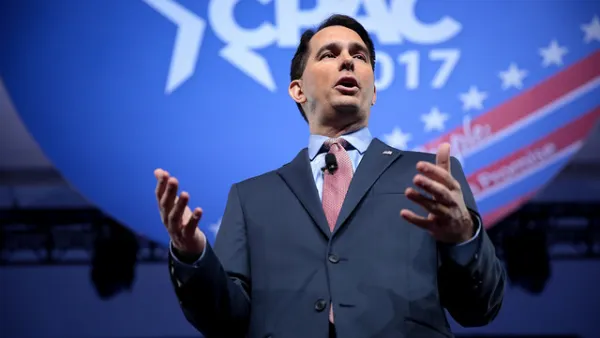
Another EPA Rollback, Tailor-Made for Gov. Walker and Southeast Wisconsin
Politics and economics win over public health in Racine County as the EPA exempted the area around the Foxconn's massive facility from meeting stricter ozone pollution standards, saving the company from investing in smog-reducing equipment.

Summertime Ethanol Restriction Lifted to Help Corn Farmers—But at What Cost?
President Trump made good on his promise last October to lift the E15 ban in time for the summer driving season. Not mentioned by the Des Moines Register are the downsides to allowing the higher ethanol blend to be sold during the summer, e.g., smog.
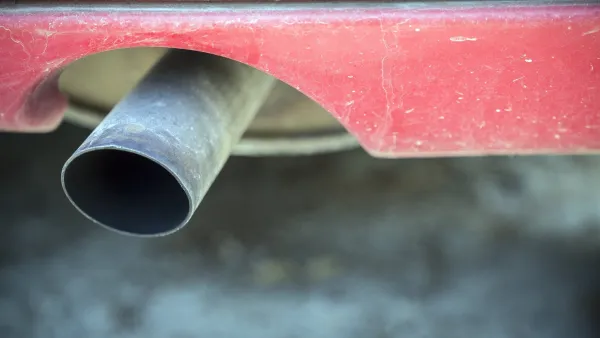
California and 16 States Sue EPA Over Decision to Rollback Vehicle Emissions Rule
Environmental Protection Agency Administrator Scott Pruitt had announced the rollback of greenhouse gas emission and fuel economy standards on April 2. While the auto industry supports the move, not all auto executives agreed.

The state-sanctioned urbicide of Austin
People don’t kill cities. Freeways do.

US to reduce Colorado River water deliveries to Mexico
A new Colorado Treaty amendment reduces Mexico’s Colorado River water allocation by 250,000 acre feet.

New Jersey’s second-largest city bans standalone data centers
Jersey City will continue to allow co-location facilities, such as those meant for research institutions that store their own data.

Amtrak not solely to blame for New Jersey commuter rail's unreliability, report finds
A new study from the Garden State Initiative found that NJ Transit’s budget grew 20% across a 4 year period, but reliability declined significantly over the same period.

EPA erases limits on planet-warming pollution from power plants
Under Monday’s plan, power plants would still have some limits on how much mercury, arsenic and other contaminants they can emit.

Phoenix announces new on-demand transit service, more frequent RAPID buses
Both new services will launch in October, and are part of Phoenix's Project Effective Access Solutions for Easing Congestion.

FREE Course: Walkable City 1: Why Walkability?
After describing his path towards focusing on walkability as the essence of good planning, Jeff Speck marches through his five principal reasons for making more walkable places.
Reinventing Malls: Planning Alchemy—Turning Gray Fields Into Gold
The course focuses on the opportunities and imperatives that shape reinvention of mall sites.

Eagle County Government
Harvard University Graduate School of Design
Nashville Planning Department
The Architects Foundation
University of Cincinnati Online
The Pocatello Development Authority
The Urban Renewal Agency of the City of Pocatello
Journal of the American Planning Association