One writer argues that cost, versatility and visual appeal makes this new building material exactly what the state will need if planned regulatory changes go through.


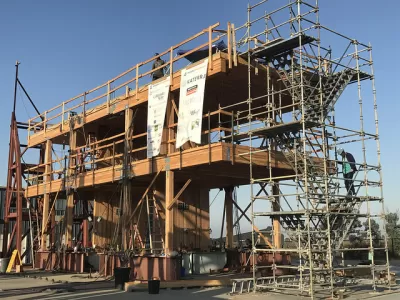
In an essay for The Architect's Newspaper, editor Antonio Pacheco proposes mass timber as one solution to California's housing crisis, citing the confluence of new legislation and capacity for domestic production of an increasingly popular building material.
His argument:
"California’s housing shortage is a watershed event several generations in the making that will require proportional measures if it is to be adequately addressed. Given current understanding of what the mass timber industry is capable of producing, a rising wave of zoning reform, and growing funding sources for affordable housing construction, it might be time for municipalities and developers alike to take a look at this new building technology."
Mass timber is an umbrella term for a number of new construction materials made of wood but manufactured for superior strength and fire resistance. It's the first novel building material developed in quite some time, and the number of both completed and proposed buildings made with it are evidence of the degree to which it seems to appeal to architects.
Pacheco, for one, believes in the aesthetic potential of mass timber in California, in addition to its more practical attributes. "Might this variable approach," he asks, "even do away with the dreaded 'stucco box?' Only time will tell."
FULL STORY: Can mass timber help California build its way out of the housing crisis?

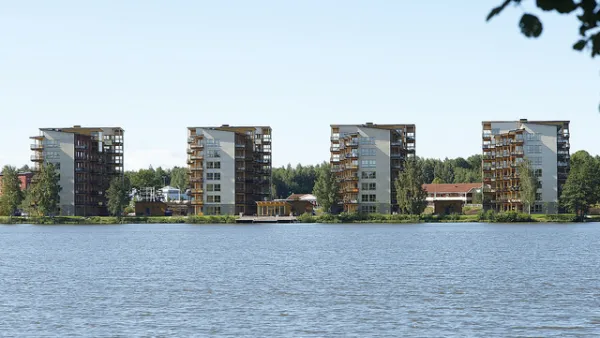
'Tall Timber' May Be the Future of Building
Mass timber is a major structural element of an increasing number of skyscrapers, according to a CTBUH survey; now, the fire codes just have to follow.
Timber Industry 'Bracing' for Soaring Demand
Building with wood is back in fashion, but lumber producers have to reckon with thorny politics and new timber-based materials that have yet to be truly defined.
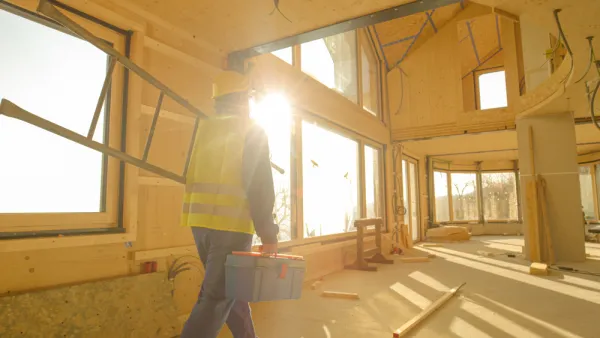
A Bipartisan Case for Mass Timber—Combating Wildfires and Developing Local Economies
What’s good for our forests and planet can also be good for our jobs, communities, and the economy. That’s why we’re writing this together—an ex-Democratic political operative and an ex-Republican staff member who want to see mass timber flourish.

The state-sanctioned urbicide of Austin
People don’t kill cities. Freeways do.

US to reduce Colorado River water deliveries to Mexico
A new Colorado Treaty amendment reduces Mexico’s Colorado River water allocation by 250,000 acre feet.

New Jersey’s second-largest city bans standalone data centers
Jersey City will continue to allow co-location facilities, such as those meant for research institutions that store their own data.

Amtrak not solely to blame for New Jersey commuter rail's unreliability, report finds
A new study from the Garden State Initiative found that NJ Transit’s budget grew 20% across a 4 year period, but reliability declined significantly over the same period.

EPA erases limits on planet-warming pollution from power plants
Under Monday’s plan, power plants would still have some limits on how much mercury, arsenic and other contaminants they can emit.

Phoenix announces new on-demand transit service, more frequent RAPID buses
Both new services will launch in October, and are part of Phoenix's Project Effective Access Solutions for Easing Congestion.

FREE Course: Walkable City 1: Why Walkability?
After describing his path towards focusing on walkability as the essence of good planning, Jeff Speck marches through his five principal reasons for making more walkable places.
Reinventing Malls: Planning Alchemy—Turning Gray Fields Into Gold
The course focuses on the opportunities and imperatives that shape reinvention of mall sites.

Eagle County Government
Harvard University Graduate School of Design
Nashville Planning Department
The Architects Foundation
University of Cincinnati Online
The Pocatello Development Authority
The Urban Renewal Agency of the City of Pocatello
Journal of the American Planning Association