Bournemouth native Stuart Semple is intent on "naming and shaming the bodies who fund and install these things."



The British artist behind the Happy City installation that will open in Denver this spring has launched a campaign against "hostile design" after his home city of Bournemouth fitted a few public benches with bars meant to keep the homeless from sleeping on them.
From The Art Newspaper:
"Hostile design–whereby public spaces are modified to deter certain activities such as rough sleeping and skateboarding–is a 'stealthy way of policing public space', Semple says. 'These designs legitimise the point of view that homeless people are the enemy. Instead they need support, often with addiction or mental health.'"
Design intended to keep people without homes from settling in a given area is nothing new, but with an ongoing housing crisis in cities across the U.S., both "defensive design" and anti-homeless ordinances have and will continue to be topics of controversy.
"Semple is launching his campaign, hostiledesign.org, later this week, which invites people around the world to send in their own photographs of such architecture. 'The website will become a database or archive of these immoral designs,' he says. 'By naming and shaming the bodies who fund and install these things, we might actually shift some of these prejudicial ideas.'"
FULL STORY: Stuart Semple launches campaign to eradicate ‘hostile design’ around the world

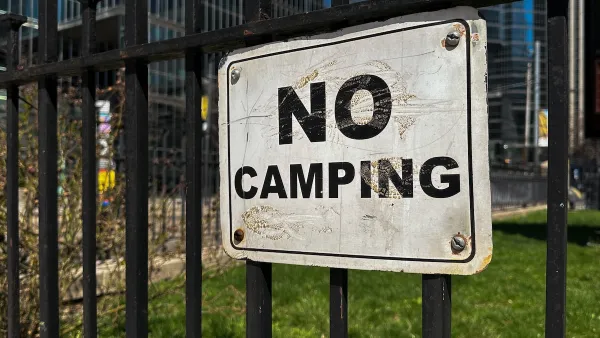
Nevada Cities Pass Punitive Anti-Homeless Laws
State legislators rejected a proposed bill that would have enshrined a “Homeless Person’s Bill of Rights” in state law.
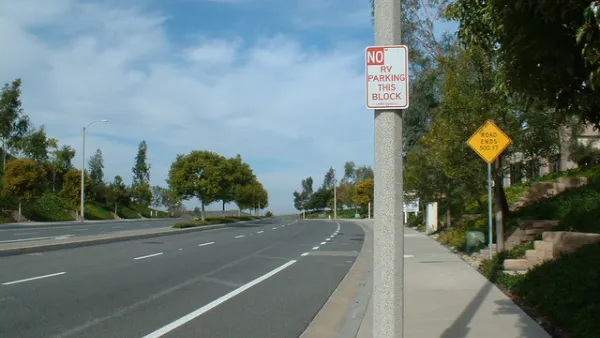
Protests Push O.C. to Kill Its First Real Plan to Help the Homeless
The affluent county finally authorized a concrete plan to address a housing crisis, but forceful opposition from residents put them 'back to Square One.'
The Resurgence of Anti-Homeless Policy and Design
A report by researchers at the University of California, Berkeley tracks the proliferation of vagrancy laws in the Golden State. Meanwhile, The Guardian notes the spread of so-called "defensive architecture."

Planetizen Federal Action Tracker
A weekly monitor of how Trump’s orders and actions are impacting planners and planning in America.

The state-sanctioned urbicide of Austin
People don’t kill cities. Freeways do.

US to reduce Colorado River water deliveries to Mexico
A new Colorado Treaty amendment reduces Mexico’s Colorado River water allocation by 250,000 acre feet.

5 New England states march closer to 800 megawatt wind energy project
Securing federal approval for the project may be complicated under the Trump administration, which has historically been hostile towards domestic wind power.

Baltimore to break ground on $50 million Transit Priority Project
The project will bring faster bus trips, safer streets and better bike connections to Baltimore.

Airbnb launches $250 million 'last-dollar financing' housing accelerator, makes first investment in Austin
The company will put $6.4 million towards affordable housing development in Texas’ capital.

FREE Course: Walkable City 1: Why Walkability?
After describing his path towards focusing on walkability as the essence of good planning, Jeff Speck marches through his five principal reasons for making more walkable places.
Reinventing Malls: Planning Alchemy—Turning Gray Fields Into Gold
The course focuses on the opportunities and imperatives that shape reinvention of mall sites.

Eagle County Government
Harvard University Graduate School of Design
Nashville Planning Department
The Architects Foundation
University of Cincinnati Online
The Pocatello Development Authority
The Urban Renewal Agency of the City of Pocatello
Journal of the American Planning Association