The inefficiencies of daily commutes set aside, the road systems of some cities are not prepared to deal with unexpected events that disrupt the transportation system.


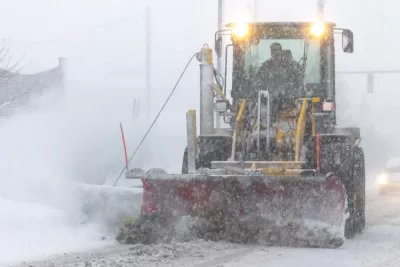
Brandon Millman shares news of a new study by researchers at Northeastern University’s Network Science Institute that quantifies the traffic resilience of road systems in urban areas around the United States.
"When it comes to how well the region can handle unexpected situations, such as inclement weather, major traffic incidents or other events, the District ranks as the worst of 40 major metro areas in the U.S.," according to Millman.
"By comparison, traffic in Los Angeles was found to be inefficient on a daily basis. Yet researchers found that an unexpected event did not dramatically make a particular drive much worse," adds Millman.
Millman's focus is on the ignominy achieved by Washington, D.C. with the ranking, but there is still time to recognize that Cleveland and Salt Lake City "are cited as two of the best cities for "traffic resilience.'" The original study is behind a paywall at the Science Advances journal.
FULL STORY: Gridlocked DC is not a ‘traffic resilient’ city, study finds

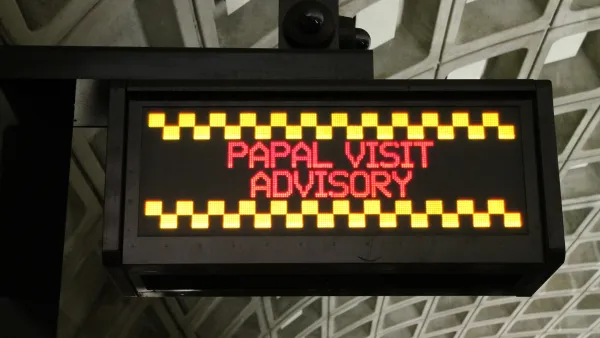
How the Pope's Visit Reduced Traffic in Washington, D.C.
Pope Francis' much-publicized visit to the capital in late September saw reductions in congestion and better travel times. Event-specific telecommuting policies and transit route changes appear responsible for the minor miracle.
America's Most Congested Cities
Forbes has released its list of the most congested cities in America. Los Angeles, New York, Chicago, Dallas and Washington D.C. top the list.
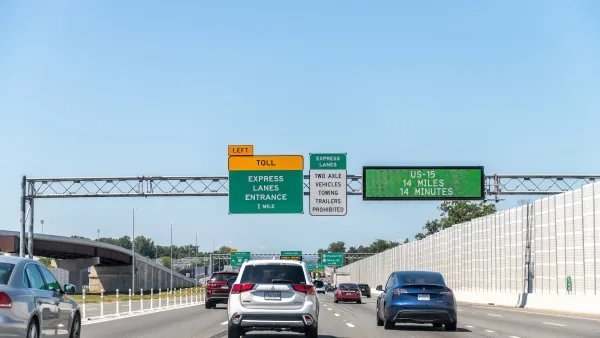
Congestion Costing Reality Check, Part 2: A congestion costing critique
There are good reasons to be skeptical of highway industry claims that traffic congestion is a growing problem. Their analysis is often incomplete and biased. Let’s pull back the curtain on some major congestion cost studies.

Planetizen Federal Action Tracker
A weekly monitor of how Trump’s orders and actions are impacting planners and planning in America.

The state-sanctioned urbicide of Austin
People don’t kill cities. Freeways do.

US to reduce Colorado River water deliveries to Mexico
A new Colorado Treaty amendment reduces Mexico’s Colorado River water allocation by 250,000 acre feet.

Colorado’s Largest Data Center Could Rise Next to Homes — Without a Public Hearing
The proposed campus would consume 11 times the power of Denver International Airport; as it has across the country, opposition mounts.

5 New England states march closer to 800 megawatt wind energy project
Securing federal approval for the project may be complicated under the Trump administration, which has historically been hostile towards domestic wind power.

Baltimore to break ground on $50 million Transit Priority Project
The project will bring faster bus trips, safer streets and better bike connections to Baltimore.

FREE Course: Walkable City 1: Why Walkability?
After describing his path towards focusing on walkability as the essence of good planning, Jeff Speck marches through his five principal reasons for making more walkable places.
Reinventing Malls: Planning Alchemy—Turning Gray Fields Into Gold
The course focuses on the opportunities and imperatives that shape reinvention of mall sites.

Eagle County Government
Harvard University Graduate School of Design
Nashville Planning Department
The Architects Foundation
University of Cincinnati Online
The Pocatello Development Authority
The Urban Renewal Agency of the City of Pocatello
Journal of the American Planning Association