Denver provides a case study of a city's politics reckoning with the pace of development in a post-recession real estate market.


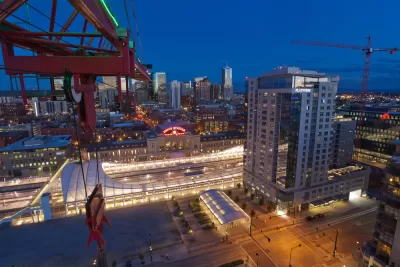
Controversy over the perceived developer friendliness of Mayor Michael Hancock has erupted in Denver, forcing the mayor to take to the pages of The Denver Post in an exclusive interview.
A separate article by Jon Murray details the development related controversies leveled at the mayor as he pursues an expected third term in office in a May 2019 election. The controversies are highlighted by uproar over a coffee shop in the neighborhood of Five Points gleefully touting its role in gentrification.
"As unrelenting development has disrupted several neighborhoods, a counter-narrative to the Denver success story is uniting Hancock’s critics and has spurred them to organize," explains Murray.
In the exclusive interview (Murray also asks the questions in the interview), Mayor Hancock responds to the accusations of being too friendly by defending his integrity, describing the growth of the city's economy, and talking about the mayor's lack of control in the development approval process.
Whether the charges of being overly developer friendly is a political third rail in the city of Denver will be determined in 2019. Until then and beyond, politicians in popular growing cities like Denver will continue to face pressure to voice a coherent development and planning agenda.
FULL STORY: s Denver Mayor Michael Hancock too friendly to developers? Here’s what he thinks

Many Cities Now Facing the Challenges of Prosperity
It might be possible for San Francisco residents to feel like the challenges of homelessness, gentrification, and a tech boom, all colliding at once, are unique to their city. Other cities—Denver for example—are facing the same challenges.
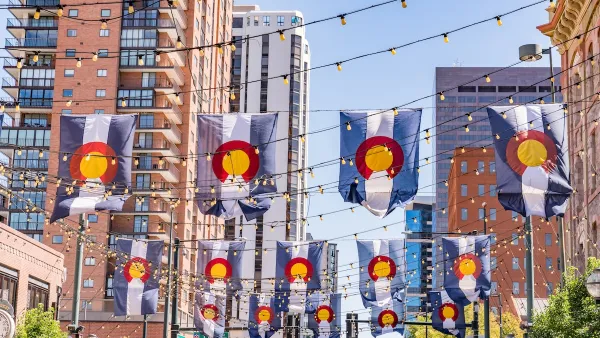
Denver Pauses Multifamily Development in Westside Neighborhoods Amidst Gentrification Concerns
City officials say the pause on permits for redevelopment projects aims to stop the displacement of long-term residents.
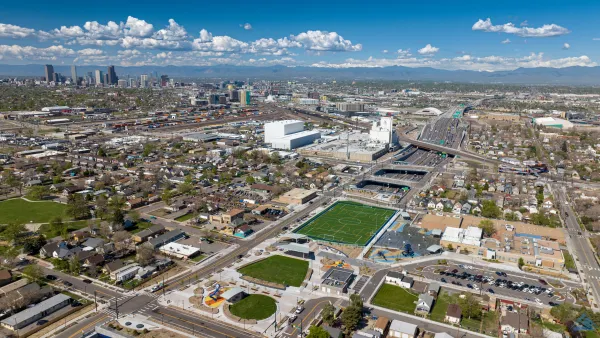
Opening of Denver’s New Freeway Cap Park Triggers Gentrification Fears
Local residents fear rising housing costs and displacement with the opening of a new four-acre park built on a deck bridge over the newly reconstructed and widened I-70 interstate.

Planetizen Federal Action Tracker
A weekly monitor of how Trump’s orders and actions are impacting planners and planning in America.

The state-sanctioned urbicide of Austin
People don’t kill cities. Freeways do.

US to reduce Colorado River water deliveries to Mexico
A new Colorado Treaty amendment reduces Mexico’s Colorado River water allocation by 250,000 acre feet.

5 New England states march closer to 800 megawatt wind energy project
Securing federal approval for the project may be complicated under the Trump administration, which has historically been hostile towards domestic wind power.

Baltimore to break ground on $50 million Transit Priority Project
The project will bring faster bus trips, safer streets and better bike connections to Baltimore.

Airbnb launches $250 million 'last-dollar financing' housing accelerator, makes first investment in Austin
The company will put $6.4 million towards affordable housing development in Texas’ capital.

FREE Course: Walkable City 1: Why Walkability?
After describing his path towards focusing on walkability as the essence of good planning, Jeff Speck marches through his five principal reasons for making more walkable places.
Reinventing Malls: Planning Alchemy—Turning Gray Fields Into Gold
The course focuses on the opportunities and imperatives that shape reinvention of mall sites.

Eagle County Government
Harvard University Graduate School of Design
Nashville Planning Department
The Architects Foundation
University of Cincinnati Online
The Pocatello Development Authority
The Urban Renewal Agency of the City of Pocatello
Journal of the American Planning Association