Bloomberg links the uptick in traffic fatalities throughout the United States to rising smartphone use while driving.


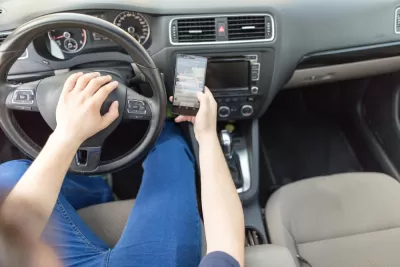
A recent study found that drivers use their phones during a full 88 percent of trips. But NHTSA records may reflect only half of cases where phone use caused a fatal crash—masking the danger of distracted driving compared to alcohol and speeding.
The difficulty, Bloomberg reports, stems in part from the fact that NHTSA gathers data from states, who in turn gather from local police. Each entity may compile crash metrics differently. It's also difficult to prove that phone use caused the crash.
Safety advocates such as Smith say lawmakers, investigators and prosecutors won’t prioritize the danger of mobile phones in vehicles until they are seen as a sizable problem—as big as drinking, say. Yet, it won’t be measured as such until it’s a priority for lawmakers, investigators and prosecutors.
Read the full story: Smartphones Are Killing Americans, But Nobody’s Counting
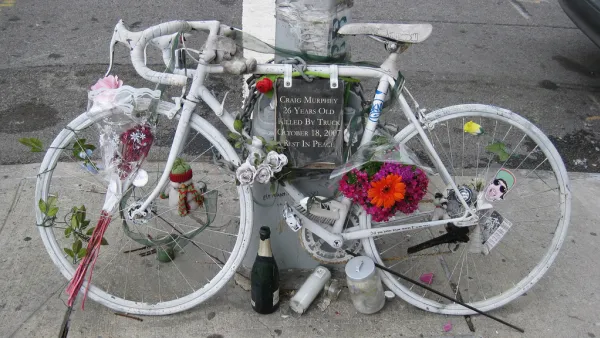
2015 Road Toll: 35,200 Fatalities
The National Highway Traffic Safety Administration (NHTSA) released preliminary fatality estimates for 2015. Deaths jumped by 2,525, an increase of 7.7 percent over 2014. Pedestrians and bicyclists saw the biggest increases.
Traffic Deaths Dip for Ninth Straight Quarter
Traffic deaths around the country are showing a slow but steady decline, but fatalities remain above pre-pandemic levels.
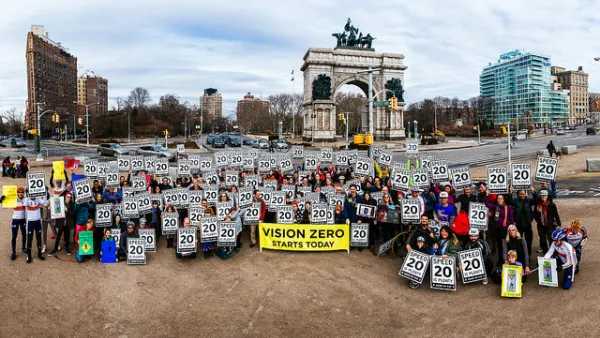
Traffic Fatalities Set Records as Pandemic-Era Road Carnage Shows No Signs of Stopping
An estimated 42,915 people died in automobile crashes in 2021, according to recent federal data. The increasing fatalities continue a trend that began with the outset of the pandemic.

Desperate measures: Advocates weigh draining Lake Powell to fill Colorado River
Draining the reservoir could reduce evaporation losses by a couple hundred thousand acre-feet.

Eastern Nebraska is running out of electricity
Data centers and electrification are straining eastern Nebraska’s grid, throttling economic development.

Malls are becoming the midtowns of the future
Mall and office park redevelopments are a generational opportunity to create new nodes of urbanity.

NYC breaks ground on anti-flooding infrastructure project
New York City's new system will reduce stormwater flows to local sewers by 90%.

One Kentucky town’s secret to affordable housing
The Smoketown Community Land Trust has already built seven affordable homes for community members.

Houston gains petal-shaped cooling infrastructure to make streets more ‘delightful’
The city has installed the pavilions along 15 blocks in Houston.

FREE Course: Walkable City 1: Why Walkability?
After describing his path towards focusing on walkability as the essence of good planning, Jeff Speck marches through his five principal reasons for making more walkable places.
Reinventing Malls: Planning Alchemy—Turning Gray Fields Into Gold
The course focuses on the opportunities and imperatives that shape reinvention of mall sites.

City of Rosemead
Rutgers University, Edward J. Bloustein School of Planning and Public Policy
One Hundred Miles
University of Michigan School for Environment and Sustainability (SEAS)
Hunter College, City University of New York (CUNY)
The Architects Foundation
City of Cambridge
Montrose County
The Pocatello Development Authority