The passage by the PA state senate of a bill allowing Pittsburgh and other cities to use red light traffic enforcement cameras has drawn a strong warning and a study from Penn Public Interest Research Group (PIRG) to only use them for safety purposes


Legislative developments in PA and CA has the Public Interest Research Group concerned about "privatized traffic law enforcement", aka red light cameras. However, in PA, PIRG need not worry about cities getting rich from unsuspecting red-light runners.
PennPIRG released a 52-page report Oct. 27, "Caution: Red Light Cameras Ahead - The Risks of Privatizing Traffic Law Enforcement and How to Protect the Public" and warned that "private for-profit companies are lobbying government officials to install the cameras and, in some cases, safety issues are taking a back seat to profit motives."
Only Philadelphia can use the cameras at present. The cities can not, by law, use the cameras as cash cows as funds would go "to the state and is redistributed for transportation safety enhancements."
From EXECUTIVE SUMMARY:
"Privatized traffic law enforcement systems are spreading rapidly across the United States. As many as 700 local jurisdictions have entered into deals with for-profit companies to install camera systems at intersections and along roadways to encourage drivers to obey traffic signals and follow speed limits.
Local contracting for automated traffic enforcement systems may sometimes be a useful tool for keeping drivers and pedestrians safe. But when private firms and municipalities consider revenues first, and safety second, the public interest is threatened."
From Inside Bay Area: Study: Use red-light cameras for safety, not cash:
"State Sen. Joe Simitian, D-Palo Alto, authored a bill this year that would've reformed the use of traffic cameras by requiring local governments to post signs near where the cameras are installed; develop uniform guidelines for screening and issuing tickets from the cameras; make formal fact-findings to justify future installations; to ignore revenue, beyond the system's own costs, when considering whether to install such systems; and so on.
SB 29 had overwhelming bipartisan support, approved by the Assembly on a 70-4 vote and by the state Senate on a 38-0 vote. Yet Gov. Jerry Brown vetoed the bill this month, writing that installation and maintenance of such camera systems "is something that can and should be overseen by local elected officials" without state interference."
Thanks to Streetsblog Capitol Hill
FULL STORY: Research group urges caution in deploying red-light cameras

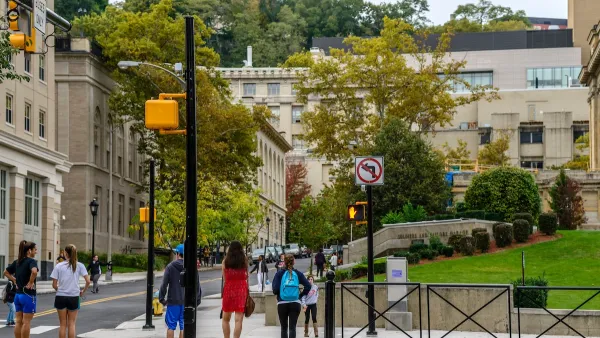
Pittsburgh Cuts Crash Deaths by 32% in One Year
The city’s Vision Zero effort hasn’t quite reached its goal of eliminating traffic deaths, but it has made impressive strides in improving road safety in its first year.
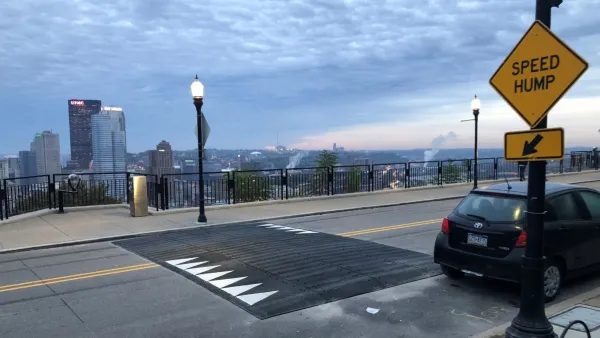
Pittsburgh Excels at Low-Cost, Quick-Build Traffic Calming
The city’s traffic calming initiative has led to a 6 percent average reduction in speeds on corridors with recent interventions.
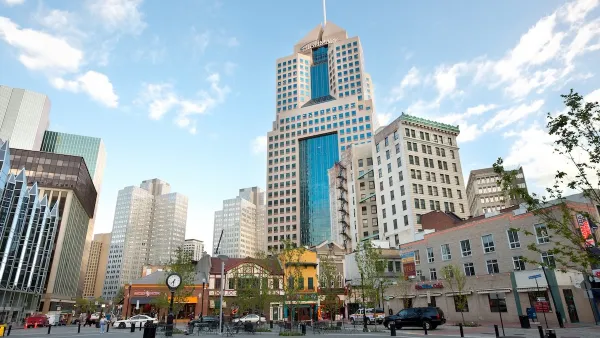
Pittsburgh Agencies Collaborate on Vision Zero Projects
The city reduced pedestrian deaths to seven in 2023.

The state-sanctioned urbicide of Austin
People don’t kill cities. Freeways do.

US to reduce Colorado River water deliveries to Mexico
A new Colorado Treaty amendment reduces Mexico’s Colorado River water allocation by 250,000 acre feet.

New Jersey’s second-largest city bans standalone data centers
Jersey City will continue to allow co-location facilities, such as those meant for research institutions that store their own data.

Amtrak not solely to blame for New Jersey commuter rail's unreliability, report finds
A new study from the Garden State Initiative found that NJ Transit’s budget grew 20% across a 4 year period, but reliability declined significantly over the same period.

EPA erases limits on planet-warming pollution from power plants
Under Monday’s plan, power plants would still have some limits on how much mercury, arsenic and other contaminants they can emit.

Phoenix announces new on-demand transit service, more frequent RAPID buses
Both new services will launch in October, and are part of Phoenix's Project Effective Access Solutions for Easing Congestion.

FREE Course: Walkable City 1: Why Walkability?
After describing his path towards focusing on walkability as the essence of good planning, Jeff Speck marches through his five principal reasons for making more walkable places.
Reinventing Malls: Planning Alchemy—Turning Gray Fields Into Gold
The course focuses on the opportunities and imperatives that shape reinvention of mall sites.

Eagle County Government
Harvard University Graduate School of Design
Nashville Planning Department
The Architects Foundation
University of Cincinnati Online
The Pocatello Development Authority
The Urban Renewal Agency of the City of Pocatello
Journal of the American Planning Association