Riders of San Francisco's Muni bus system often complain that the buses stop too much. Now, evidence is building that simply consolidating bus stops will help to make the buses run faster and more reliably.


This video from Streetfilms looks at how the bus stop consolidation could ease bus traffic in San Francisco, but touches on the political fires the idea can start. "Muni's stops are actually much closer than its own standards advise. Only 17 percent of Muni's bus stops fall within the recommended range of 800-1,000 feet (closer on steep hills); 70 percent are closer than that. As SFMTA staff has pointed out in the past, nationwide research shows most people are willing to walk a quarter-mile to the nearest bus stop. The SFMTA's first attempt to consolidate stops -- a pilot project on the 38-Geary in the Tenderloin -- turned out poorly for the agency."
Read the full story: Making Muni Faster and More Reliable Through Bus Stop Consolidation

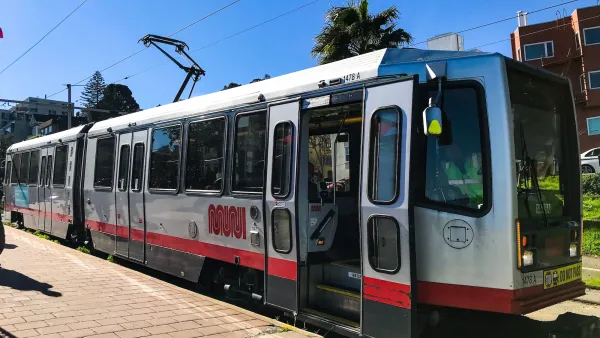
San Francisco cyclists push to allow bikes on Muni trains
The agency is one of few that bans bikes from its trains due to space constraints.

A San Francisco bus that serves thousands of students students is getting some upgrades
Students advocated for changes on the #29 bus, which was notorious for its lack of reliability.
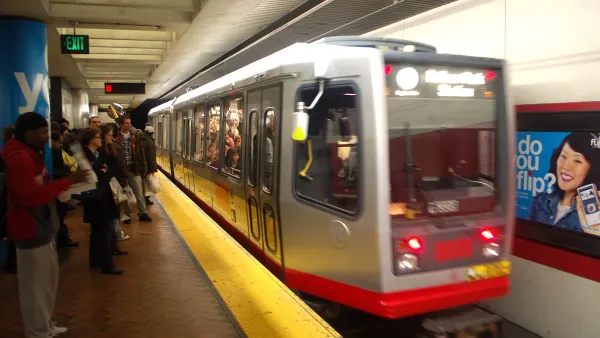
California Revives $750M Loan to Save Bay Area Transit
The state approved a $750 million loan as a stopgap measure to fund regional transit agencies until a 2026 ballot measure that could bring more permanent funding.

Planetizen Federal Action Tracker
A weekly monitor of how Trump’s orders and actions are impacting planners and planning in America.

Amtrak, CN end decades-long dispute with eight-year agreement
The new operating agreement establishes an updated framework for the companies to work together, including processes to resolve disputes.

Judges permit Denver to divert 77,000 acre feet from the Colorado River for reservoir expansion
Overuse and climate change have caused the Colorado River’s water levels to plummet.

Boston has spent millions making the Green Line more accessible — and there’s no end in sight
While the city has invested millions into expanding and adding platforms to the Green Line to make it more accessible, new train cars set to arrive next year will be too tall for disabled passengers to board without raising the current platforms.

Idaho may see an 18% drop in federal surface transit funding — the largest estimated cut in the US
Transit systems in rural communities are much more reliant on federal funding to provide their services.

How ‘post-disaster gentrification’ alters neighborhoods after natural calamities
After hurricanes, fires or other calamities, the original residents of a community are often replaced by younger, wealthier residents.

FREE Course: Walkable City 1: Why Walkability?
After describing his path towards focusing on walkability as the essence of good planning, Jeff Speck marches through his five principal reasons for making more walkable places.
Reinventing Malls: Planning Alchemy—Turning Gray Fields Into Gold
The course focuses on the opportunities and imperatives that shape reinvention of mall sites.

City of Wisconsin Rapids
Harvard University Graduate School of Design
KFH Group Inc.
The Architects Foundation
University of Cincinnati Online
The Pocatello Development Authority
The Urban Renewal Agency of the City of Pocatello