Land Use

Affordable Housing Development Rejected for Lack of Third Staircase in Connecticut
The New Canaan Planning Commission rejected a development proposal, including 31 below-market-rate apartments, for lack of a third staircase, among other reasons, at a time when advocates are pushing to relax two-staircase requirements.

Maps: How Much of Your City is Parking?
The percentage of land dedicated to parking in the central districts of major U.S. cities ranges from 4 percent to as much as 42 percent.

Part of Houston’s Main Street to Be Permanently Pedestrianized
A seven-block stretch downtown will remain closed to cars after the success of a pandemic-era outdoor dining program.

Parking Reform Gains Momentum
More cities and states around the country are recognizing the value of eliminating parking requirements.
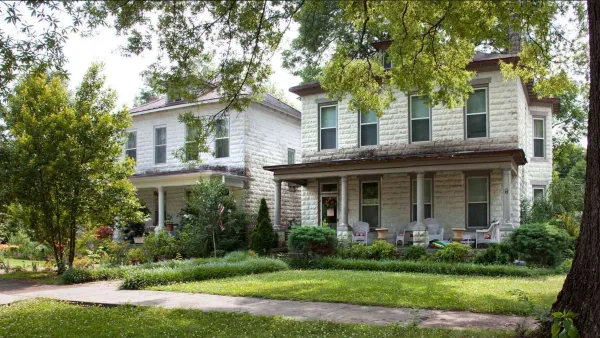
The Return of ‘Catalog Homes’
Sets of pre-approved housing plans can lower construction costs, shorten timelines, and encourage more badly needed housing production.

Sprawl and Democracy
One common defense of pro-sprawl government policies is that government reflects the will of the people. But is this really true?

Opinion: How California’s Environmental Law Empowers NIMBYs
Critics of a new provision calling “social noise” an environmental impact say the law can too easily be co-opted by anti-housing groups to block new development.

Colorado Governor Wants to Preempt Local Zoning Control
Colorado could be the latest state, following Oregon and California, to legislate statewide preemption of local zoning codes to allow for more housing development.

Florida Law Would Change the Definition of ‘Sprawl’
One quick way to build sprawl.

Study: Autonomous Cars Won’t Solve the Parking Problem
In hyper-dense cities where incentives to reduce car use and eliminate parking are already high, mass adoption of AVs won’t significantly reduce parking demand.

Panel: Minneapolis Zoning Updates Should Reflect Mixed-Use Future
A discussion of post-pandemic changes in work and commuting concluded that the city’s overhaul of its zoning code should be less restrictive with land uses.

Planners Look to ‘Activity Centers’ for Sustainable Development
Existing hubs of ‘hyperlocal’ economic activity provide a model for urban density.
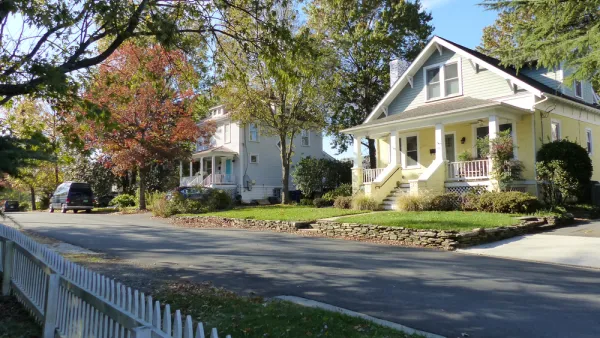
The End of Single-Family Zoning in Arlington County, Virginia
Arlington County is the latest jurisdiction in the country to effectively end single-family zoning.

With New ADU Rules, Anchorage Leading U.S. Zoning Reform Efforts
Anchorage recently passed a package of laws that will allow accessory dwelling units in commercial and residential zones, and, in a rare move, on residential lots with existing multi-family housing.

Working With Nature, Not Against It
The concept of ‘natural capital’ calls on policymakers to consider the value of natural infrastructure, which can often improve climate resilience without expensive construction projects.
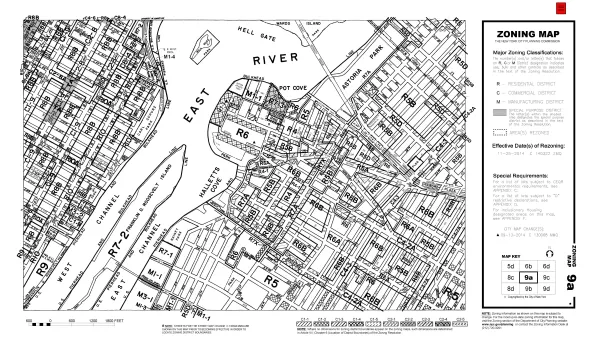
Ranking Exclusionary Zoning: D.C., New York Metro Areas Top the List
A new database measures the restrictiveness of exclusionary zoning practices around the country. Exclusionary zoning, it turns out, is much more prevalent than commonly acknowledged.

Dallas Ahead of the Game in Adaptive Reuse
Thanks in part to a state tax credit created in the early 2000s, downtown Dallas is set to create roughly 1,500 new housing units by converting office buildings to residential uses.

Avi Kwa Ame, Sacred Land in Nevada, to Be Preserved as a National Monument
Hundreds of thousands of acres of land in Clark County, Nevada will be preserved by President Biden under the powers of the Antiquities Act, according to reports.

Arlington ‘Missing Middle Housing’ Plan Faces Scrutiny
A proposal to legalize more housing types in northeastern Virginia has prompted vigorous debate among stakeholders.

New York Governor Advances Housing Plan Amid Stiff Suburban Opposition
Governor Kathy Hochul’s ambitious proposal to create more housing has once again run into a brick wall of opposition in New York’s enormous suburbs, especially on Long Island. This year, however, the wall may have some cracks.

FREE Course: Walkable City 1: Why Walkability?
After describing his path towards focusing on walkability as the essence of good planning, Jeff Speck marches through his five principal reasons for making more walkable places.
Reinventing Malls: Planning Alchemy—Turning Gray Fields Into Gold
The course focuses on the opportunities and imperatives that shape reinvention of mall sites.

One Hundred Miles
County of Mendocino
planning NEXT
The Architects Foundation
University of Cincinnati Online
Montrose County
Northern Illinois Transit Authority (NITA)
The Pocatello Development Authority









