Land Use
Report Details Best Practices for Land Banks
A recent report collects data from the experience of cities using land banks as a method for addressing vacant and blighted properties.
The Human Dimension of the Physical City
In his latest two contributions from the south of France, Chuck Wolfe reminds urbanists of the backdrop of the human dimension of affinity, conversation and daily rituals that stand behind the physical, human scale.
Who's Right in the Informal Housing Debate?
When Los Angeles County Planner Jonathan P. Bell wrote about informal housing in the region, several commenters responded. So Bell decided to answer questions and critics.
A Census for City Streets
Eric Scharnhorst, project manager at Gehl Architects, argues for a wide-scale census instrument detailing city life, not just pedestrian counts and fatalities.

The Undeniable Urbanism of the 'Plot'
According to researchers and practitioners in the United Kingdom, there's still room for another urbanism. Chuck Wolfe digests the recent Summit on Plot-Based Urbanism from Glasgow.
To Keep the Weight Off—Oklahoma City Prioritizes Active Urban Spaces
In 2012, Oklahoma City lost one million pounds by going on a citywide diet. Now it plans to keep the weight off by funding and building a more active, less car-centric city.
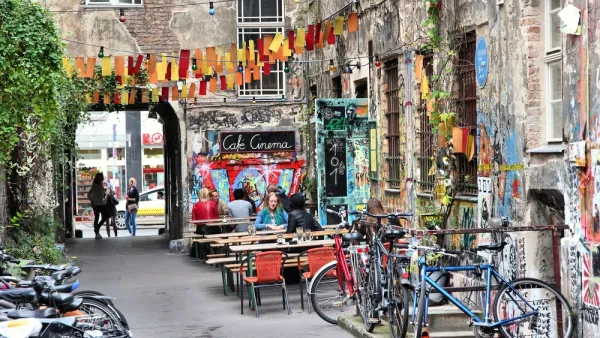
Lessons Learned from Berlin Shopfronts
Susan Henderson looks to Berlin's delectable shopfronts for pointers. Not from the usual suspects like Kurfürstendamm and Friedrichstrasse, but from the neighborhoods of Prenzlaur Berg, Scheunenviertal, Kreuzberg, and of course, Hackeschen Höfe.
Nuances Of NIMBYism
Harvard Professor Naomi Oreskes' recently issued a plea to "stop hating on NIMBYs." But the righteousness of NIMBYism, or the "hatred" thereof, depends, in large part, on whether opposition takes place in an urban or rural setting.
San Francisco Voters Increase Height Limits for Waterfront Development
Voters gave Forest City Enterprises' Pier 70 development the go-ahead on Tuesday by increasing height limits from 40 to 90 feet. The 65-acre property will be developed into mixed use, with 2,000 housing units, 30 percent affordable, and open space.
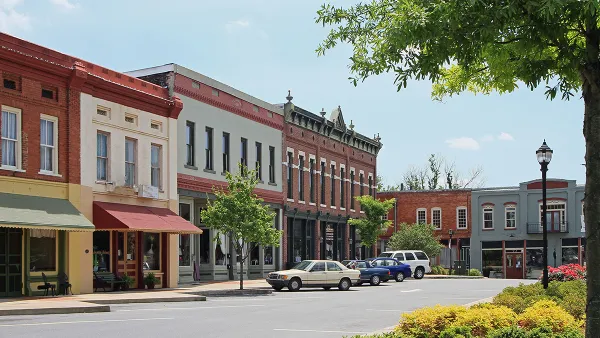
The Many Benefits of Traditional Development
Charles Marohn assesses some of the economic benefits of traditional commercial development as compared to those of auto-oriented commercial development.
Artisan Manufacturing Mixes Uses with Residential
Looking to integrate artisan manufacturing into a residential neighborhood? Berlin examples provide a few pointers, via Hazel Borys.
Competitors File Suit Over San Francisco's Airbnb Legislation
The already controversial law enabling Airbnb in San Francisco will head to court, as a competitor believes the city has granted Airbnb an unfair advantage.
Nothing to See Here: Detroit's Blockbuster Blight Bid Falls Through
Anna Clark has the scoop about the latest wrinkle in the blockbuster Detroit blight auction: the surprise, mysterious bid for 6,000 parcels if off the table.
Campaign 2014 Results: Bay Area Transportation, Land Use, and Soda Tax Measures
Votes exceeded the two-thirds threshold to pass two vital transportation funding measures in San Francisco and Alameda counties. In Berkeley (which passed the nation's first soda tax) and Menlo Park, voters resoundingly reject anti-growth measures.
Paying a Premium to Live on New York City's Shortest Streets
One-block streets are, often one-way and without sidewalks, are home to some of New York City's desirable residences.
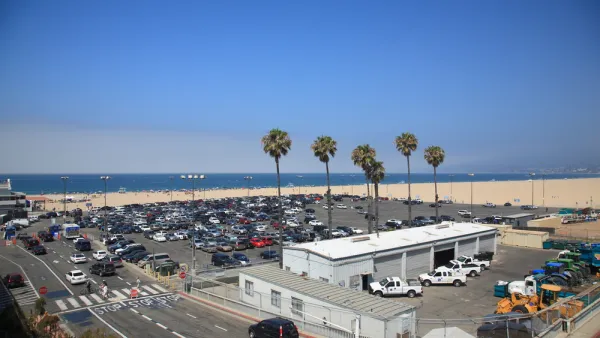
Places for Parking, Not People, in Santa Monica, California
After noting the heated rhetoric that surrounds development in Santa Monica, especially during election season, Jason Islas reveals claims of the city's overdevelopment to be true—if we're talking about cars.

When Nuisance Suits Are a Nuisance
In one Texas case, homeowners are suing a new apartment building for nuisance. If such suits become common, infill development will become less common, causing higher rents and more citywide vehicle traffic.

Height Limits as a Catalyst for Development
Charles Marohn proposes height limits as a catalyst for development. Yes, you read that correctly.
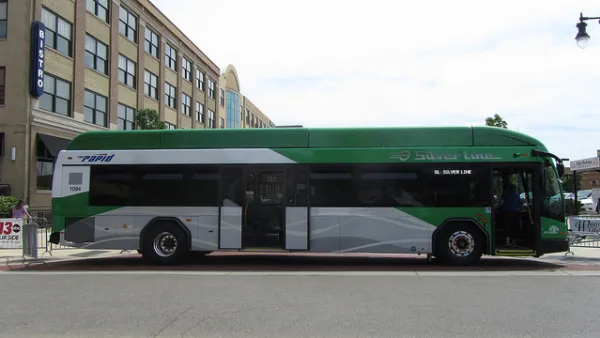
How Grand Rapids Became a Transit Success
Rachel Dovey shares some of the secrets to the success of Grand Rapids, Michigan after a year of transit improvements in the small city.
Plans for a $35 Million Rail-to-Trail Conversion in South Los Angeles
A blighted abandoned rail corridor through South Los Angeles received funding to plan a rail to trail conversion. Can residents compel officials to complete the sorely needed open space facility?

FREE Course: Walkable City 1: Why Walkability?
After describing his path towards focusing on walkability as the essence of good planning, Jeff Speck marches through his five principal reasons for making more walkable places.
Reinventing Malls: Planning Alchemy—Turning Gray Fields Into Gold
The course focuses on the opportunities and imperatives that shape reinvention of mall sites.

City of Rosemead
Rutgers University, Edward J. Bloustein School of Planning and Public Policy
One Hundred Miles
University of Michigan School for Environment and Sustainability (SEAS)
Hunter College, City University of New York (CUNY)
The Architects Foundation
City of Cambridge
Montrose County
The Pocatello Development Authority









