Though research has been piling up on the adverse health impacts connected with driving long distances every day, it turns out that no matter how you travel to work, "having a job far from home can undermine health."


"Millions of Americans . . . pay dearly for their dependence on automobiles, losing hours a day that would be better spent exercising, socializing with family and friends, preparing home-cooked meals or simply getting enough sleep," writes Jane E. Brody. "The resulting costs to both physical and mental health are hardly trivial."
But such costs aren't just borne by Americans, or car commuters.
"Erika Sandow, a social geographer at [Sweden's] Umea University, found that people who commuted more than 30 miles a day were more likely to have high blood pressure, stress and heart disease," notes Brody. "Another Swedish study, directed by Erik Hansson of Lund University, surveyed more than 21,000 people ages 18 to 65 and found that the longer they commuted by car, subway or bus, the more health complaints they had. Lengthy commutes were associated with greater degrees of exhaustion, stress, lack of sleep and days missed from work."
Read the full story: Commuting’s Hidden Cost

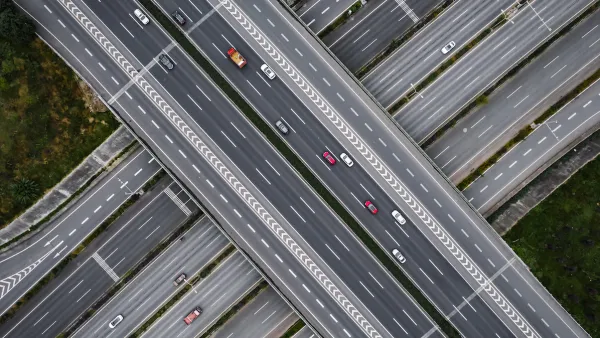
The Harms of a Car-Centric World
While most of the world’s population doesn’t drive, cars have an outsized negative impact on public health, the environment, and land use.
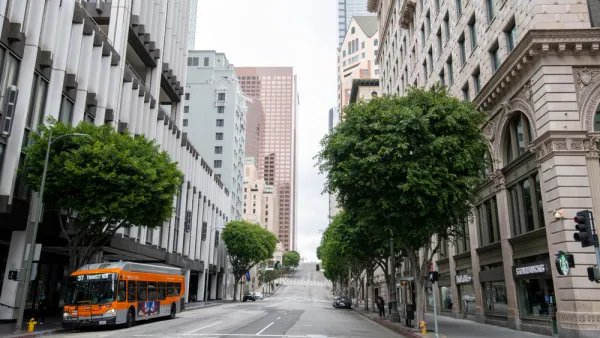
L.A. Metro Plans for an Equitable Recovery
The pandemic has forced difficult confrontations with inequities that existed long before the novel coronavirus. L.A. Metro planners are responding by charting a path toward a transportation system that reverses and improves those previous realities.

As Texans face soaring electricity costs, a public health crisis looms
Demand for electricity in Texas is surging, largely driven by data centers and other industries, and residential customers are footing the bill.

Planetizen Federal Action Tracker
A weekly monitor of how Trump’s orders and actions are impacting planners and planning in America.

Data reveals that NYC’s bet on congestion pricing has paid off
After almost two years of the program, reports show positive impacts on traffic and air quality and no disruptions to parking.

Denver is solving homelessness. Why aren't the rest of us?
Since 2023, Denver's street homeless population has decreased by 64%, proving that effective tools exist to support those in need of housing.

Will sprawl save California?
California residents will vote on Proposition 45 in November, which would make it easier to build large housing developments on the outskirts of the state’s cities.

Texas suburbs are popping up around old oil wells. Some are starting to leak
Several plugged wells in Texas have failed in recent years, endangering those who unknowingly settled nearby.

This Chicago neighborhood is using planning to increase life expectancy
The Garfield Park Quality-Of-Life Plan aims to bring residents everything from easier access to fresh food to revitalized commercial corridors.

FREE Course: Walkable City 1: Why Walkability?
After describing his path towards focusing on walkability as the essence of good planning, Jeff Speck marches through his five principal reasons for making more walkable places.
Reinventing Malls: Planning Alchemy—Turning Gray Fields Into Gold
The course focuses on the opportunities and imperatives that shape reinvention of mall sites.

Rutgers University, Edward J. Bloustein School of Planning and Public Policy
One Hundred Miles
County of Mendocino
The Architects Foundation
University of Cincinnati Online
Montrose County
Northern Illinois Transit Authority (NITA)
The Pocatello Development Authority