When the Trump administration went after colorful crosswalk treatments, some cities found creative ways to fight back.


In a very early episode of the vintage cartoon series Rainbow Brite, a terror befalls Rainbowland in the form of a thief.
For those unfamiliar, Rainbow Brite and her friends — Starlight, Twink and the Color Kids — live to protect Rainbowland "so that they can bring color and happiness to people everywhere," so the narrator informs us. But Murky Dismal, the series’ comically small and sickly-looking villain, has other plans: to steal Rainbow Brite’s magic belt and take all the colors out of the world to make everyone gloomy. "If I destroy color," he exclaims with glee, "I’ll destroy happiness and hope!!"
The episode may have run in 1984, but it watches like a heavy-handed allegory for urban America today. Last year, U.S. Transportation Secretary Sean Duffy issued a letter to all 50 states demanding the removal of "political messages or artwork" from their roadways. Rainbow crosswalks disappeared overnight across the country, from Orlando to Austin and beyond, as jurisdictions feared losing transportation funding. Utah and Idaho banned "unofficial" flags — including Pride flags — from government buildings and schools. As though the country has been blanketed in a state-sanctioned fog of Murky Dismal’s signature "gloom cloud" formula, rainbows have blinked out from America’s streetscapes from coast to coast.
But, just like in Rainbowland, resistance is afoot as cities use the powers they have to re-rainbow streetscapes on their own terms. While states may control roadways, cities control sidewalks, street furniture and much more. In honor of Pride this year, here are a few examples of cities bringing color back in the form of rainbow resistance.
San Antonio’s rainbow sidewalks
Rainbow crosswalks started disappearing from San Antonio streets this year after Gov. Greg Abbott directed the Texas Department of Transportation to remove them or risk the city losing millions in funding. But Jalen McKee-Rodriguez, a gay City Council member, quickly had an idea for resistance: paint the sidewalks — which are not under state jurisdiction — instead.
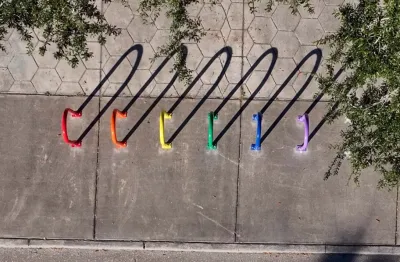
St. Petersburg’s rainbow bike racks
After Governor Ron DeSantis and the Florida DOT demanded the removal of rainbow crosswalks statewide, many cities resisted. But St. Petersburg went one step further, installing 11 Pride-inspired bike racks along Central Ave and 25th Street, funded by the city’s long-standing public bike rack program.
Salt Lake and Boise’s new "official" flags
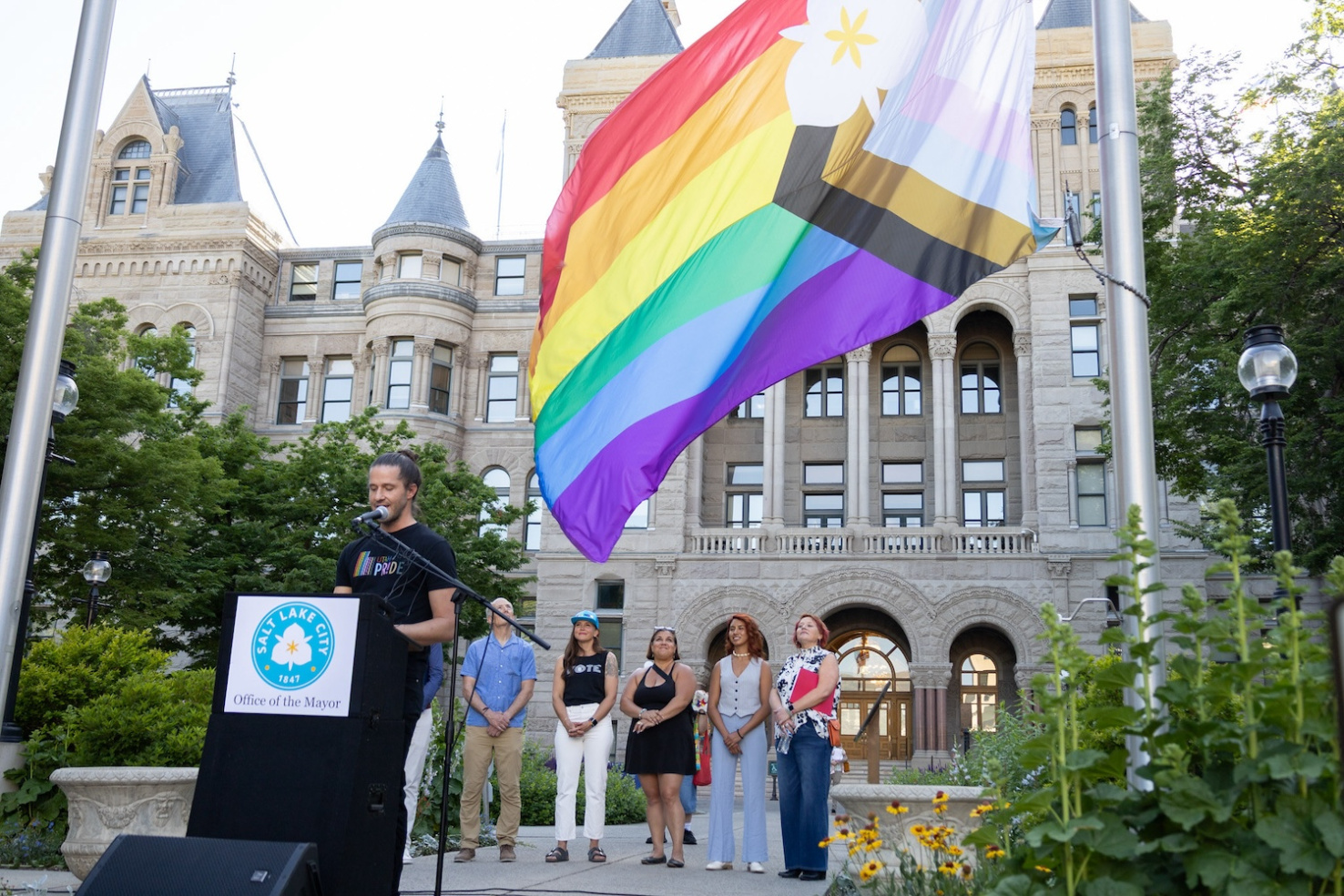
Banned from displaying unofficial flags on government property, Utah and Idaho’s state capitals, Salt Lake City and Boise adopted a surprisingly simple workaround: they made Pride flags official. Or, to be more specific, Boise made the traditional Pride flag one of its official flags while Salt Lake went a step further and adopted three new flags with the city’s traditional sego lily design imposed over a Pride flag, a trans flag and a Juneteenth commemoration flag.

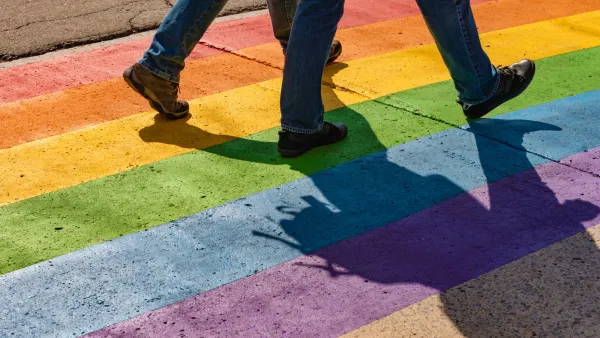
Austin Removes 3 Decorative Crosswalks After Feds Shut Down Safety Study
The crosswalks, two of which were painted with rainbow colors, were part of a safety study canceled by the FHWA in November.
USDOT Pulls Funding from Projects not “Car-Focused” Enough in Connecticut, New Mexico, Illinois
The department is sending letters to local officials rescinding multimodal grants, saying the money will instead be focused on projects that “promote vehicular travel.”
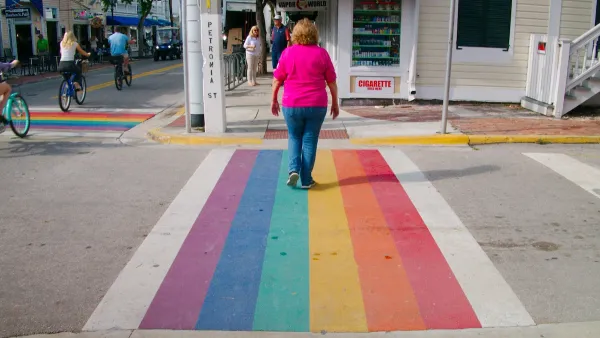
The Florida Cities Risking Everything to Save Rainbow Sidewalks
Gov. DeSantis has threatened to withhold state transportation funding and remove local leaders who don’t comply with an order to remove painted crosswalks.

Planetizen Federal Action Tracker
A weekly monitor of how Trump’s orders and actions are impacting planners and planning in America.

Amtrak, CN end decades-long dispute with eight-year agreement
The new operating agreement establishes an updated framework for the companies to work together, including processes to resolve disputes.

Northwest rail fans eager for Sept. 30 debut of Amtrak’s Airo fleet
Get ready for that new train smell and more seats. But they won’t go faster or run more frequently on the Cascades route in Washington and Oregon.

St. Louis Metro to test if single-car trains can reduce operating costs, maintain rider satisfaction
The pilot program will run from October to spring 2027, and begin with one single-car train operating on Metrolink’s Red and Blue lines.

Pennsylvania is building data centers in abandoned mines
Housing data centers in mines provides an alternative to destroying local forests and may spare residents from data centers’ noise and air pollution.

If Corpus Christi can’t revive desalination plant project, it may owe Texas $235 million
Earlier this month, city officials declined to pursue developing the plant for the second time in a year.

FREE Course: Walkable City 1: Why Walkability?
After describing his path towards focusing on walkability as the essence of good planning, Jeff Speck marches through his five principal reasons for making more walkable places.
Reinventing Malls: Planning Alchemy—Turning Gray Fields Into Gold
The course focuses on the opportunities and imperatives that shape reinvention of mall sites.

City of Thousand Oaks
City of Wisconsin Rapids
Harvard University Graduate School of Design
The Architects Foundation
University of Cincinnati Online
The Pocatello Development Authority
The Urban Renewal Agency of the City of Pocatello

