The crosswalks, two of which were painted with rainbow colors, were part of a safety study canceled by the FHWA in November.


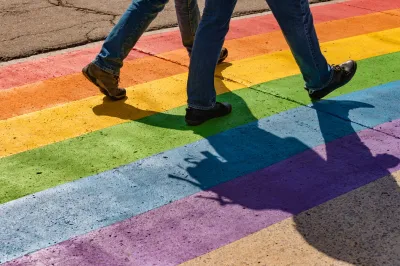
Austin city officials removed three decorative pavement markings on crosswalks identified as potentially subject to scrutiny under new federal regulations that prohibit “political messaging,” reports Nathan Bernier for KUT News.
According to Bernier, two of the crosswalks featured rainbow designs, while the third was painted to look like brick pavers. “All were installed in October 2024 as part of an FHWA study testing whether colorful or patterned pavement markings affect pedestrian safety.” The FHWA ended that study in November, citing safety concerns and ordering the city to restore standard markings. “Prematurely ending such federally funded carries real consequences, according to Stefanie Seskin with the National Association of City Transportation Officials.” Meanwhile, a city report found that, in some cases, aesthetic treatments improved how often drivers slowed down for people crossing.
In response to the new federal guidelines, Texas tightened its own regulations for road marking to go above and beyond, adding a line that bans “political or advocacy messages of any nature.” Austin could be forced to remove additional crosswalk treatments.
FULL STORY: Austin removes colorful crosswalks after feds terminate safety study

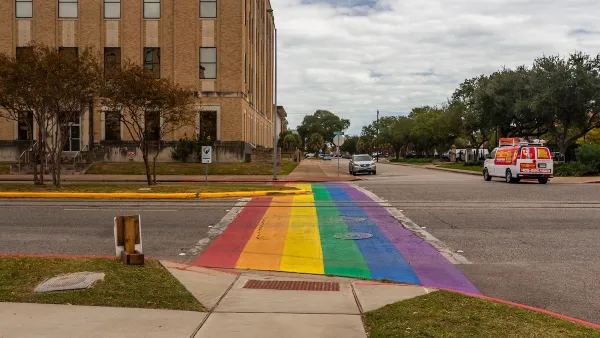
Texas Governor Orders Removal of Rainbow Crosswalks, ‘Political’ Road Markings
The directive follows a similar order from U.S. Transportation Secretary Sean Duffy.
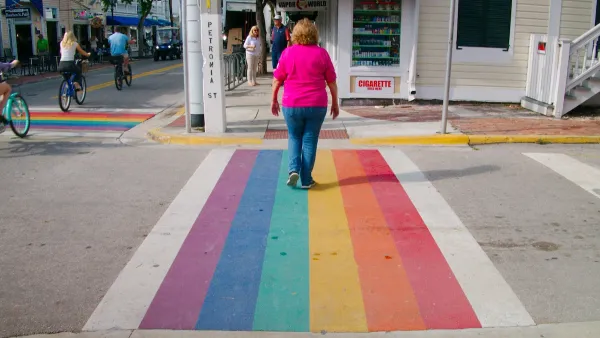
The Florida Cities Risking Everything to Save Rainbow Sidewalks
Gov. DeSantis has threatened to withhold state transportation funding and remove local leaders who don’t comply with an order to remove painted crosswalks.
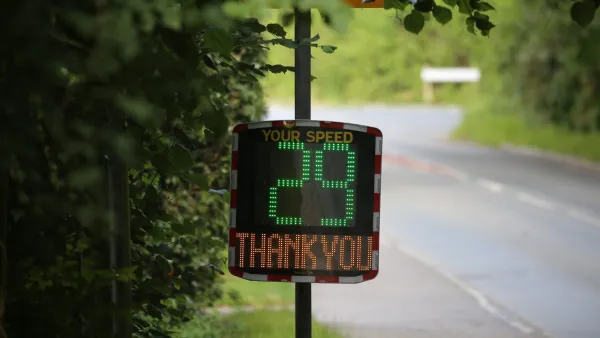
Austin road sign compliments safe drivers
An electronic display praises drivers who stay under the speed limit with personalized messages.

Planetizen Federal Action Tracker
A weekly monitor of how Trump’s orders and actions are impacting planners and planning in America.

The state-sanctioned urbicide of Austin
People don’t kill cities. Freeways do.

US to reduce Colorado River water deliveries to Mexico
A new Colorado Treaty amendment reduces Mexico’s Colorado River water allocation by 250,000 acre feet.

5 New England states march closer to 800 megawatt wind energy project
Securing federal approval for the project may be complicated under the Trump administration, which has historically been hostile towards domestic wind power.

Baltimore to break ground on $50 million Transit Priority Project
The project will bring faster bus trips, safer streets and better bike connections to Baltimore.

Airbnb launches $250 million 'last-dollar financing' housing accelerator, makes first investment in Austin
The company will put $6.4 million towards affordable housing development in Texas’ capital.

FREE Course: Walkable City 1: Why Walkability?
After describing his path towards focusing on walkability as the essence of good planning, Jeff Speck marches through his five principal reasons for making more walkable places.
Reinventing Malls: Planning Alchemy—Turning Gray Fields Into Gold
The course focuses on the opportunities and imperatives that shape reinvention of mall sites.

Eagle County Government
Harvard University Graduate School of Design
Nashville Planning Department
The Architects Foundation
University of Cincinnati Online
The Pocatello Development Authority
The Urban Renewal Agency of the City of Pocatello
Journal of the American Planning Association