Exclusives
FEATURE
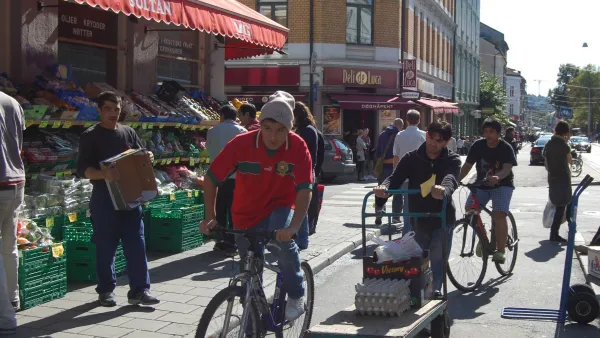
What Can a 'Science of Cities' Offer Planners?
Research across a range of fields is beginning to offer useful new guidance for planning policy and practice—and pointing the way to more effective "bottom-up" strategies.

BLOG POST
The Curious Anonymity of Architecture
Chicago's complaints about the signage on Donald Trump's new tower are predictable enough. What's surprising is that the people to design buildings rarely, if ever, get the slightest recognition in the public realm.
BLOG POST
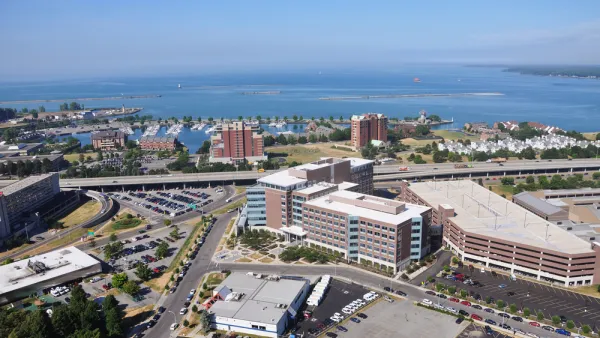
Does Low Congestion Mean Urban Failure?
The least congested cities tend to be small, declining, and dangerous.

BLOG POST
Destabilizing Urban Planning
How can the contemporary concepts in ecology studies—adaptability, resiliency, and flexibility—advance urban planning practices?

FEATURE
One Hundred Years of Exposure
An interview with artist and critic Jonathon Keats, who recently implemented a project in Berlin where participants will anchor pinhole "century cameras" around the city to record its changes over a period of 100 years.

BLOG POST
Self-Starter Urbanism: Small Firms Tackle Big Projects on Their Own Terms
Development and research projects allow small firms entry into large-scale design.
BLOG POST
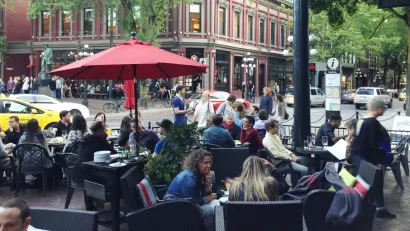
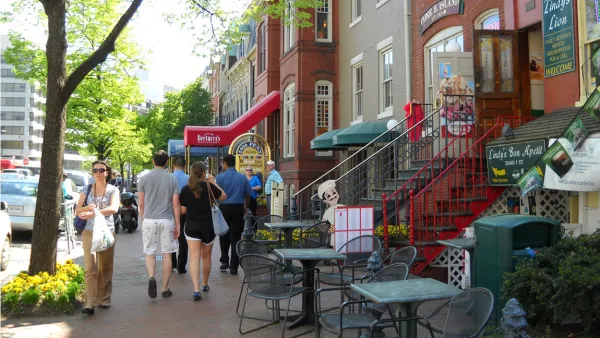
Let's Make Sticky Streets for People!
As cities work hard to evolve their perspective on the role of streets as public places in smarter city-making, remember this: Good cities know that streets move people, not just cars. Great cities know that streets are places to linger and enjoy.

BLOG POST
A Parking Paradox
Minimum parking requirements affect developer behavior most where they are most controversial: in downtown neighborhoods. In suburbs where they may just mimic the market, the arguments for such rules are paradoxically even weaker.
BLOG POST
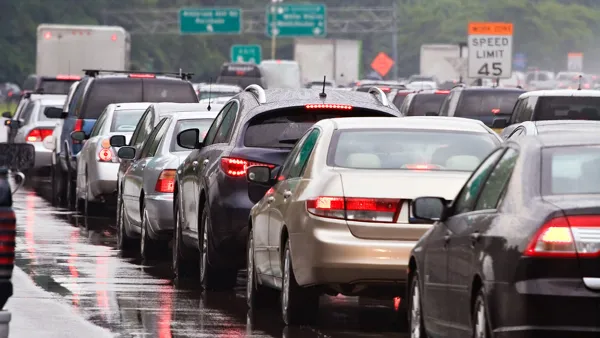
Is Traffic Speed Compliance A Congestion Cost?
Conventional evaluation often exaggerates congestion costs by using baseline travel speeds which exceed speed limits. This assumes that traffic speed compliance is a congestion cost that justifies major infrastructure investments to alleviate.
FEATURE
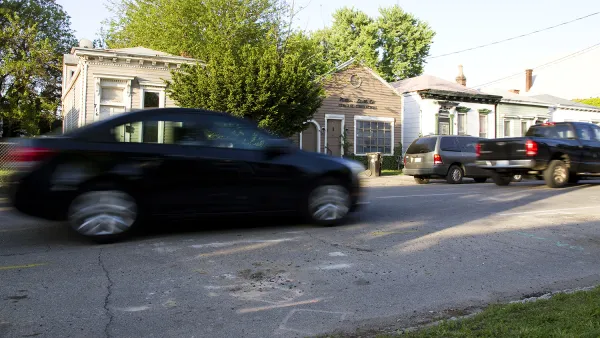
Two-Way Streets Can Fix Declining Downtown Neighborhoods
America’s multi-lane one-way streets are a disaster for neighborhoods. A recent study, released at the International Making Cities Livable Conference and led by John Gilderbloom, finds benefits to converting such streets to two-way traffic flows.

BLOG POST
The Fall of Planning Expertise
With increasing skepticism and conflict towards planners and planning projects, we must ask ourselves: Is the power and politics now vested in "community participation" undermining the planning profession?

BLOG POST
E-Commerce And The Future Of The City
Chinese cities have grown at an astounding pace over the past few decades, wholeheartedly embracing the automobile. The upcoming IPO of Alibaba and the rise of e-commerce heralds a new, possibly troubling chapter in China's urban development.

FEATURE
Did Google Find a Low-Speed Shortcut to Fully Automated Vehicles?
Google's bold new design for a self-driving car has no steering wheel or pedals. And it has a top speed of 40 km/h. Here is a look at Google’s plans and the role low-speed automated vehicles could play in urban transportation.
BLOG POST
Gentrification and High Rents—Not Quite the Same Thing
Public concern about gentrification is based on fears that out-of-control rents are pricing out the middle and lower classes. But rent is rising even in places where gentrification is not happening.
BLOG POST
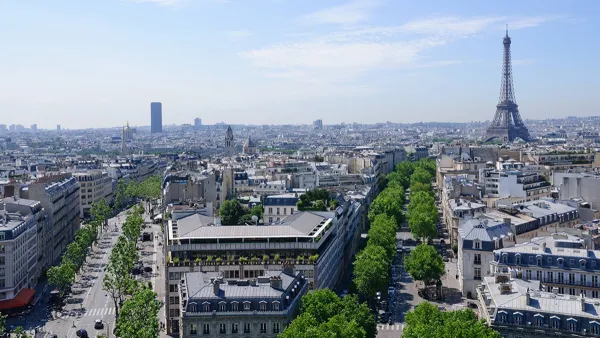
Tall Tower Debates Could Use Less Dogma, Better Design
When it comes to tall buildings, there's a lot of dogma out there among urbanists, in both directions. Lets spend more time and attention on the quality of tower and neighbourhood design, rather than on how tall the buildings are.

BLOG POST
The Case for Neighborhood Bars...and Why Planning is Like Cooking
Beyond permits and specific plans, urban planning is the creation and facilitation of a user experience, where the neighborhood bar is an essential ingredient to the cohesiveness of a neighborhood.

BLOG POST
Does Beauty Still Matter?
The design of urban landscapes has become dominated by a growing call for them to be ecologically resilient. But isn't it important what they look like?
FEATURE
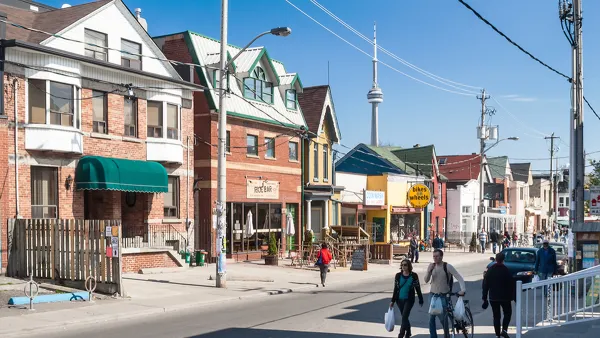
How Green is My Neighborhood? Let Me Count the Ways
Neighborhood-scale sustainable development is flourishing, as are tools for assessing and certifying the triple bottom line of projects. Ten neighborhood rating tools are reviewed for their best fit for planners, developers, and communities.
BLOG POST
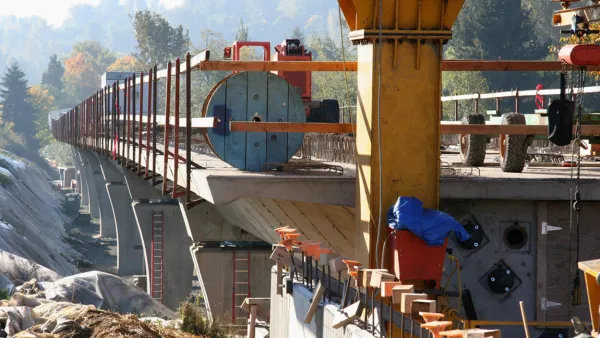
Responding to Transit Funding Criticism
My recent column, "Evaluating Public Transit Funding Options," described various ways to finance public transit improvements. Such funding is sometimes criticized. This column examines and responds to common criticisms.

BLOG POST
New Research: Social Vulnerability Significantly Predicted Storm Damage from Hurricane Ike
Wesley E. Highfield, Walter Gillis Peacock, and Shannon Van Zandt from Texas A&M examine the damage after Hurricane Ike and its relationship to social vulnerability (Available via Open Access, http://goo.gl/K) in a new JPER article.
Harvard University Graduate School of Design
KFH Group Inc.
Greater Baltimore Committee
The Architects Foundation
University of Cincinnati Online
The Pocatello Development Authority
The Urban Renewal Agency of the City of Pocatello

FREE Course: Walkable City 1: Why Walkability?
After describing his path towards focusing on walkability as the essence of good planning, Jeff Speck marches through his five principal reasons for making more walkable places.
Reinventing Malls: Planning Alchemy—Turning Gray Fields Into Gold
The course focuses on the opportunities and imperatives that shape reinvention of mall sites.