Exclusives
FEATURE
The Most Popular Planetizen Posts of 2014
We've been collecting data on the posts you made the most popular for the year 2014.

BLOG POST
The Economist and Suburbia: A Fistful of Myths
A recent set of articles in the Economist argued that the continued spread of suburbia was inevitable and perhaps desirable. But the article's arguments are not always applicable to North America.
FEATURE
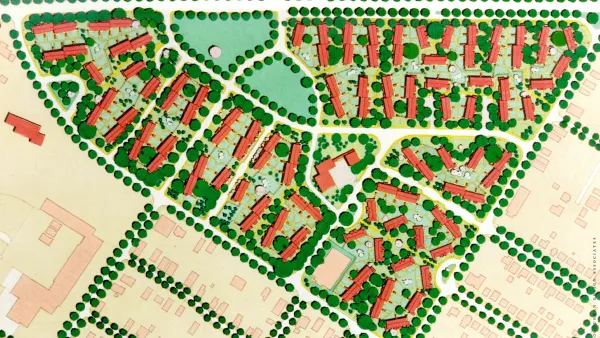
Back to Basics: the Diggs Town Public Housing Revitalization
Some of the most effective solutions in urban design involve the simplest design changes. Revitalizing public housing is difficult, but not impossible, as shown by Ray Gindroz and his team at Urban Design Associates in Norfolk, Virginia.

BLOG POST
Dumping in Dixie and the Inequity of Place
Only by better addressing issues of inequity can we create truly sustainable and livable communities. But is that even possible today?
BLOG POST
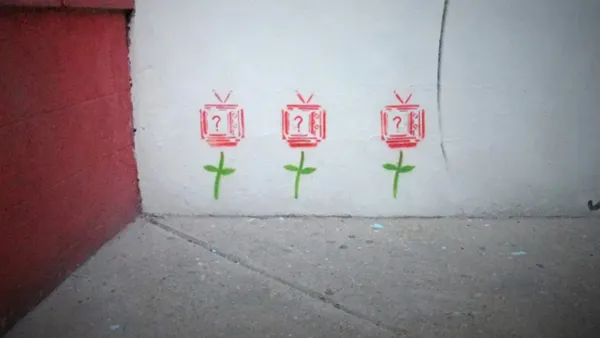
Nature and Art: A Christmas Plea for Cities
I wrote an urbanist Christmas wish list last week for Fast Forward Weekly. I figured I'd elaborate on one of my wishes for weedy nature and public art: disturbance oriented art.

BLOG POST
Five Things You Need to Know About E-Bikes—An Urban Transportation Paradigm Shift
When you have a small electric motor, a battery, and a throttle on your bicycle, it becomes very difficult to make any more excuses. Here's why...
BLOG POST
Secrets of Congestion-Busting Cities
Only nine regions experienced reduced traffic congestion between 1991 and 2011. What do they have in common?

BLOG POST
Popular in 2014: Increasing Transient Occupancy Taxes
Fourteen California municipalities attempted to increase their Transient Occupancy Taxes (TOTs) through ballot measures this November. Why are cities around the state looking to TOTs to increase revenues?

FEATURE
Top 10 Books - 2015
Planetizen is pleased to release its list of the ten best books in urban planning, design, and development published in 2014.
BLOG POST
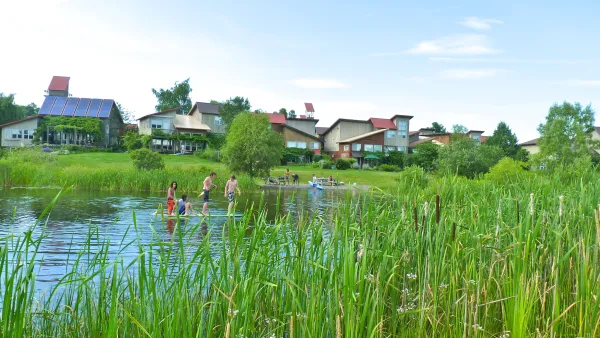
The Eco Village Concept: Climate Mitigation Might Require Experimentation
Robert Boyer of UNC-Charlotte discusses his new article on the hurdles surrounding building environmentally friendly Ecovillages. Follow Journal of Planning Education and Research @JPER7.
BLOG POST
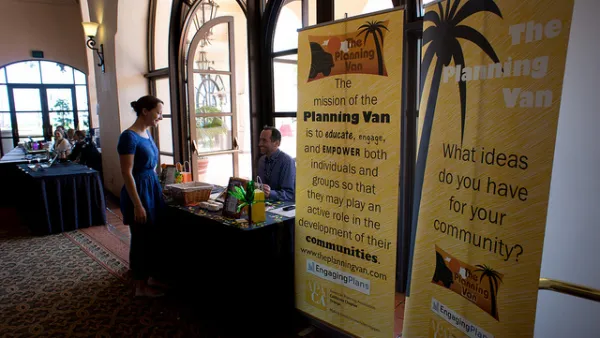
Should I Present at a Conference? And If I Don't Present, Should I Attend?
One question I get asked a lot is if students should present at conference. In fact it is often more of a statement of intent rather than a question about whether it is useful. The answer, however, is not as clear as many students believe.

BLOG POST
A Playful Approach to Activating Spaces along the Los Angeles River
An interview with two of Project 51's co-founders, John Arroyo and Catherine Gudis, on the collective's recent "Play the LA River" card deck, a playable guide which invites participants to discover 56 unique sights along the entire Los Angeles River.

BLOG POST
Critiquing the 'Twenty Percent' Argument Against Transit Funding
This post critiques a common argument against federal support for public transit: that transit gets 20 percent of transportation spending yet has a much lower market share.

FEATURE
South Park Neighborhood in Downtown Los Angeles Partners for Greener Alleys
The South Park BID and LA Sustainability Collaborative came together to organize the "Green Alleys in South Park Visioning Report," with plans to connect its next steps in sustainable action to city, development, and third-party projects.
BLOG POST
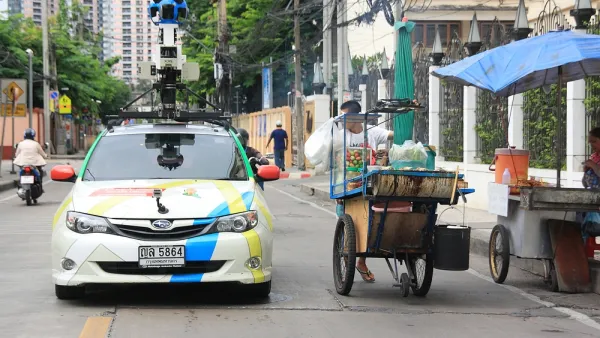
How to Decide if Planning is for You
At this time of year, many prospective graduate students are asking themselves if they should apply to planning programs. This is a good question. Planning is a diverse field and it can be hard to figure out if it will be the right fit.
BLOG POST
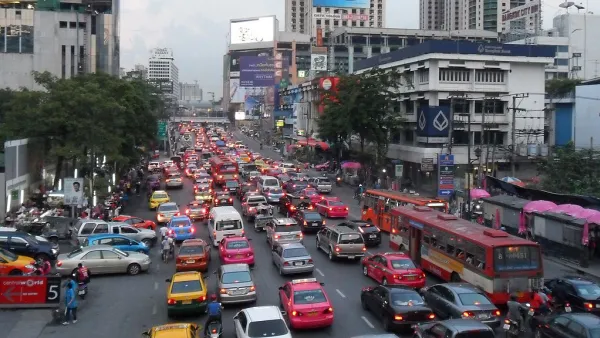
Land for Vehicles or People?
Automobile-oriented planning requires that cities devote signifiant amounts of space to roads and parking—under many conditions each vehicle requires more land than is devoted to housing per capita.
BLOG POST
Shadow Transnationalism and Planning
The Chester Rapkin award goes to University of Oregon's Gerardo Sandoval for work on the impact of transnational communities and planning.

FEATURE
A Planning Career to Help People Share—Bikes, of Course
The following interview, as published in the 4th Edition of the Planetizen Guide to Graduate Urban Planning Programs, features Kimberly Lucas, bicycle program specialist for the District Department of Transportation.

BLOG POST
Why Accusations of 'Racism' Don't (Usually) Work
Conservatives and liberals tend to define "racism" very differently. As a result, accusations of racism tend to be unsuccessful outside ideologically homogenous environments.
BLOG POST
Climate Change Targets? No Problem! We Have Win-Win Solutions
Ambitious new emission reduction targets can be met with strategies that also help achieve other economic, social, and environmental objectives.
Harvard University Graduate School of Design
KFH Group Inc.
Greater Baltimore Committee
The Architects Foundation
University of Cincinnati Online
The Pocatello Development Authority
The Urban Renewal Agency of the City of Pocatello

FREE Course: Walkable City 1: Why Walkability?
After describing his path towards focusing on walkability as the essence of good planning, Jeff Speck marches through his five principal reasons for making more walkable places.
Reinventing Malls: Planning Alchemy—Turning Gray Fields Into Gold
The course focuses on the opportunities and imperatives that shape reinvention of mall sites.