Exclusives

BLOG POST
What Density-Phobia Gets Wrong
In her article, "What Champions of Urban Density Get Wrong," the Philadelphia Inquirer's Inga Saffron critiques attempts to increase urban population. This post responds to her work.
BLOG POST
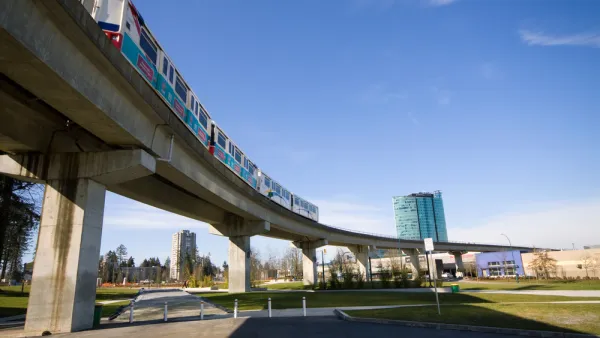
Public Transit Turning Point for Vancouver
Metro Vancouver is about to vote on a historic Transportation and Transit Plan, and an associated sales tax increase to pay for it. Will the citizens of this model transit Metro vote against a transit-friendly future? Canadian urbanists weigh in.

BLOG POST
How Ancient and Modern Cities Compare (and Why Planners Should Care)
A new scholarly paper argues that ancient and modern cities can be usefully analyzed in a comparative perspective. But what you do with the comps depends on how much you value similarities versus differences in urban form.
BLOG POST
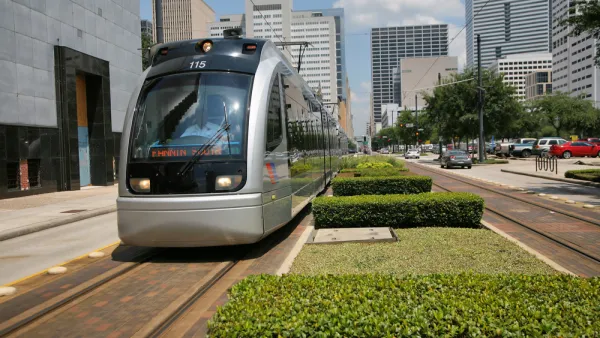
How Not to Evaluate Public Transit Risks
Randal O'Toole claims that light rail transit is more dangerous than bus or automobile travel, but he fails to account for exposure or overall safety benefits. This is a good example of bad statistical analysis.

FEATURE
Book Review: Zoned in the USA
"Zoned in the USA: The Origins and Implications of American Land-Use Regulation," by Sonja Hirt, describes the exceptional characteristics, compared to European land use regulations, that make U.S. zoning laws so conducive to sprawl.

BLOG POST
What Property Professors Are Writing About
A recent property professors' conference discussed a variety of issues of possible interest to planners including tightened home lending standards, municipal policies affecting the homeless, the Fair Housing Act, and inclusionary zoning.

FEATURE
Q&A: New Orleans Planning is 'Visionary within the Envelope of Feasibility'
The following interview, as published in the 4th Edition of the Planetizen Guide to Graduate Urban Planning Programs, features Jason Neville, senior planner for the New Orleans Redevelopment Authority.

BLOG POST
The Decline of Carpooling—Can App-Based Carpooling Reverse the Trend?
Contrary to the prevailing narrative about decreasing vehicle miles traveled runs a constant decline in the number of carpools. Very little is known about why Americans are carpooling so much less, so can mobile apps hope to reverse the the trend?

BLOG POST
Are Home Prices in New Urbanist Neighborhoods More Resilient? Evidence from Metro Portland
A new article in the Journal of Planning Education and Research (@JPER7) by Hongwei Dong of California State University, Fresno, asks whether New Urbanist developments were more resilient in terms of recovering from the 2008 real estate crash.

BLOG POST
Suburban Multifamily: Smart Growth or Smart Sprawl?
In suburbia, the line between smart growth and conventional sprawl is sometimes a blurry one.

BLOG POST
Blogging the City: Research, Collaboration, and Engagement in Urban Planning
Blogs are a rewarding platform for bringing academic perspectives and research results to a much broader audience of scholars, planning professionals, students, and citizens.

BLOG POST
Ready, Set, Action: Using 'Active Lifestyle Cameras' in Planning
Active Lifestyle Cameras are increasing in popularity—allowing for people to capture the moment on camera while in action. Now planners can use active lifestyle cameras to study all manner of activities, from use of parks to commuting.

FEATURE
Affordable Housing: the Hype and the Hope
Sam Hall Kaplan elucidates the inadequacies of affordable housing policy before introducing a new perspective to the conversation—a new book by Roger Katan with Ronald Shiffman called "Building Together."

BLOG POST
Part Two: Should MoMA Tout Tactical Urbanism(s) as a Solution to Uneven Growth?
The second and final post about MoMa's exhibit, "Uneven Growth: Tactical Urbanisms for Expanding Megacities."
FEATURE
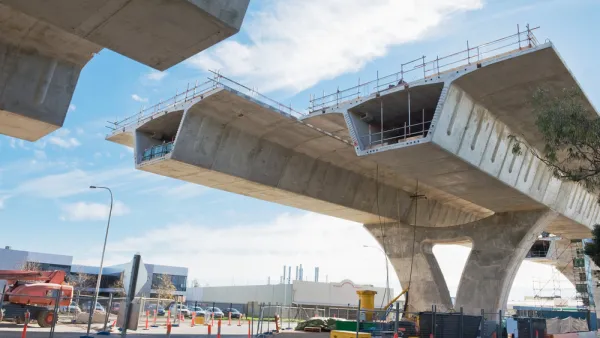
Needed: A Fresh Approach to Funding U.S. Infrastructure
Kenneth Orski, editor and publisher of Innovation NewsBriefs, examines how state governments are beginning to accept more responsibility for transportation funding.

BLOG POST
Supply and Demand Denialism
Some progressives deny that the law of supply and demand applies to housing.
BLOG POST
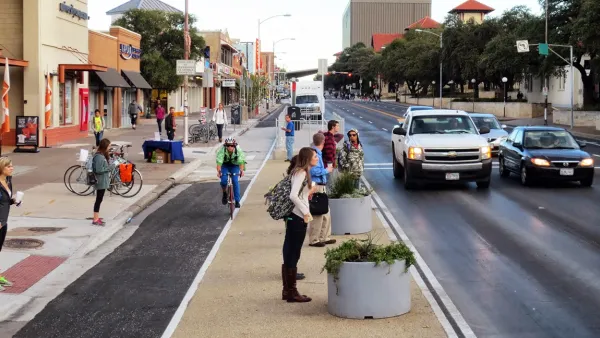
Celebrating the Best Complete Streets Policies of 2014
The nationwide trend of cities, counties, and regions adopting complete streets policies continued its momentum in 2014. A new report from the National Complete Streets Coalition surveys the field and decides which is the best of the best.

BLOG POST
Advice for Students: When to Contact Faculty at a Different Institution
With social media and the internet generally making it easy to contact faculty across the globe students are tempted to do so. But when is it appropriate? The short answer is contact them if they request it.

BLOG POST
Cities and the Hasselhoff Effect
All of a sudden, the viability of driverless cars seems to be on the rise. It's a worrying notion for anyone skeptical about technology. And yet, this advancement may help cities regain the charm and vibrancy they lost in the automobile age.

BLOG POST
More Sensationalism About Gentrification
Governing's recent study of gentrification systematically exaggerates gentrification in a variety of ways.
Harvard University Graduate School of Design
KFH Group Inc.
Greater Baltimore Committee
The Architects Foundation
University of Cincinnati Online
The Pocatello Development Authority
The Urban Renewal Agency of the City of Pocatello

FREE Course: Walkable City 1: Why Walkability?
After describing his path towards focusing on walkability as the essence of good planning, Jeff Speck marches through his five principal reasons for making more walkable places.
Reinventing Malls: Planning Alchemy—Turning Gray Fields Into Gold
The course focuses on the opportunities and imperatives that shape reinvention of mall sites.