Exclusives

BLOG POST
When Conversations Turn Ugly: How to Understand Online Dialogue
Imagine that public meeting that explodes in heated argument. You've likely seen the same thing online. Learn about tools for analyzing online public engagement.
FEATURE
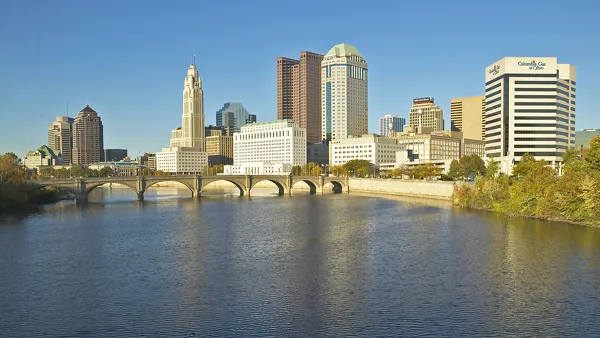
Columbus Bucks Trends, Grows Steadily
The latest installment of the "Planners Across America" series visits Columbus, Ohio, for a conversation with Planning Administrator Kevin Wheeler.

BLOG POST
Umberto Eco, Planning Education, and Urban Space
The great Italian scholar and novelist's death likely has little meaning for practicing planners, but his literary method might have lasting relevance for planning education and the design of urban space.

BLOG POST
The Changing Nature of Retail: The Impact of Online Shopping on Cities
As consumers increasingly buy online, technology is changing the shape of our cities, reducing demand for retail space, increasing freight congestion, and leaving parking lots empty.

BLOG POST
The Colliding Legacies of Olmsted and Obama
Architects will soon be hired to design Obama's presidential library in Chicago. It may turn out to be a beautiful building, but will it be worth all that is lost in the process?

BLOG POST
Retrofitting the Cul-de-Sac
A recent book on retrofitting sprawl contains numerous proposals to revise cul-de-sacs—all of which are interesting, even if politically infeasible.
BLOG POST
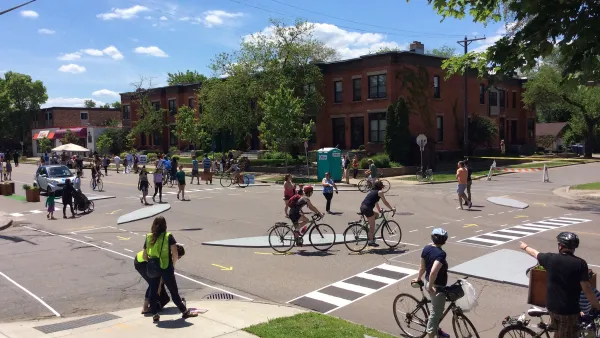
DIY Urbanism and Top-Down Planning
Though projects tend to be hyper-local and temporary, Do It Yourself, Tactical, or Guerrilla Urbanism is an endorsement of the top-down planning model, rather than a repudiation.

BLOG POST
It's Our Future You Are Planning For: Getting Youth Involved in Planning
This blog post highlights resources available to help engage children and young adults in participatory planning processes.

BLOG POST
Tip of the Iceberg: Seeking Real Accessibility in Community Engagement
Do modern accessibility regulations go far enough to ensure fair access to all community members for public engagement activities? How can we design our planning processes to reach the broadest demographic?

FEATURE
Op-Ed: Let's Build Homes, Not Ideology
Knee-jerk, ideological reactions to the California housing crisis rest on faulty arguments and threaten to cheat the state out of workable solutions.
BLOG POST
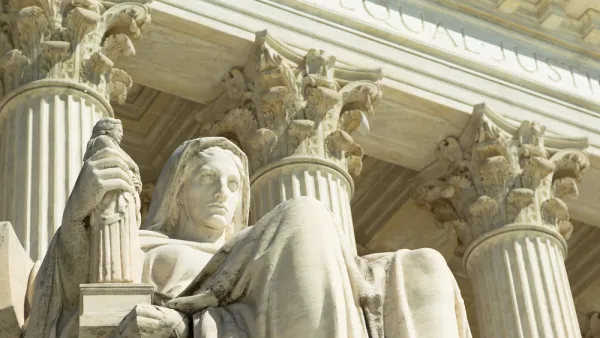
Justice Scalia and the Takings Clause
Summarizes Justice Scalia's most important Takings Clause decisions.
BLOG POST
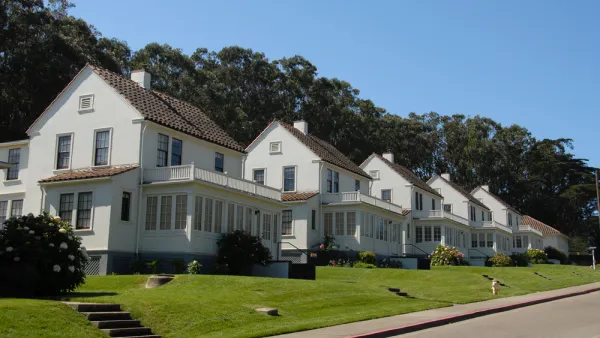
Problems With Economic Impact Analysis: Examples From Base Communities
Guest blogger Joshua Drucker discusses his new research critiquing current practices in economic impact analysis.

FEATURE
GE and Industry's Return to the City
GE recently made the blockbuster decision to move its corporate headquarters to Boston. More than just another example of a company returning to an urban area, the move shows how a city like Boston benefits the kind of company GE wants to become.
BLOG POST
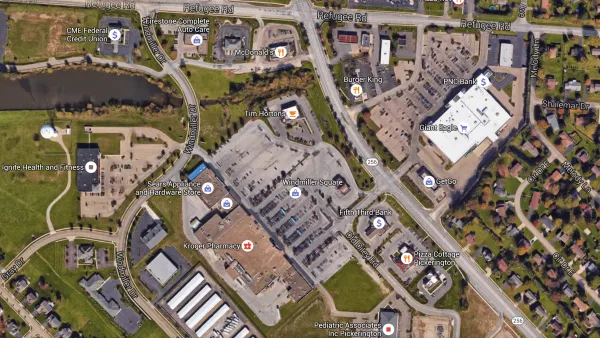
Retail Parking: A View from Google Earth
Google Earth can be a useful tool for understanding how parking is being used in your community and to identify where over- or under-utilization occurs.

BLOG POST
The Bicycle as a Tool of Social Justice
Philosopher Ivan Illich believed that the bicycle could connect users back to the pace of community-oriented life, that the right of free movement does not lapse just because cities have strapped themselves into ideological seat belts.

BLOG POST
Smart Growth Policies for Urban Affordability and Fertility
The new International Housing Affordability Survey contains various errors and biases. The author even claims that compact housing reduces fertility. Really? Smart policies can create affordable and family-friendly housing.

FEATURE
Teaching Urban Planning to Pre-Schoolers
An experiment involving colorful Legos, big pictures, and "Where Things Are From Near to Far."
FEATURE
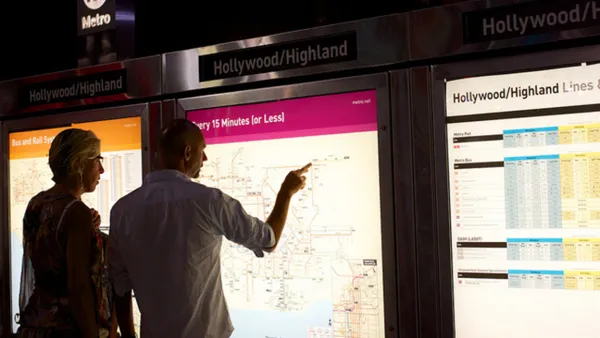
The Go LA App Offers a One-Stop Shop for Transportation Choices
A public-private partnership between Xerox and the city of Los Angeles rolls out a new mobile trip-planning app to the public today. Now it's on the city's residents to use this new power wisely.

BLOG POST
Right to the City
You may not have a moral right to live in an expensive city—but does the government have a moral right to exclude you?
Harvard University Graduate School of Design
KFH Group Inc.
Greater Baltimore Committee
The Architects Foundation
University of Cincinnati Online
The Pocatello Development Authority
The Urban Renewal Agency of the City of Pocatello

FREE Course: Walkable City 1: Why Walkability?
After describing his path towards focusing on walkability as the essence of good planning, Jeff Speck marches through his five principal reasons for making more walkable places.
Reinventing Malls: Planning Alchemy—Turning Gray Fields Into Gold
The course focuses on the opportunities and imperatives that shape reinvention of mall sites.